
If energy-based treatments seem confusing, it’s not because you’re behind. Popular nonsurgical treatments like lasers, radio frequency, ultrasound and microneedling are often grouped together, even though they rely on different forms of energy, work at various depths and are designed to address different concerns. “Each type of energy benefits the skin and the tissue underneath to some degree,” says Omaha, NE dermatologist Joel Schlessinger, MD. “But, there are both subtle and significant differences between them.”
So what makes them different? “Energy-based devices deliver nonablative energy, such as radio frequency or ultrasound, to create controlled thermal stimulation within the skin,” explains Beverly Hills, CA dermatologist Dr. Jacquiline Habashy Hakim. “Unlike lasers, which rely on specific wavelengths of light to target specific pigments, these technologies gently heat tissue to stimulate collagen remodeling and tightening.”
Radio Frequency
What It Does
Radio frequency (RF) uses electromagnetic energy to create controlled heat within the dermis. “Radio frequency refers to energy that generates heat within tissue,” explains Dr. Schlessinger. “It stimulates collagen in a similar way to lasers.” Results develop gradually as skin remodels.
Concerns It Targets
Early laxity and textural issues
What Stands Out
Unlike lasers, which rely on light absorption, radio frequency delivers heat independent of pigment, allowing it to treat deeper tissue layers safely.
RF Microneedling
What It Does
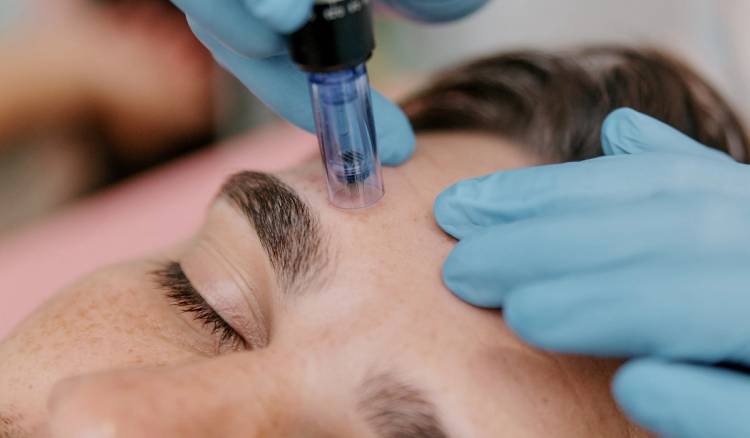
This modality delivers radio-frequency heat through insulated microneedles to stimulate collagen remodeling beneath the skin’s surface. “How much remodeling is achieved really comes down to whether the needles actually reach the programmed depth,” explains New York dermatologist Brian Hibler, MD.
Concerns It Targets
Acne scars, uneven texture, enlarged pores and early laxity
What Stands Out
After a recent FDA safety warning about fat loss linked to overly aggressive RF microneedling, choosing an experienced provider is critical. “If treatments are performed by unqualified individuals who deliver energy inappropriately, fat could be compromised. Systems such as EndyMed offer a safer, more precise way of delivering energy to avoid issues with fat or other structures,” says Dr. Schlessinger.
Ultrasound
What It Does
This modality sends focused ultrasound sound waves to precise depths below the surface, triggering collagen production while leaving the top layer of skin intact.
Concerns It Targets
Early laxity in the brow, jawline or neck, or mild laxity on FDA-cleared body areas such as the arms, abdomen, thighs or knees
What Stands Out
Because ultrasound energy is delivered in controlled focal points, results from treatments like Sofwave and Ultherapy PRIME develop gradually over time. “Ultrasound is generally more superficial than other modalities, so outcomes can be softer and more subtle,” says West Palm Beach, FL dermatologist Jacob Beer, MD.
Nonablative Laser
What They Do
Lasers use focused light at specific wavelengths to target precise components within the skin. “The laser is absorbed by a particular color in the skin, usually pigment, blood or water,” says Dr. Schlessinger.
Concerns They Target
Sun damage, uneven tone, redness, rough skin texture and fine lines
What Stands Out
Nonablative lasers, such as Clear + Brilliant, MOXI and HALO, refine tone and texture with minimal downtime. “Those treatments are more subtle and often require a series for optimal results,” says Dr. Beer. Fractional lasers such as Fraxel FTX penetrate deeper to stimulate collagen and smooth texture. “Wrinkles used to be treated with just one wavelength. Now we generally use two. Combined lasers seem to work best, like Solta’s newer Fraxel platform,” says New York dermatologist David Goldberg, MD.
Ablative Lasers (CO2 and Erbium)
What They Do
Ablative lasers remove controlled layers of damaged skin to reset the surface and trigger a deep wound-healing response. “With CO2, you’re creating a deliberate injury to the skin,” says Dr. Beer. “That injury drives collagen remodeling, with results that can continue to improve for months.”
Concerns They Target
Advanced sun damage, deeper wrinkles, scarring or significant texture concerns
What Stands Out
The intensity with CO2 lasers is unmistakable; Dr. Schlessinger notes that there’s somewhat less recovery time with erbium lasers like Contour TRL. “A patient who’s had a CO2 laser is definitely going to know they’ve had it done,” says Dr. Beer. “While the results can be terrific, there’s real recovery involved.” Dr. Schlessinger adds, “This is an aggressive treatment that’s mostly for patients in their 50s and beyond.”
Setting Realistic Expectations
It’s important to understand that the results of energy-based treatments unfold gradually. “Changes usually occur within the first few days to weeks, but improvements can continue over the next six months,” says Dr. Schlessinger.
La Jolla, CA plastic surgeon Robert Singer, MD adds that treatments with minimal downtime yield limited results. “Aggressive lasers can produce significant color changes and are not a replacement for surgery in patients who are better candidates for it.”
Power Moves
Here’s what’s new and next in energy-based treatments.
Precision Coring
Rather than resurfacing broadly, laser coring removes microscopic columns of skin to stimulate deep collagen renewal. “We’re using the laser to tighten the skin like you would aerate a lawn,” says Dr. Schlessinger. “This is not to be confused with the non-laser micro-coring, which has been associated with scarring and discoloration in some individuals.”
The Carbon Patch Reset
A carbon-infused patch activated with a Q-switched Nd:YAG laser is emerging as a noninvasive cellulite dimple treatment. “The laser activation of the carbon disconnects the fibrous bands that pull the skin down, creating cellulite dimples,” says Dr. Goldberg. “Biopsies during clinical trials confirmed structural change beneath the skin.”
K-Beauty Tech
The monopolar radio-frequency platform XERF, emerging from Korea, is designed to tighten skin while preserving facial contours—no numbing required. Instead of diffusing heat broadly, it targets fibro-septal structures with controlled modulation. “Unwanted fat loss has been reported when energy is delivered too superficially or without proper modulation,” says Dr. Hakim.
Triple-Modality Body Sculpting
T-Shape 2 is drawing attention for layering radio-frequency, low-level laser and vacuum modalities in one session. “Among the newer the increase in TikTok videos for Ultherapy last year, adding 1.9 million to Spate’s Popularity Index devices for body shaping, T-Shape 2 seems to be among the best now for noninvasive body contouring,” says Dr. Goldberg.
Subdermal Heat
Using 1940-nm diode laser energy, iLaser delivers energy beneath the epidermis through an ultrathin fiber. Denver dermatologist Sarolta Szabo, MD says, “This diode laser targets water within the dermis and subcutaneous fat, resulting in fat melting, skin tightening or both.”