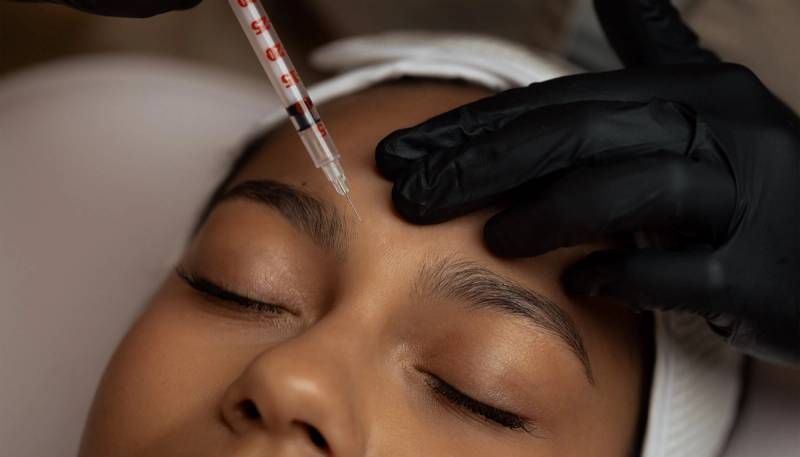
For many of us, line-smoothing neurotoxin injections seem like a no-brainer, but the decisions made before, during and after treatment can meaningfully shape both safety and results.
No Consultation, No ’Tox
Before any injections take place, a consultation with a qualified provider is essential. It’s a moment to slow down, talk through what you want to address and come up with a game plan. “A thorough consultation shows that the provider is taking the time to put the patient first,” says Chapel Hill, NC dermatologist Sue Ellen Cox, MD. “It should include a discussion of goals, anatomy and medical history.
Choose Your Injector Carefully
Botox Cosmetic and other neurotoxin treatments (Daxxify, Dysport, Jeuveau, Letybo and Xeomin) may be quick to administer, but they require years of medical training to be done well, and safely. “The issues we see most frequently are complications that stem from injectors who lack formal training in facial anatomy and emergency management,” says Dallas dermatologist Elizabeth Houshmand, MD. “Most of these are preventable with proper training.”
Whether injections are performed by a physician or administered by a supervised medical injector, “physician oversight is critical,” Dr. Houshmand adds. “A supervising physician ensures proper sourcing of the product, adherence to medical protocols, sterile standards, dosing accuracy and complication management. They also carry legal and professional accountability.”
Know the Red Flags
Not every injector—or setting— is worth trusting. According to Dr. Houshmand, certain warning signs should prompt patients to walk away immediately. Red flags include cash‑only pricing with no receipts or medical documentation, no visible medical license or supervising physician, products that are unlabeled or already drawn up in a syringe, social media–only booking with no established clinic, unrealistically cheap pricing, and pressure tactics or “today‑only” discounts. As Dr. Houshmand puts it plainly: “Your safety should never be rushed or discounted.
FDA Approval Is Non-Negotiable
Neurotoxins used in medical aesthetics should be sourced directly from their respective manufacturers. Practices will often note on their website which company they purchase from, such as Allergan Aesthetics for Botox Cosmetic, Merz for Xeomin or Galderma for Dysport. “Patients should also be able to confirm that legitimacy in person,” says Dr. Houshmand. Unopened vials with visible lot and serial numbers, sterile technique, proper medical documentation and informed consent are all markers of an FDA‑regulated compliance setting.
Protect Your Results Post-Injection
Post‑care matters just as much as what you do beforehand. “After treatment, avoid strenuous exercise and excessive heat exposure for the rest of the day,” says Miami dermatologist Anna Chacon, MD. “Increased blood flow can worsen swelling or bruising and may slightly affect how the product settles.”
It’s also best to avoid lying flat in the short term. “Remaining upright for about four hours helps minimize the risk of product migration,” Dr. Chacon adds. “Lying down too soon may allow Botox to spread to adjacent muscles, increasing the risk of side effects such as eyelid drooping or neck weakness, depending on the treatment area.”
Migration can also occur if you rub or massage an area that was injected. Dr. Chacon explains that this can lead to unwanted effects, such as eyelid or brow drooping, and may compromise the precision and balance of the results.
Botox Isn’t for Parties or Pop-Ups
Despite their popularity, neurotoxin treatments don’t belong at parties, pop‑ups or private homes. This trend has rightfully earned the name “Backyard Botox.” Dr. Houshmand says that at these so‑called parties, the injections are frequently performed “by untrained—often unlicensed— individuals who may use counterfeit or improperly stored products. They also lack sterile technique or emergency preparedness.”
The likelihood of unpredictable outcomes rises quickly in these instances. “When proper safeguards are ignored, the risks increase dramatically, including infection, nerve injury, vascular compromise, asymmetry, toxin spread, and even systemic illness,” Dr. Houshmand adds.
Don’t Skip Your Follow-Up Appointment
This visit is about precision: Your provider may suggest small tweaks you didn’t realize you needed. “Follow‑ups typically occur two weeks post‑treatment and allow the provider to assess results and make adjustments if needed,” says Dr. Chacon. “Ongoing access to the provider is important so concerns like asymmetry [a heavier brow on one side, etc.] or unexpected muscle weakness can be addressed quickly.”
Respect the Treatment Timeline
“Botox is typically performed every three to four months,” says Dr. Chacon. “Treating too frequently may reduce the neurotoxin’s effectiveness over time. Appropriate spacing helps maintain natural‑looking, consistent results.”
The exact timeline can vary based on which neurotoxin is used and how your body responds to it, which is why your provider should guide your schedule.