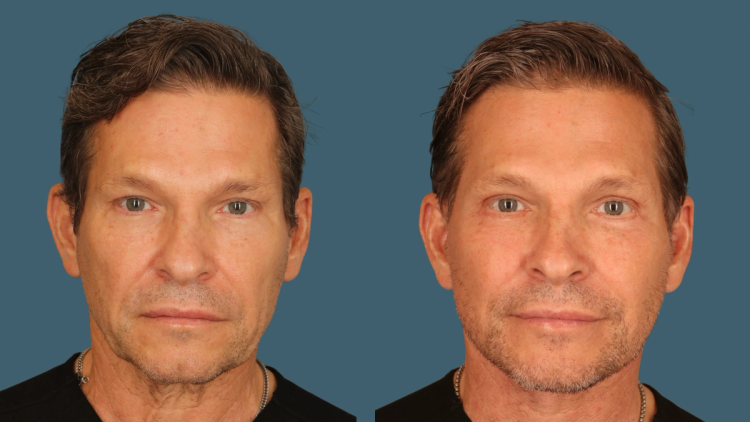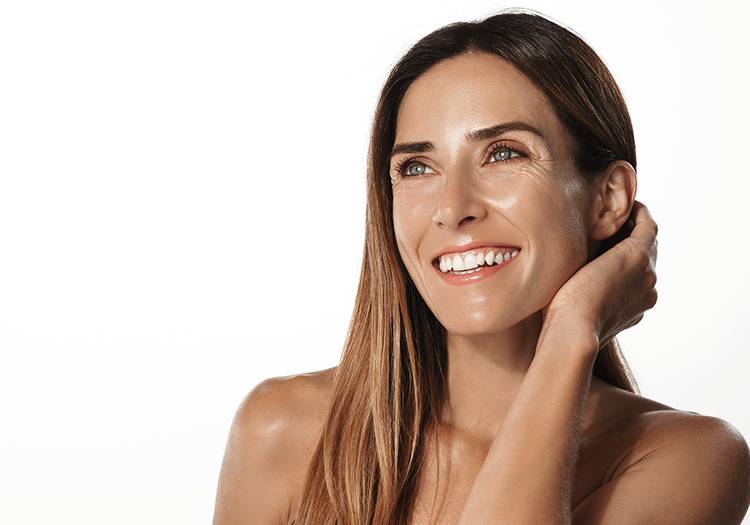
Ah, “skin tightening.” The term is everywhere, from products lining the shelves at your favorite retailer to in-office treatments offered by top providers. But what skin tightening actually means—and what it can realistically do—looks very different depending on your age. Ahead, we’re breaking down what works in your 20s, 30s, 40s and 50s+, along with what you can truly expect from today’s treatments—and where expectations often go wrong.
Featured Experts
- Dr. Deborah Longwill is a board-certified dermatologist in Miami
- Terry Dubrow, MD is a board-certified plastic surgeon in Newport Beach, CA
How Skin Tightening Changes With Age
The idea of tightening skin often brings to mind dramatic lifting or instant transformations, but the reality is far more nuanced. How skin responds depends on how much collagen and elastin—the proteins that give skin structure—and how well it can repair and rebuild itself over time, a process influenced by factors ranging from fibroblast activity and circulation to hormones and cumulative sun exposure.
“In your 20s, your skin responds incredibly well as collagen production is high and healing is strong,” says Newport Beach, CA plastic surgeon Terry Dubrow, MD. “In your 30s, you still respond, but results are more subtle and need consistency.”
But that biological advantage changes over time. “In your 40s, laxity becomes structural,” Dr. Dubrow continues. “This is where devices can improve quality but can’t truly lift." Miami dermatologist Deborah Longwill, MD echoes that point. “As we move into our 40s and beyond, elastin fibers weaken, and the skin becomes thinner. Tightening can still work, but results take longer, often require a series and expectations shift from snap-back to gradual improvement.”
"In your 50s and beyond, regenerative capacity drops significantly, so meaningful tightening usually requires surgery," says Dr. Dubrow.
Skin Tightening in Your 20s and 30s: It’s All About Prevention
While “tightening” is often the term patients search for, experts say the focus in your 20s and early 30s is actually prevention. “Sun protection is number one," says Dr. Dubrow. "UV destroys collagen faster than anything. Good sleep, protein, resistance training and avoiding smoking matter more than people realize.”
Dr. Longwill agrees that consistency early on can dramatically shape how skin ages later and points to a few key topicals: “Daily sunscreen, vitamin C, retinoids and good barrier care make a measurable difference decades later,” she says.
In-office treatments during this age range are typically about maintenance rather than correction. “Light energy-based treatments, microneedling and collagen-stimulating facials can help maintain firmness,” says Dr. Longwill. “But the goal is preservation, not tightening.”
Skin Tightening in Your 40s: When Devices Start to Make Sense
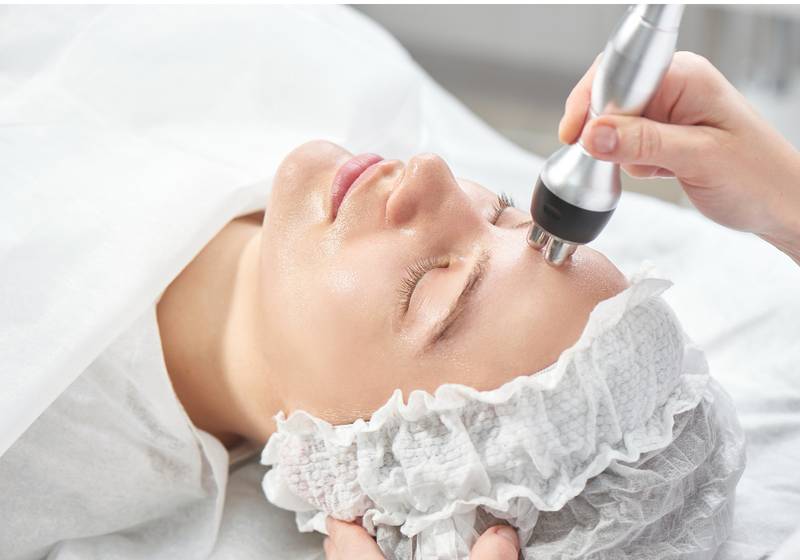
By the time most patients reach their 40s, collagen loss and subtle tissue descent start to become more visible. This is often when people begin exploring tightening devices in earnest. “Radio frequency devices—including radio-frequency microneedling—as well as ultrasound and lasers can improve texture and mild laxity,” says Dr. Dubrow. “But results are modest, require maintenance and won’t correct jowls or significant sagging.”
Dr. Longwill adds that these treatments can still make a meaningful difference for early laxity. “They can soften early jowling and mild neck laxity and improve overall skin quality,” she says. “But they will not replicate surgical lifting. Think improvement, not replacement.” Dr. Dubrow drives home the same idea: “These treatments refresh,” he says. “But they don’t replace surgery.”
Skin Tightening in Your 50s and Beyond: When Devices Enter the Conversation
As laxity becomes more pronounced, whether the issue is skin quality or tissue descent matters just as much as age itself. “If the issue is skin quality: fine lines or crepey skin, that’s when devices can help,” says Dr. Dubrow. “If the issue is tissue descent: jowls, neck laxity or facial drooping, only surgery can really reposition tissue.” He often uses a simple—and memorable—analogy to explain the difference: “Devices tighten fabric; surgery tailors the suit.”
Dr. Longwill says many patients benefit from combining treatments. “If laxity is mild to moderate, devices and injectables can still produce meaningful tightening and improve skin quality,” she explains. “When there is significant skin excess or heavy jowling, surgery becomes the only option that truly repositions tissue.”
The Biggest Misconceptions About Skin Tightening
One of the most persistent myths patients have about skin tightening is that non-surgical treatments can replicate surgical results. “It can’t,” Dr. Dubrow states.
Dr. Longwill says the reality is much more gradual—and cumulative. “One treatment will not dramatically lift everything,” she says. “Tightening is cumulative, gradual and maintenance-based. Great skin is built over time, not created overnight.”