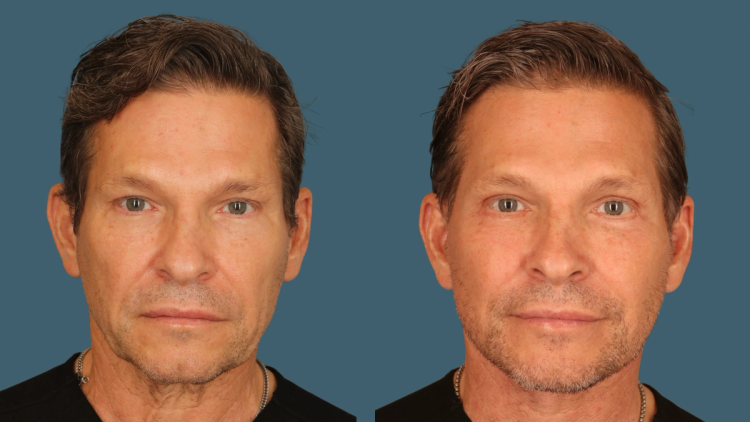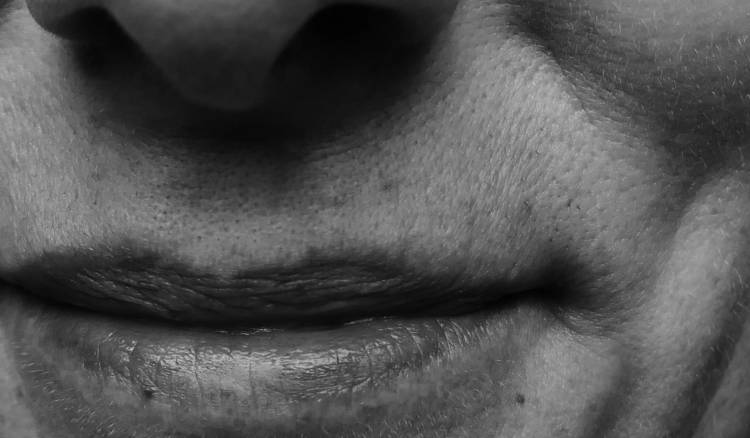

Thread lifts have been around for years, but as interest shifts toward treatments that promise subtle results with less downtime, they’re getting a second look. The procedure uses dissolvable threads placed beneath the skin, and depending on the type, they can lift or reposition tissue, add support or encourage collagen production.
Ahead, the difference between barbed, smooth and twisted threads, how they fit into the larger shift toward collagen-stimulating treatments, why some doctors remain cautious and how to know if a thread lift—versus a facelift—is the right call.
Featured Experts
- Kimberly J. Lee, MD, is a board-certified facial plastic surgeon in Beverly Hills, CA
- Dr. Amy Spizuoco is a board-certified dermatologist and dermatopathologist in New York, NY
- Brian Hibler, MD, is a board-certified dermatologist in New York, NY
The Appeal—and the Debate
Beverly Hills, CA facial plastic surgeon Kimberly J. Lee, MD sees the appeal as part of the move toward more natural-looking rejuvenation. “As we turn even more towards looking natural, threadlifting is a minimally invasive procedure to lift sagging skin by using dissolvable threads. It’s gaining more popularity because of the ability to provide natural and subtle results, minimal downtime and ease of having it done under local anesthesia.”
But threads remain a divisive treatment. Some doctors use them regularly, while others are more cautious about the results, risks and whether certain patients need them at all.
Not All Threads Are the Same
One important distinction is the type of thread being used. Barbed threads are designed to grip tissue for lifting. Smooth and twisted threads work differently. They’re used more for subtle tightening than for a mechanical lift , so their results shouldn’t be grouped together under one promise of a “thread lift.”
New York dermatologist Dr. Amy Spizuoco regularly performs thread treatments but avoids barbed threads. “I only do the smooth and the twisted,” she says.
Her preference developed after training with barbed threads early in her practice. “I learned on the barbed threads, but I just didn’t see the results.” She also found barbed threads uncomfortable for some patients.
Instead, she uses smooth and twisted threads for more subtle improvement. “I like the smooth ones. I’ll do them under the jawline, and it gives a nice little lift and tuck. I also use the smooth ones to improve the lines.” For Dr. Spizuoco, matching the thread type to the patient’s goal matters more than defaulting to whichever technique promises the biggest lift.
The Collagen Connection
For Dr. Spizuoco, threads aren’t necessarily about creating a dramatic mechanical lift. She also sees them as part of the larger move toward biostimulatory treatments designed to encourage collagen production over time.
“It’s all biostimulatory. Filler was the thing for a while, along with Botox, but now we’re evolving. You can correct something instantly, but now it’s more about the longevity of it.”
She points to Sculptra as another example of that same collagen-stimulating philosophy. The two treatments work differently (one is a physical filament, the other an injectable), but both aim to stimulate the skin’s own collagen production rather than deliver an instant, mechanical change.
Why Some Doctors Urge Caution
The less-invasive nature of a thread lift doesn’t mean it should be treated casually. New York dermatologist Brian Hibler, MD, has seen patients seeking help after undergoing threads and multiple other aesthetic treatments abroad.
“They had threads under their eyes, and they got all this stuff done that I don’t think they needed,” he says. “They probably need imaging and to see a plastic surgeon.” The patients had lumps, bumps or swelling after multiple procedures, making it unclear which treatment caused the reaction.
His larger point applies to aesthetic procedures more broadly: patients need to understand the risks and have a clear reason for choosing a treatment.
“These are medical procedures. There are risks, so it’s really important not to do something to your face that you might regret and not to do something just because it’s trendy, went viral and you want to be a part of it,” he adds.
So, Are Thread Lifts Worth It?
The answer depends on what you expect them to accomplish and which type of thread is being recommended. Dr. Lee sees threads as part of a broader shift toward natural-looking rejuvenation, while Dr. Spizuoco has narrowed her own practice to smooth and twisted threads after finding barbed threads less effective.
For patients seeking more substantial lifting, a facelift is a different category of treatment. A facelift, by contrast, repositions deeper facial tissues and can remove excess skin. Threads and facelifts aren't interchangeable—one isn't simply a lower-downtime substitute for the other.
The biggest takeaway is that “thread lift” isn’t one universal treatment. Ask what kind of thread is being recommended, what it can realistically accomplish and what risks come with it. Those answers should help determine whether the treatment makes sense for you.