Patients who have lost weight on a GLP-1 often walk into the office with the same worry. New York dermatologist Marina Peredo, MD said most of her GLP-1 patients don’t want filler because, after losing all that weight, they assume filler is bad. Austin, TX oculoplastic surgeon Sheila Barbarino, MD hears a version of it too, from patients who say they don’t want to look fatter.
At NewBeauty’s inaugural State of Aesthetics Roundtable in New York, experts including New York dermatologists Amanda Doyle, MD and Dendy Engelman, MD, who attended as guests of Merz Aesthetics, made the case that filler isn’t the problem. How, where and in whom it’s used is what counts. For many GLP-1 patients, filler works best as part of a broader approach that combines three treatments to help restore a more youthful appearance.
Ahead, why GLP-1 weight loss changes the face differently than aging, and the three treatments experts say work best together.
Why the GLP-1 Face Looks Different
Dr. Doyle explained that rapid, medication-driven weight loss changes the face in a specific way. “If you lose 22 pounds, you can lose up to 7 percent of your facial volume,” she said, citing a 2025 imaging study. Where that volume goes matters, too. With fast weight loss from these medications, “it’s a more superficial fat pad type of change versus a deeper fat pad loss,” she said. With ordinary aging, it’s the reverse. Dr. Peredo said the biggest losses tend to show up in the fat compartments of the temples and cheeks.
That changes the plan. “Addressing that specific type of population is really important in knowing how to inject them appropriately with the right type of products,” Dr. Doyle said. Here are the three treatments the experts are relying on.
1. Filler, Placed With Precision
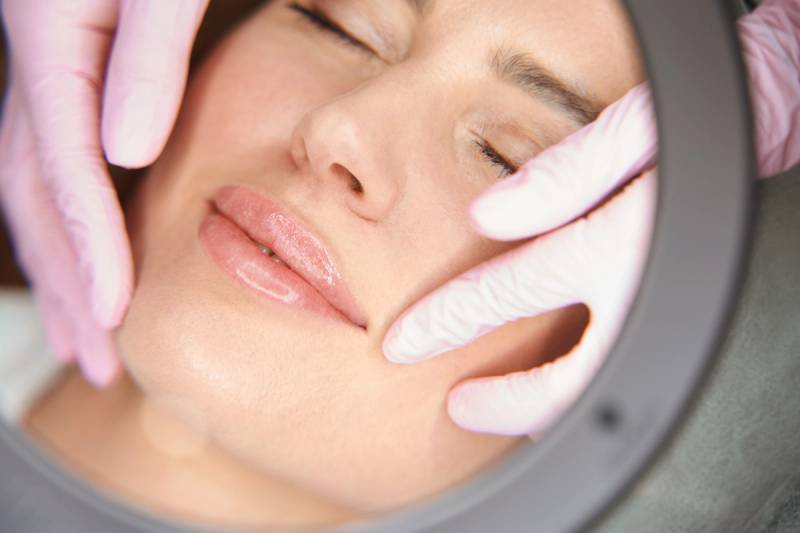
Dr. Barbarino said the fear of looking heavier comes from a misunderstanding. “If you place filler in the correct anatomical position, you should always, always, always look like you’ve lost weight and that you look more sculpted, not that you’ve gained it,” she said. The goal, in her words, “shouldn’t be to augment people, it’s to bring out their best features.”
Dr. Doyle described the art the same way. Done well, filler has a certain je ne sais quoi, “making it look like something meaningful has been done without being known what’s been done.” Getting there starts before the needle. “Not every patient is a filler patient, even if they think they may be,” she said. Then comes restraint: smaller amounts, placed carefully and less often. “I think that’s really going to turn the tables on aesthetics and make patients more comfortable with filler again over time.”
A new generation of products is helping. Dr. Doyle pointed to Merz Aesthetics’ expanded Belotero collection. “I think that there’s some really unique things coming out of Merz with the Belotero Balance and Volume and Intense portfolio that add a unique component to our toolbox,” she said, highlighting the line’s biomimetic design, “meaning things that can move naturally with our tissue and integrate really nicely.”
In September, the FDA approved Belotero Volume (+) to restore volume and contour in the cheeks and midface and Belotero Intense (+) for lip fullness, joining Belotero Balance (+). Both new fillers use Merz’s Cohesive Polydensified Matrix technology, which creates a gel designed to integrate into tissue rather than sit on top of it, so faces keep their full range of expression. Merz reports 95 percent patient satisfaction through 18 months for Belotero Volume (+).
2. Biostimulators That Rebuild From Within
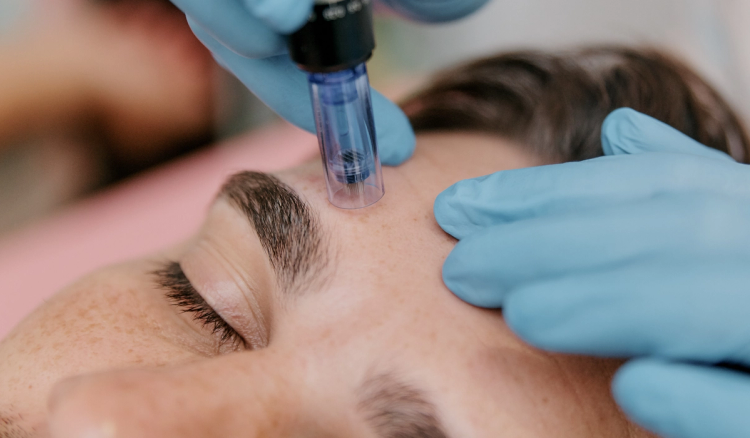
Where filler restores shape, biostimulators prompt the skin to make more of its own collagen. Dr. Peredo has long been a big user of Radiesse and Sculptra, and she said Sculptra is having “a huge comeback” in her practice.
Toronto physician Jennifer Pearlman, MD uses a lot of hyperdilute Radiesse, which she said has a unique place “as it relates to reloading the matrix.” She doesn’t see that as the end of hyaluronic acid. “HAs will always have a place in our aesthetic arsenal if we are thinking about the skin architecturally and we’re providing targeted scaffolds,” she said.
Dominic Mazzone, founder and CEO of the physician-led network VOS Collection, said his company’s data backs up pairing the two. Patients who get regenerative biostimulators without HA filler, he said, drop off faster than those who do both.
3. Energy Treatments for Skin Quality
The third piece is the skin itself. Dr. Peredo layers biostimulators with lasers, including a 1550 nm laser that spares the skin’s surface, so she can treat a wide range of ages and skin tones, even in summer. Many practices also offer micro-focused ultrasound, the technology behind Merz Aesthetics’ Ultherapy.
Even as newer technologies arrive, the classics still matter. “We always have our lasers and our light-based treatments,” Dr. Pearlman said.
Choosing the Right Hands
All of that choice raises the stakes for training. DJ Sethares, vice president of U.S. marketing for Merz Aesthetics, called it an “inflection point of risk because the innovation is outpacing the education.” She emphasized the need for shared industry standards, “not to create rigidity, but to create an expectation that we can train towards and that patients can understand and expect.”
Dr. Engelman said educating patients is part of the solution. “We all have like the attention span of a fruit fly now,” she said, adding that doctors have to translate clinical language for consumers. “What we speak about here is wildly different than what I was saying at 9 a.m.” Her advice to GLP-1 patients starts with the basics: “You need to make sure you’re managing your protein and your caloric intake.”
It’s also why vetting your injector matters, whether you’re at a dermatologist’s office or a medspa.
Start With the Patient
Sethares summed up the philosophy the room kept returning to. “I don’t believe in starting with product first at all. I believe in starting with the patient first,” she said. “For most of our patients, whether they’re GLP-1 or menopausal, whatever cause of accelerated aging they are experiencing, it’s a multimodal treatment approach.”
For GLP-1 patients, that means filler isn’t automatically the enemy or the answer. The most youthful results come from the right mix of all three, tailored to where your face lost volume, how quickly it happened and who’s doing the natural-looking work.