
Walk into any aesthetic practice right now and one thing is clear: Men are not just showing up; they are asking smarter questions and thinking long-term about how they look. The numbers back it up. According to The International Society of Aesthetic Plastic Surgery, surgical procedures in men are up 95 percent globally since 2018, with nonsurgical treatments rising even faster. But, what matters more than growth is how the category is evolving. Men still want dramatic change, but the trend is shifting toward refinement and looking like themselves on their best day.
The Art of Subtlety
For many men, the entry point is the face. New York plastic surgeon Mokhtar Asaadi, MD says blepharoplasty (eyelid surgery) leads among his male patients. “They want to look youthful, refreshed and polished.”
According to New York facial plastic surgeon Moustafa Mourad, MD, chin and jawline work is also gaining popularity among men. “Most men are seeking structural solutions rather than temporary fixes.”
“Most commonly, I see male patients seeking necklifts and blepharoplasties,” adds Palo Alto, CA facial plastic surgeon Jill Hessler, MD. “They are looking for ways to correct a specific concern, like a sagging neck or under-eye bags, and are wanting more long-term results.”
New York plastic surgeon JoAn Monaco, MD says the key to great results in men is a slow, stepwise progression. “It has to be deliberate, from neurotoxin and fat transfer to blepharoplasty,” she explains, noting that she’s particularly thoughtful around the eyes. Women often want to erase their crow’s-feet entirely, but “a man’s lines tell a different story,” Dr. Monaco continues. “It’s very attractive for a man to hold on to some of his crow’s-feet. It’s a distinguishing factor.” The same logic extends to browlift surgery. “With men’s anatomy, it’s much easier to do more later than to correct too much,” the surgeon adds.
Body Goals
While the face may get the attention, the body is where many practices are seeing major growth. Newton Centre, MA plastic surgeon Joseph A. Russo, MD says the shift is hard to ignore. “Men are losing more weight just like women, and we are doing more tummy tucks in men than ever before.”
When he opted to have a combination of procedures nicknamed “Gladiator Surgery,” Phoenix dermatologist Dr. Karan Lal was not starting from scratch. After losing 300 pounds and previously undergoing gynecomastia surgery and a tummy tuck, he said he wanted even more definition.
When he met with his Scottsdale, AZ plastic surgeon, Benjamin Martin, MD, he was told to spend another year in the gym before moving forward. “Dr. Martin said, ‘Do this before, because if you fill in from working out, your results will change,’“ Dr. Lal recalls.
After that year, they mapped out a plan: aggressive 360-degree liposuction with VASER, Renuvion skin tightening and intramuscular fat transfer to the chest. Keeping the outcome masculine was also important. When Dr. Lal pushed to add fat to his glutes, his surgeon said no. “That’s why you have to find someone who specializes in men and has the right vision,” he says.
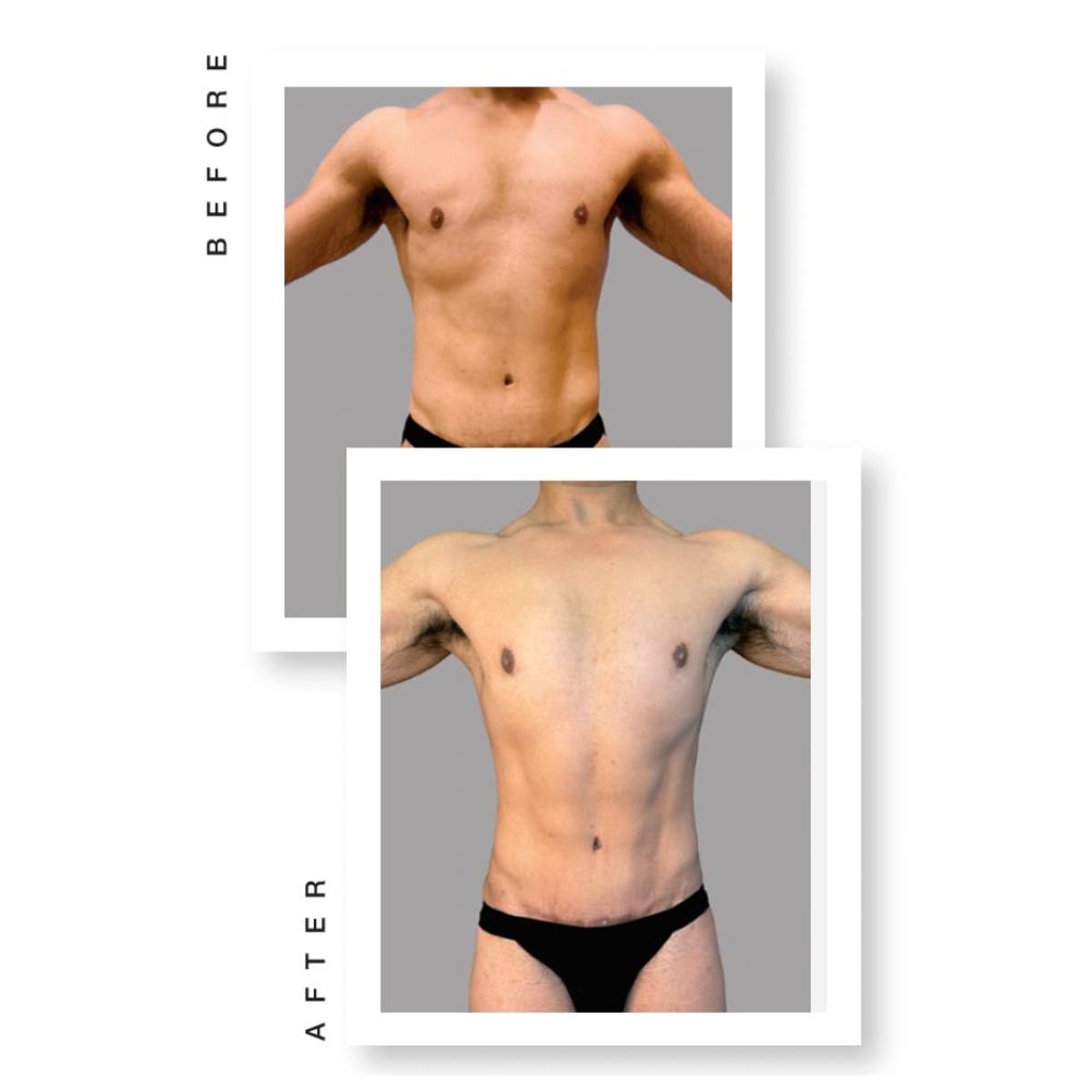
Dr. Lal says the procedure helped refine areas he couldn’t change on his own rather than replace the work he was already putting in. “I worked out for a year before and now I work out twice as hard after.”
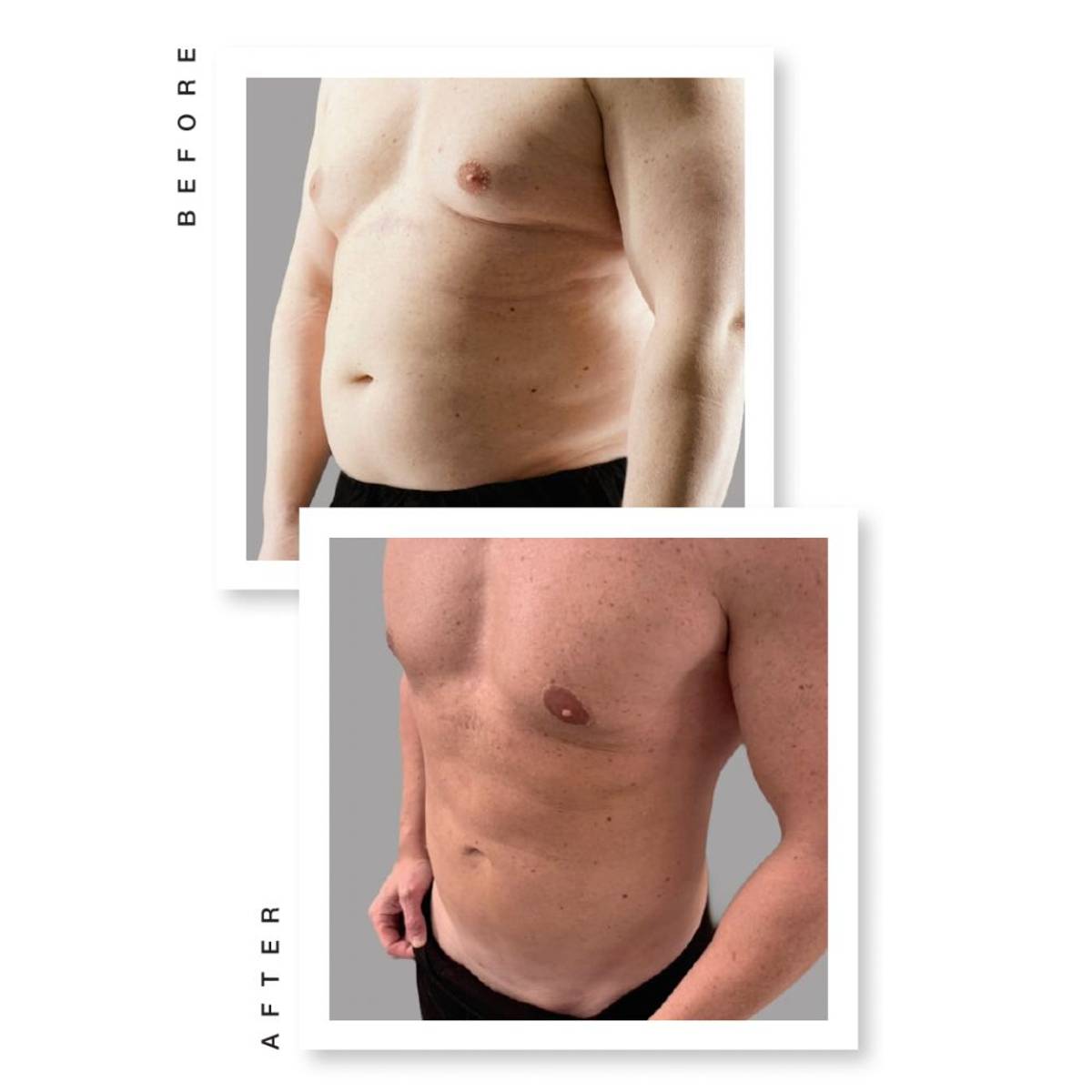
Grand Rapids, MI plastic surgeon David Alfonso, MD says liposuction of the chest and love handles are among his most requested procedures for men. “I think it’s partly related to a greater acceptance of cosmetic surgery, as well as the desire to look younger and more competitive, both at work and socially.”
The Rise of “No Downtime”
Nonsurgical treatments are a popular choice for men, too, and are often the gateway to more. Houston plastic surgeon Olga Bachilo, MD says neurotoxins and fillers are usually the first step. “There is increased awareness that these treatments can help men look younger, and more men are interested in that,” she explains. “They can’t tolerate long downtime and usually don’t want any social downtime either.”
Hollywood, FL plastic surgeon Narayanan Nair, MD sees the same trend, along with strong demand for hair restoration, too. “Social media visibility and a growing focus on personal branding and confidence are major factors,” he says.
Treatments like radio frequency, Ultherapy PRIME and Sofwave are also gaining traction, offering subtle skin tightening. New York facial plastic surgeon Lee Ann Klausner, MD tells us she’s seeing strong interest in Ultherapy PRIME for the jawline and neck, along with neurotoxin and filler.
Why Now?
So, what is actually driving the shift? Los Angeles plastic surgeon George Sanders, MD points to a mix of modern pressures. “People are working longer and seeing themselves on virtual meetings,” he says. “Working into your 60s and 70s requires you to maintain an energetic, youthful persona.”
Beverly Hills, CA plastic surgeon Charles Galanis, MD says many of his male patients are referrals from their wives: “A number of the men I see are the husbands of patients I have operated on. When they see what’s possible, they say, ‘Well, maybe I can do this.’“
The shift is evident at Grand Rapids, MI plastic surgeon Bradley Bengtson, MD’s practice, where male patients now make up 18 percent of his clientele, up from 10 percent a decade ago. “The biggest shift isn’t just that we’re seeing more men on the operating table. It’s also that they’re comfortable saying what they’re having done,” he says. Dr. Galanis adds, “Just as the stigma surrounding cosmetic procedures for women has lifted over the past decade or two, the same is now happening with men’s aesthetics.”