I’m going to say something that doesn’t make me particularly popular in my field: I almost never recommend buccal fat removal. My colleagues tease me for how vocally and tenaciously opposed I am. I’ll take it. Because the patients who’ve come back years later to thank me for talking them out of it are worth every joke at my expense.
Let me give you some context. I’m in my mid-40s now. I’ve been in practice for 15 years. And I’ll be honest about something I wouldn’t have admitted in my early 30s: I miss my baby fat. I look at photos of myself at 25 and I see fullness in my midface that I’d give a lot to have back. That soft, rounded volume in the cheeks isn’t a flaw. It’s youth. It’s architecture. And you will lose it with age.
That’s the thing about aging no one tells you early enough. The face doesn’t just sag. It shrinks. Facial fat pads, including the buccal fat pad, naturally atrophy with age. The hollowing you see in an older face, the gauntness, the shadows that deepen under the cheekbones: that’s mostly fat loss. I spend an enormous amount of energy as a plastic surgeon trying to restore that volume. And yet, for a stretch of years, a significant number of patients and surgeons were racing to remove it in perfectly healthy young women.
How We Got Here
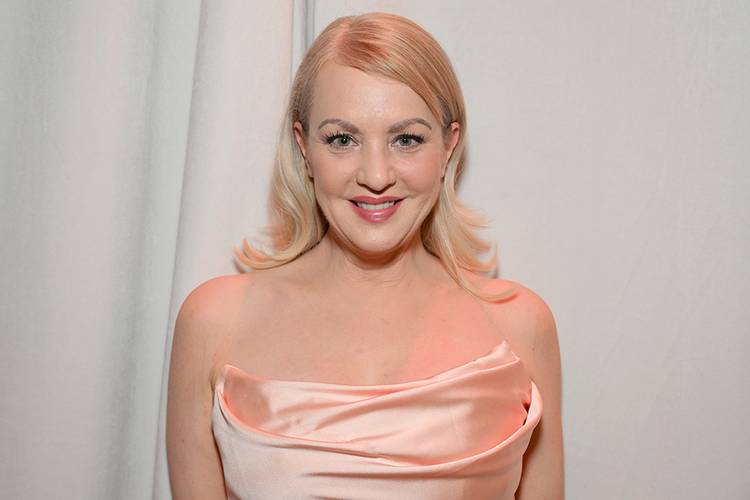
The buccal fat removal trend peaked around 2021 and 2022, propelled almost entirely by social media. The hashtag #BuccalFatRemoval accumulated hundreds of millions of views on TikTok. And it had a very prominent, very public ambassador: Chrissy Teigen, who announced her procedure on Instagram in 2021, pointing to her cheekbones and captioning it, “No shame in my game.” She still says she has no regrets. I respect that. But that moment of casual, confident disclosure sent a powerful signal to a generation of younger women: this is normal, this is easy, this is something you can just do.
And it wasn’t only women receiving that signal. Men arrived at consultations with the same request, just framed differently. Women wanted hollow cheekbones. Men wanted a chiseled, square-jawed, editorial look. Different aesthetic vocabulary, same surgery, same long-term consequences. The “snatched” look became something patients showed me on their phones during consultations, regardless of which side of the gender divide they sat on. According to the American Society of Plastic Surgeons (ASPS), buccal fat removal wasn’t even formally tracked before 2019. By 2022, over 4,500 procedures had been documented among ASPS-member surgeons alone. The real number was almost certainly much higher.
In my early years of practice, I did perform this surgery often. I counseled patients, I screened them, I tried to identify appropriate candidates. But I was also responding to what patients were asking for, and the culture at the time wasn’t pushing back. The surgery itself is technically straightforward: a small incision inside the mouth, the fat pad teased out. 20 minutes. No visible scar. Easy to say yes to. What I didn’t fully appreciate then, and what I now believe with conviction, is the long-term cost of removing a fat pad that the face is going to spend the next 30 years trying to replace.
What I’m Seeing Now
The trend has cooled, thankfully. By 2025, requests for buccal fat removal had dropped significantly from its peak. But the consequences of the boom years are showing up in consultations. Patients coming to me from other practices, in their late 30s and 40s, wondering why they look so gaunt. Patients who were told they’d love the result, and who genuinely did, briefly, and who now see something in the mirror they didn’t expect: a face that looks hollowed out, prematurely aged, structurally off.
The buccal fat pad is not simply “chubby cheeks.” It’s a specialized fat compartment providing structural support to the mid-face and lower face, uniquely resistant to weight fluctuations. It isn’t the fat you lose when you diet or exercise. It sits in its own biological category, and once it’s gone, it’s gone. Facial fat transfer can replace some of what was lost, and I do perform fat grafting for exactly this reason, but it cannot perfectly replicate natural buccal fat. I always feel like I’m patching something that didn’t need to be removed.
When I see a 28-year-old patient whose face will naturally lose volume over the next two decades, and I think about voluntarily removing a fat pad whose job is to prevent exactly that kind of hollowing, I just can’t get myself to recommend it.
The Broader Pattern
What concerns me isn’t just buccal fat removal in isolation. It’s a pattern of trend-driven surgery that asks patients to make permanent decisions based on a beauty standard with an expiration date. We saw it with lip overfilling, with so-called “facial balancing” via filler stacked onto filler until patients no longer recognized themselves. And now we’re seeing it push further still.
There’s a growing contingent of surgeons offering submandibular gland reduction, and in some cases digastric muscle resection, as part of aggressive jawline contouring. Proponents will say partial resection is safe, and the complication rates in careful hands are indeed low. Perhaps. But we are still removing functional glandular tissue from a healthy patient for a few millimeters of jawline definition. Complete resection carries documented risks of dry mouth and nerve injury. And even partial removal of a salivary gland in someone with no pathology represents a departure from what I consider a foundational principle of elective surgery: risk must be proportionate to benefit, and that benefit must be meaningful and lasting.
I have similar reservations about “preventative” facelifts being marketed to patients in their 30s, driven once again by social media. Facial surgery is not preventative medicine. You don’t lift tissue that hasn’t fallen yet. That’s not prevention. That’s doing the surgery early and then needing another one once aging hits after menopause. And the second time, your surgeon is working through scar tissue. It’s a harder operation.
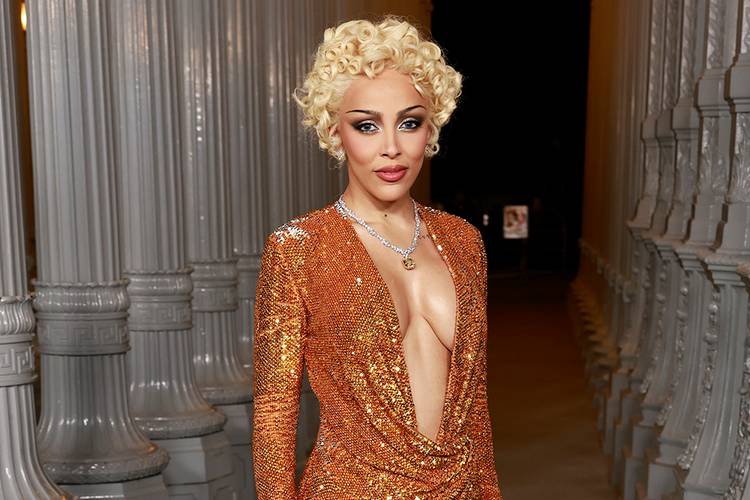
If you look at the celebrity faces that have become cautionary examples, the ones described as “off,” as “botched,” as somehow no longer themselves, you’re almost always looking at one of a few things: dramatic fat loss from GLP-1 medications without a plan for facial volume preservation, unnecessary buccal fat removal that has changed the fundamental geometry of the face, or the cumulative damage of excessive filler and Botox Cosmetic administered by practitioners who had no business holding a syringe. That last category has quietly become its own epidemic, fueled by the same social media culture and the same race to the bottom on price and credentials. Overfilled, over-frozen faces age in ways that are very difficult to correct, and the patients who end up in my chair after years of indiscriminate injections are often harder to help than those who did nothing at all.
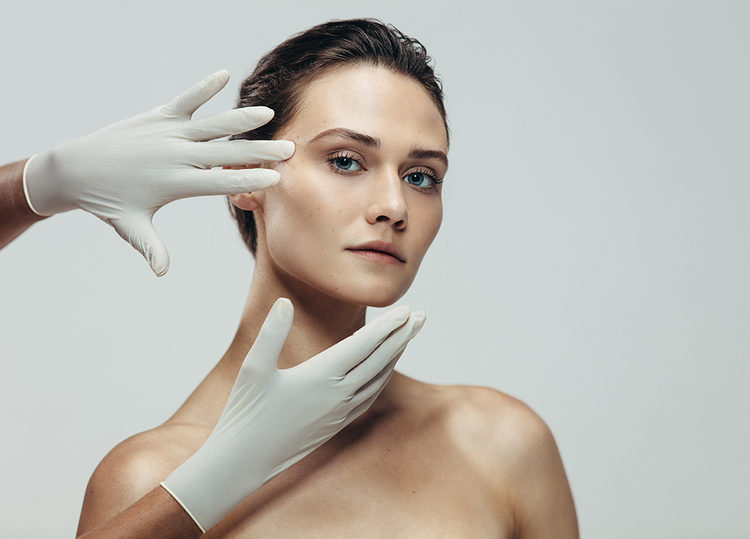
Your face is three-dimensional architecture. That volume in the middle isn’t decorative. It’s structural. Remove it, hollow it or distort it, and the cheeks flatten, the lower face loses its support, and the skin has nowhere to go but down.
What I Tell Patients Instead
I tell them the same thing I’d tell a 25-year-old version of myself: the baby fat you’re trying to reduce is the fullness you will eventually pay a surgeon to put back. If you live long enough, you will miss it.
There are ways to create more defined cheekbones and a sculpted midface without permanently removing tissue. Sometimes the roundness is masseter hypertrophy. Sometimes it’s facial proportion. Sometimes its simply genetics presenting a face that is beautiful and does not need intervention. Patients who want more definition are often better served by building structure above the cheekbone than by hollowing the space below it.
I’ve been in this field long enough to watch trends arrive, peak and leave behind patients who have to live with the results. Buccal fat removal peaked. The trend has faded. The surgeries haven’t.
That’s the part no TikTok trend accounts for. You have to live in your face for the rest of your life.