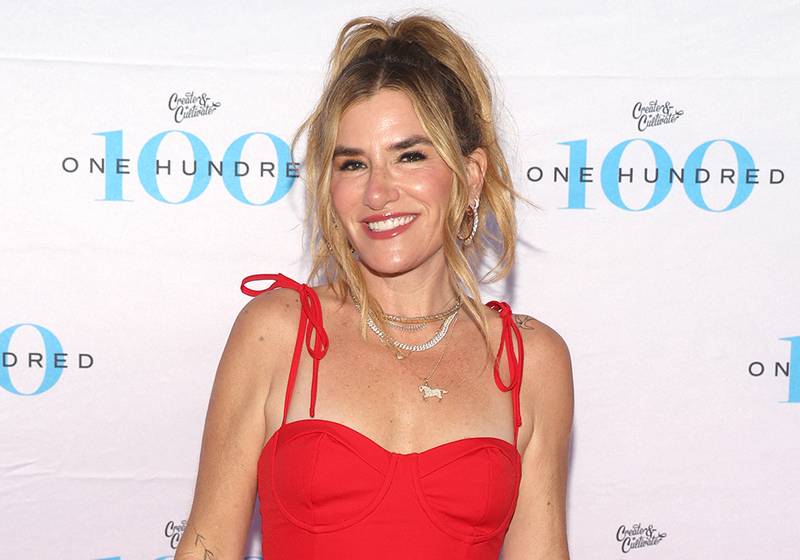
At 51, beauty entrepreneur Alli Webb made a deeply personal decision: to undergo a facelift. Known for redefining the way we think about hair care and self-care (she founded Drybar and Messy by Alli Webb), she’s now opening up about another chapter of her beauty journey—one that goes beyond products and treatments and explores aging, confidence and feeling like the best version of yourself.
In this exclusive interview—now three months post-op—Webb shares why she chose to have a facelift (along with a rhinoplasty, necklift and CO2 laser treatment done at the same time), what the experience was really like, how her recovery continues to unfold and the advice she would give anyone considering the procedure.
We also spoke to Beverly Hills, CA plastic surgeon Sarmela Sunder, MD—the doctor Webb has trusted for nearly a decade—who performed her facelift, for the technical details.
How Webb Knew It Was Time
“For me, the thought probably started around 40, but honestly it wasn't until I was closer to 45 that I really noticed the changes in my face—the jowls and the loose skin,” says Webb. “I'm 51 now, and over the last 10 or 15 years, I've gained weight, lost weight, gained it back, lost it again. That takes a toll on your skin, especially your face. Your skin stretches and rebounds only so much.
It's funny because when you look at my face before surgery, I think most people would've said I looked great. I felt pretty and confident, too. But I had developed jowls. There was also the natural loss of elasticity that comes with aging. Even when I told my brother I was doing it, I knew he'd say, ‘Why? You look so good.’ But I knew how I felt inside.
For probably the last five years, I'd find myself literally pulling my skin back in the mirror and asking Dr. Sunder, ‘How does this even work? What would a facelift actually do?’ I'd ask things like, ‘Is my face going to move? Are my lips going to look weird?’ She'd laugh and explain that my lips weren't going anywhere.
I've been seeing Dr. Sunder for almost 10 years. She started out doing my Botox and always took a very conservative approach. Years ago, she also did my upper blepharoplasty because I have very small eyes, and it was just a subtle enhancement to open them up a bit. Nothing she ever recommended was about changing how I looked; it was always about enhancing what was already there. Having the right plastic surgeon was really important because my goal was never to look different. I just wanted to look like myself, but refreshed.
Maybe turning 50 was the tipping point. I wanted to feel confident in my skin. I'd see photos or videos of myself where my chin looked like it was falling and I noticed more fullness underneath it. I realized there was an opportunity to improve that, and I decided to take it.”
The Type of Facelift—and What Else Was Done
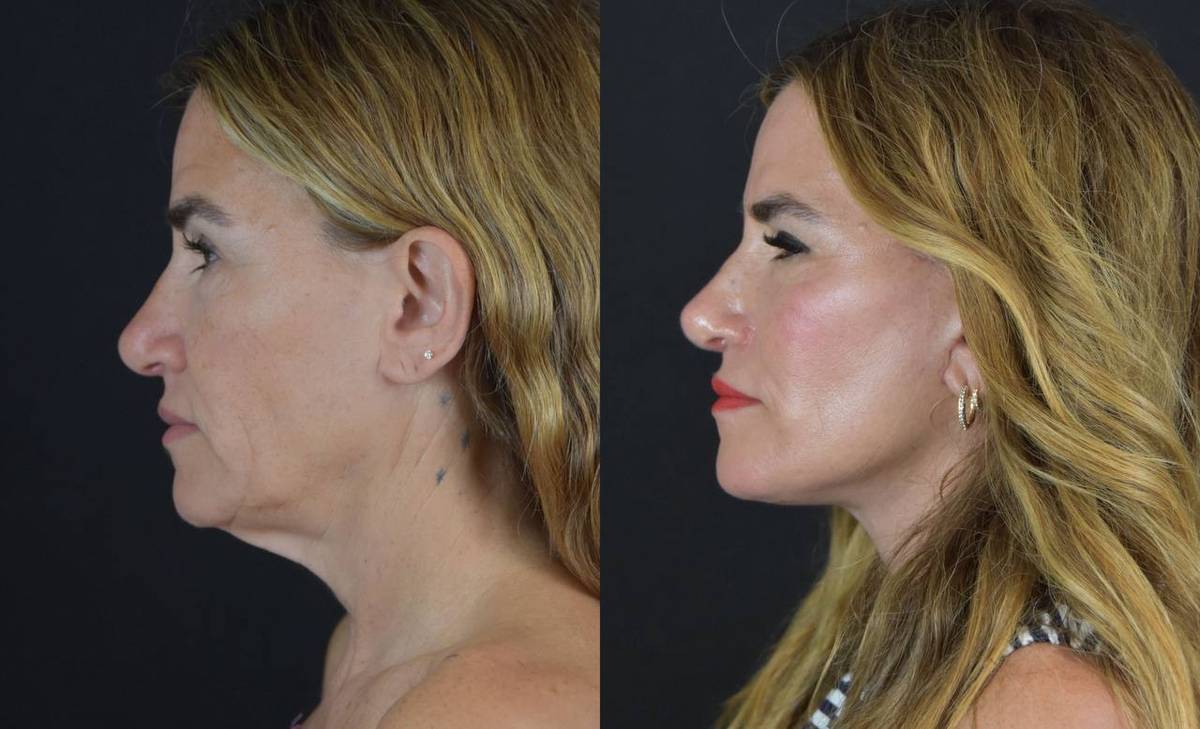
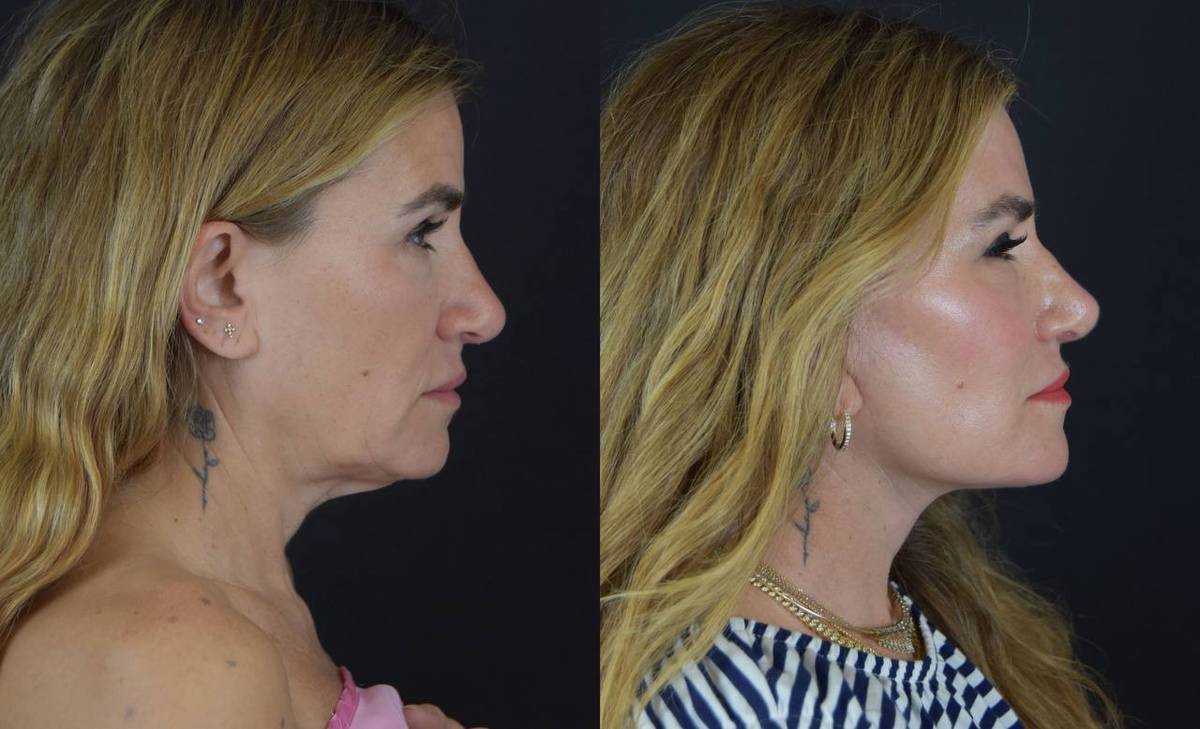
“I had a lower facelift and necklift—not a full facelift—so we focused on the lower part of my face, jawline and neck,” says Webb. “I also had a rhinoplasty and a CO2 laser treatment.”
Technically speaking, Dr. Sunder says she performed a deep-plane lower facelift, and on the neck, she did a lift, but no deep neck restructuring. “With some of my patients, I will reduce the submandibular glands or remodel the digastric muscle, but for Alli, we kept it pretty simple and only addressed her neck with a platysmaplasty.” Total time in the OR was about five hours.
The Rhinoplasty
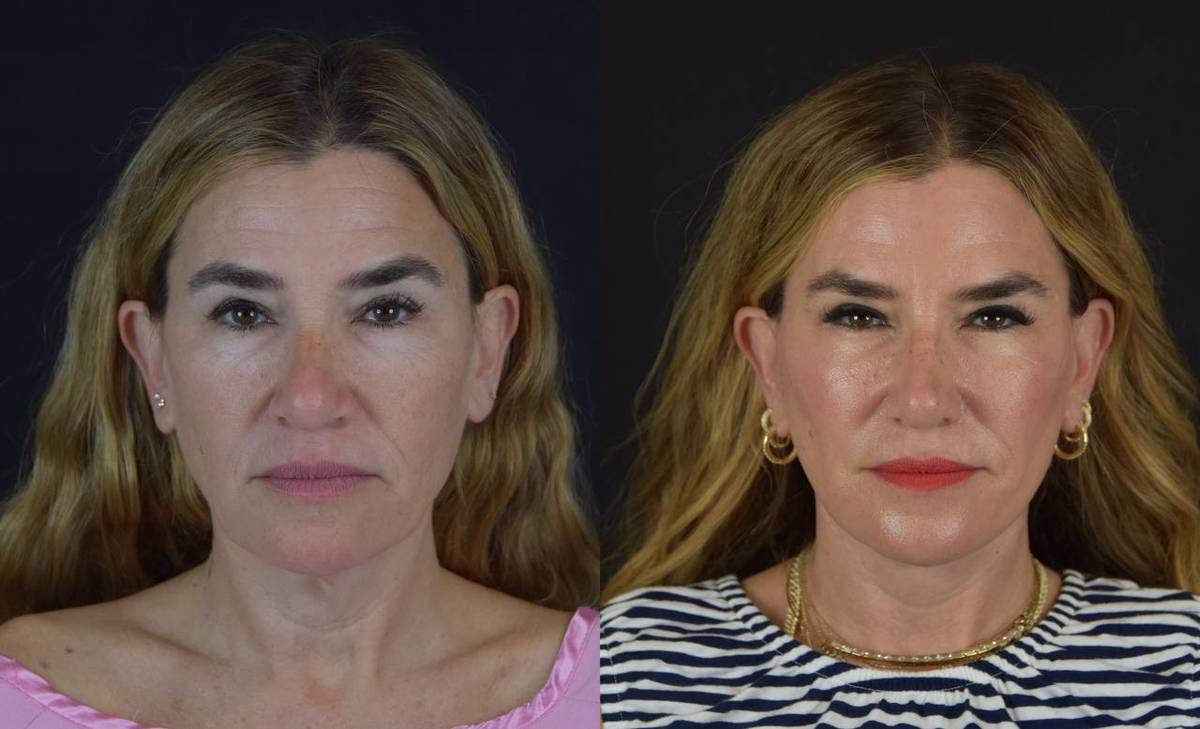
In terms of her rhinoplasty, which was done at the same time, Dr. Sunder says it could be referred to as a tip rhinoplasty. “There was no work performed on the bony part of her nose, so that area was left alone, and I only manipulated the tip cartilages.” Webb says that because she was having a lower facelift rather than a full facelift, Dr. Sunder felt comfortable doing both procedures together, even though she said that's not especially common.
“Over the last decade, I'd started noticing that my nose looked wider in photos,” says Webb. “When I compared pictures of myself in my 20s to more recent ones, I realized I didn't really have the same nose anymore. Dr. Sunder explained that it's actually very common for your nose to widen and enlarge as you age. I had no idea that happened.
In the years before my facelift surgery, she'd occasionally use filler in my nose to subtly refine the shape and give it a little lift. It's amazing what filler can do in that area. But a couple weeks before surgery, we dissolved the filler, so she could make a few small refinements surgically instead. If you compare my before-and-after photos, you'll notice my nose is just a little bit smaller and more refined.”
The Necklift (Platysmaplasty)
Dr. Sunder says that most patients opt to also address their neck laxity simultaneously. “In someone in their 40s and above, you really should not be doing just the neck without doing the lower face because they are contiguous,” she explains. “If someone is bothered by their face, they are usually going to be bothered by their neck in a few years anyway, so you might as well do the two together.
In Webb’s case, she came in wanting to work on her face. I knew that she would not be happy if she did not do her neck. Sure enough, after surgery, she was ecstatic that we addressed the neck as well, especially looking at her ‘before’ photo profile view.”
The CO2 Laser Resurfacing Treatment
“For most of my patients, we do incorporate some sort of resurfacing with the lift,” says Dr. Sunder. “If they are a candidate for CO2, we do CO2. If they have a deeper skin tone and are not a candidate for CO2, we will do fractionated radio frequency, or we might incorporate a peel with the surgery.
That is because the surgery—the lift—only addresses laxity, loose skin, loose muscle and loose tissues. It does not change the quality of the skin. It does not change the fabric of the skin.
For many people, that is part of why they want to have this procedure. They want to rejuvenate their look overall. If you only do the lift without affecting texture, you are only doing 75 or 80 percent of the work.
Resurfacing is a really important part of it. Especially in Alli’s case, as she has really enjoyed the sun over the years, so I thought it was very important to work on that sun damage. Without incorporating CO2, I don’t think her skin would look as luminous and the results would not be as beneficial.”
The Recovery: Good, Bad + Ugly
“I remember Dr. Sunder telling me that recovery would be a journey, and she was absolutely right,” Webb says. “Every stage of recovery, every sensation I would feel—she had prepared me for all of it. The first week after surgery was intense. I went to her office every single day. She told me she has patients who don't always follow instructions, but I did everything exactly as she recommended.
After about two weeks, because I was also recovering from the CO2 laser treatment, my face was basically covered in tiny scabs that I couldn’t scratch. So I was swollen, scabbed and just looked crazy. You have to sleep sitting upright for quite a while, which took some getting used to. Not being able to wash my hair for two weeks wasn't exactly fun either, but it was a small price to pay.
My face was so swollen, so my eyes, which are already naturally small, looked even smaller. My whole face looked bigger, and I definitely had a moment where I thought, Oh my gosh, what have I done?
I was texting Dr. Sunder saying, ‘I don't want to look like this.’ She immediately reassured me, saying ‘Alli, you're so early in the healing process. You're incredibly swollen. This is not your final result.’ Hearing that helped, but you still go through all the emotions.
I also did 10 consecutive days in a hyperbaric chamber, which I really believe accelerated my healing. As the swelling gradually went down, I started thinking, Wow...OK, this is looking like me again. Little by little, I improved.
Dr. Sunder actually laughed and told me, ‘In a few months, you're probably going to come back and say, 'I don't know if we did enough.' That's such a woman thing to say, isn't it?’”
What's fascinating is that, every day, I notice a tiny change. The swelling continues to improve, and I feel a little more like myself. Overall, I'd say it will probably take about a year before everything is truly settled.”
What Surprised Webb Most About Recovery
“One thing Dr. Sunder prepared me for was the numbness,” says Webb. “My ears were numb, the sides of my face were numb, and even now, more than two months later, I still have some numbness. It's much better than it was initially, but she told me that it could take a year—or even longer—for sensation to fully return.
Another thing was just how tight my face felt. I'd wake up every morning feeling like someone was gently pulling my skin. It wasn't sharp pain—it was more of a constant tightness and dull ache. I iced my face several times a day, and for the first month I was definitely sore and uncomfortable.
As the numbness starts to wear off, you also begin feeling little sensations—almost tiny shooting or tingling pains. They're not severe, but if no one had warned me about them, I probably would've been alarmed. Instead, I actually found them reassuring because they meant the feeling in my face was coming back. It was almost like my nerves were waking up again.
I also remember telling Dr. Sunder that my face felt incredibly tight, and she smiled and said, ‘That's the point.’ She reminded me that I'd wanted my skin to feel tighter, and that's exactly what the surgery accomplished. Hearing her say that helped me mentally embrace the sensation instead of worrying about it.
I honestly hadn't appreciated how much of this process is emotional until talking about it now. The physical healing is one thing, but the mental side is just as important.”
The Incisions + Scars
“For Alli, the incision was placed right under or within the temporal tuft of hair, right along the sideburn,” says Dr. Sunder. “It goes around the ear in front, and the placement depends on the patient. For some patients, I place it behind the tragus, which is called a post-tragal incision. For others, I place it in front of the tragus, wrap it around the ear, and it can continue into the hairline depending on how much skin laxity there is.
The skin in front of the ear on the cheek has a different quality, color and texture compared to the skin on the tragus. When we take the skin and put it on the tragus, to me, it can be a telltale sign that someone has had something done. I prefer to make the incision in that crease.
There is also an incision in the submental region, underneath the chin. Many people have a scar under their chin from falling when they were younger. If that is the case, we will incorporate that scar. But even without a previous scar, most people have a crease under their chin that we can hide the incision in.
I usually tell people to give it six weeks before judging the incision because initially it is going to look pink, red, purple—all the colors—and then it will slowly fade over time.”
Webb says that early on her scars were much more noticeable. “The skin almost looked rippled or buckled, like when you've sewn fabric together and it hasn't settled yet. When I saw Dr. Sunder last week, she explained that it's still because I'm swollen in that area. I'm only about two months out from surgery, so she reassured me that it will continue to smooth out over time.
My scars have already faded so much. Eventually they should be virtually invisible. Even when I wear my hair up now, you really can't see them because they're hidden so well in my hairline. One thing I'm very diligent about is scar care. Dr. Sunder had me use Aquaphor while the incisions were still healing, and once they were fully closed, she had me switch to BIOCORNEUM Scar Gel.”
Webb’s Post-Facelift Skin-Care Routine
“Dr. Sunder is adamant about sunscreen,” Webb says. “She keeps reminding me to protect my face, especially after the CO2 laser because it essentially resurfaced my skin. She wants me to preserve those results, and sun exposure can undo them pretty quickly.
A couple of weeks ago, I was finally able to start using my retinol again. She also cleared me to start doing gua sha, which I love for depuffing. I still use my eye masks because we didn't do anything to the upper part of my face. Other than that, I'm mostly back to my normal routine. I tend to layer a lot of products, so it's really just those, plus a lot of sunscreen.”
Why Webb Is Choosing to Be Open About It
“I don't want to be a gatekeeper about my surgery. For me, talking about it feels liberating. That's one of the reasons I'm grateful to people like Catt [Sadler] and Teddi [Mellencamp] for being so open about their experiences. They helped me understand what the process was really like, and hopefully sharing my story can do the same for someone else.
What bothers me is when celebrities aren't honest about the procedures they’ve had because it creates impossible beauty standards. Honestly, I don't see a facelift as being that different from working out or coloring your hair. We do those things because they help us feel good and feel more confident.
I'm 51. My skin has gone through a lot over the years, and this felt like the right time. I didn't feel like I had to do it—I wanted to. And if my experience gives someone else a little more confidence to explore something they've been thinking about, then that's a good thing.”