As a longtime Reddit devotee, I’m basically a virtual fly on the wall for all kinds of conversations about lip filler and other cosmetic treatments happening across the platform. Recently, a post on r/PlasticSurgery caught my attention: One patient shared that TikTok trends had made these treatments seem reserved for younger people, leaving her worried she was “too old to even consider lip filler.” It was a concern I hadn’t come across so candidly before, but one I suspected many women shared.
“After a lot of research, I finally decided to get just 0.5 mL of filler,” Reddit user u/RightNeck5144 wrote in the post (referring to half of a standard 1 mL syringe). “I was nervous walking into my appointment, but my injector was so kind. She listened to what I wanted, reassured me that subtle results were absolutely possible and never once made me feel judged for starting later in life.”
The results left her “so glad” she’d taken the leap. “For me, it wasn’t about chasing youth or trying to look 20 again,” she wrote. “It was about restoring a little confidence and proving to myself that aging and wanting to look your best aren’t mutually exclusive.”
The comments section filled with praise, and it got me thinking about why conversations around aging lips and filler remain so scarce. Is lip filler safe later in life? Can it still look natural as the skin becomes thinner? And do mature lips require a different approach? I turned to two board-certified dermatologists for answers.
Featured Experts
- Doris Day, MD, is a board-certified dermatologist in New York
- Marina Peredo, MD, is a board-certified dermatologist in New York
How Lips Change With Age
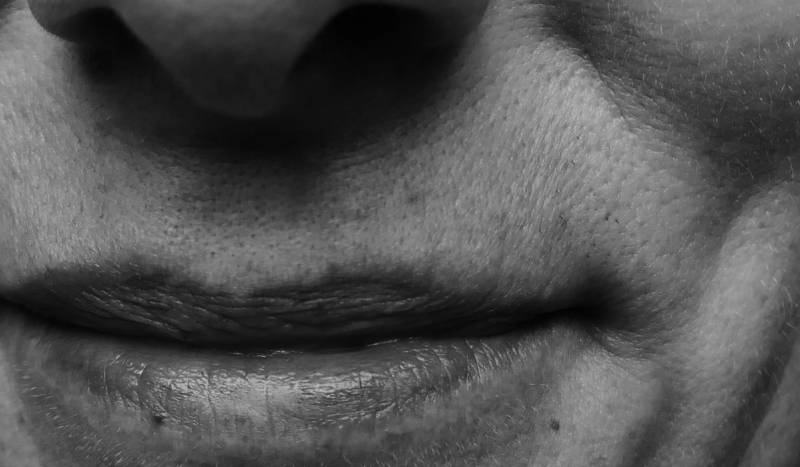
Like the rest of the face, the lips undergo their own set of age-related changes. They gradually lose volume and structural support, while the philtrum—the space between the nose and upper lip—can become longer and flatter, explains New York dermatologist Marina Peredo, MD. The vermilion border, the line where the lips meet the surrounding skin, may also lose definition, the corners of the mouth can begin to turn downward and vertical lines, often called “smoker’s lines,” may become more noticeable.
How Lip Filler Is Done Differently on Mature Lips
Both dermatologists agree that lip filler can be safe later in life, but achieving natural-looking results requires a more tailored approach. New York dermatologist Doris Day, MD, considers the mouth and chin as a single area, using most of the filler to support the surrounding structures and only a small amount within the lips themselves. “Once the area is balanced, lip filler is added for the final touch,” she says.
Dr. Peredo also favors a conservative, highly customized approach. “I use smaller amounts, more precise placement and often several different techniques and fillers—layering—rather than trying to accomplish everything with one syringe,” she says. “The goal is to rebuild architecture while preserving softness and natural movement.”
In practice, that might mean placing a firmer hyaluronic acid filler, such as Restylane-L, along the lip border to restore definition, then using a softer, more flexible option like Restylane Kysse to gently replenish lost volume. To soften vertical lines around the mouth, Dr. Peredo may place tiny droplets of RHA Redensity directly into the creases or use crosshatching, a technique in which fine threads of filler are placed in intersecting directions to create subtle support beneath the skin.
Does Lip Filler Last Differently in Older Patients?
There is no clear evidence that mature lips consistently metabolize filler faster or slower than younger ones. Both dermatologists say age matters less than individual factors such as metabolism, genetics, skin quality, sun damage, smoking history, the type and amount of filler used, its placement and natural lip movement.
Rather than following a fixed schedule, Dr. Peredo reassesses each patient and recommends small, conservative touch-ups when needed to maintain support and natural proportions without overfilling the lips.
Is Filler Alone Enough?
Sometimes, but not always. “Depending on the patient, I may combine filler with small amounts of neuromodulator—a lip flip—especially for perioral lip lines, microneedling or laser resurfacing to improve etched-in lines, texture, and overall skin quality,” says Dr. Peredo. “It is rarely about one treatment; it is about choosing the right combination.”
Dr. Day may also pair injectables with Sofwave to improve skin quality, a consistent skin-care routine or resurfacing lasers such as UltraClear, Fotona and CO2 to address skin laxity, texture and uneven tone.
Ultimately, age isn’t the deciding factor. The right treatment plan depends on the patient’s anatomy, skin quality and desired result. As Dr. Peredo puts it, “The final goal is not to give an older patient ‘young lips.’ It is to restore what time has softened—creating lips that are prettier, smoother, more defined and completely natural.”