The women who book a consultation with New York plastic surgeon Anna Steve, MD aren’t asking to go bigger. Most want back what they lost.
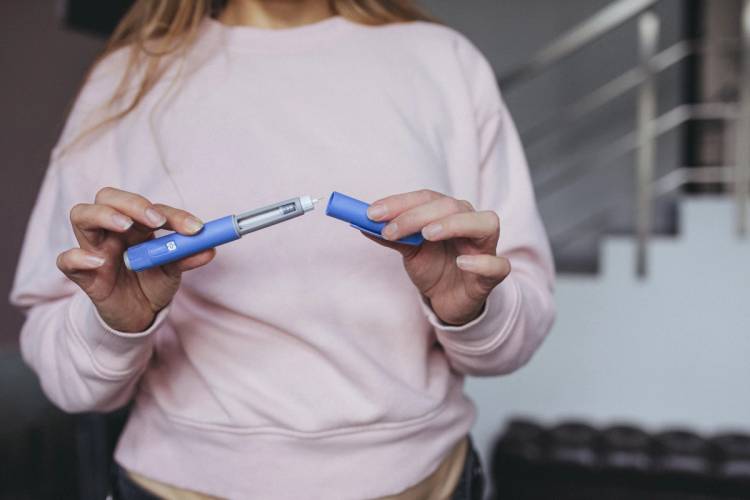
Dr. Steve, who specializes in small-volume breast enhancement and joined NewBeauty’s first State of Aesthetics Roundtable in New York as a guest of Motiva, doesn’t prescribe GLP-1s. “But probably more than 80 percent of my patients are on a GLP-1,” she said. Most of them aren’t patients with obesity. “I see patients who are mostly BMI 21 and less,” she said, and many take the medication for aesthetic reasons.
The Third Hit
The breast changes Dr. Steve sees after GLP-1 weight loss look a lot like postpartum changes, just earlier. For many women, they’re the latest in a series of losses. “I see patients who are in their perimenopausal years who maybe didn’t have as much volume loss with pregnancy and breastfeeding, but they almost get a second hit with perimenopause, and then a third hit with GLP-1,” she said.
That changes the goal of surgery itself. “It’s not implants to be bigger; it’s implants to restore the volume loss,” Dr. Steve said. It’s a story NewBeauty readers have heard firsthand from women describing their own breast restoration after GLP-1 weight loss.
Smaller Implants, More Choice
The industry is moving in the same direction. “We’re seeing the shift towards smaller volume implants,” said Malavika William, who leads global corporate communications and marketing at Establishment Labs, the maker of Motiva implants. She pointed to two looks gaining ground: “The ballerina breast and the yoga breast is very much on trend.”
Motiva has built its range around that kind of subtle result. In October, the FDA approved 28 additional sizes of smaller Motiva implants, going as small as 105 cc, across its SmoothSilk Round and Ergonomix styles. The Ergonomix implant is designed to move with the body for a more natural shape, according to the company. It all fits a year in which implant trends are leaning softer and more proportional.
Patients Ask by Name
Patients have noticed. “Now you have patients coming in saying, ‘I want the Motiva implant,’” said Beverly Hills, CA plastic surgeon Charles Galanis, MD. His practice focuses on breast surgery and body contouring. “That wasn’t something they were that specific about a few years ago.” Some even request Preservé, Motiva’s minimally invasive approach.
Dr. Galanis tied it to the broader push for natural results. “Even in LA, it’s more of a modest size,” he said. “And I think that’s where the Motiva implant has excelled.”
Safety data is part of the conversation, too. Capsular contracture, when scar tissue tightens around an implant, is one of the most common reasons for revision surgery. In Motiva’s U.S. clinical study, the rate was 0.5 percent at five years among 451 primary augmentation patients, according to Establishment Labs.
A Less Invasive Future
Dr. Steve expects the shift to keep going. “I think we’re getting to the point where breast enhancement can be almost thought of more as a procedural or an injectable type of thing than a surgery,” she said. Implant technology is a big part of that, along with renewed interest in over-the-muscle placement that aims to preserve tissue and ease recovery.
It isn’t only about the chest. Austin, TX plastic surgeon Johnny Franco, MD said patients want a fit, athletic look from body procedures too, rather than dramatic size, and newer fat-based products have widened options for issues like implant rippling. Fat transfer remains another route for women who want a modest change.
What to Ask Before You Book
If you’re losing weight on a GLP-1, timing matters. Ask your surgeon whether your weight has stabilized, whether volume alone will give you the shape you want or whether you’ll also need a lift, and how they’ll coordinate with the doctor managing your medication. Dr. Steve, for one, prefers to work closely with prescribers. “As a non-prescriber, I always like to collaborate with people who are sort of experts in their field,” she said.
It’s also worth asking what’s inside your implant and why your surgeon chose it, especially if you’re considering a revision of older devices. William said that transparency is one of the biggest changes she’s seen. “Ten years ago, you think back, and people had no idea what they were putting in their body,” she said. “I feel like this evolution has really brought us closer to knowing those things and being more educated.”