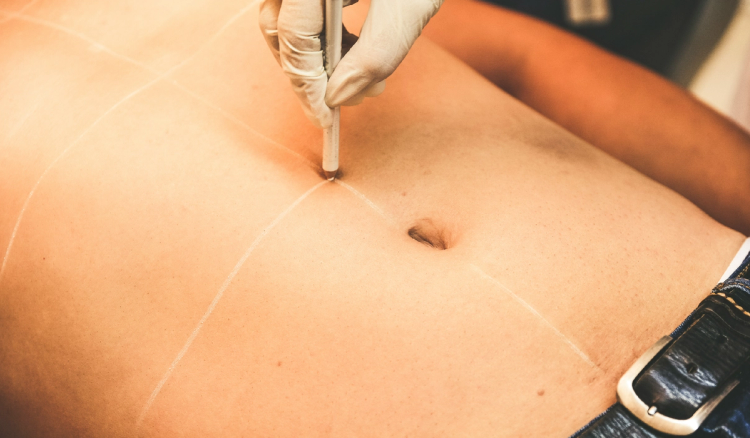
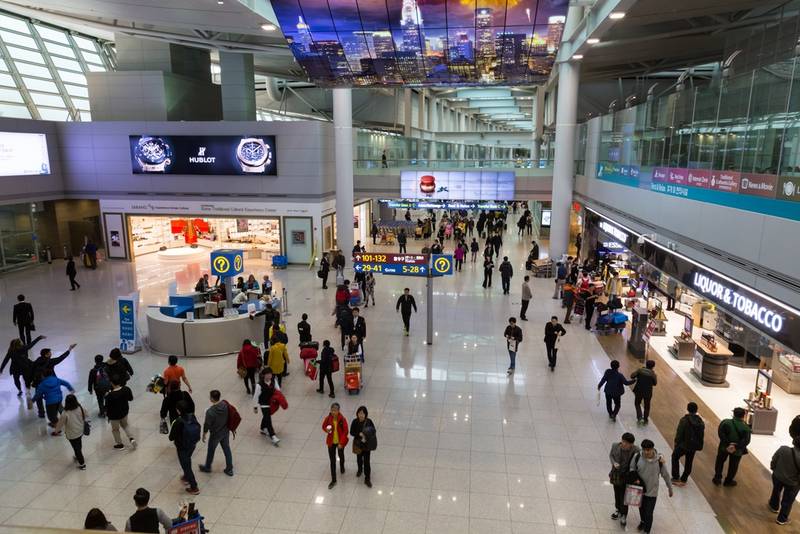
If you’ve ever been sitting at an airport terminal and have found yourself looking for something to occupy your time, you know how convenient it is to have a spa or nail salon inside the airport. Many airports in major cities now boast airport spas where you can get a facial, a blowout and manicures and pedicures while you’re waiting in connecting flight limbo. Now, a South Korean airport is making plans to open a plastic surgery center in its soon-to-be-completed transit terminal.
Incheon International Airport in Seoul, South Korea, has released plans to set up a 2,500-square foot cosmetic surgery center on the third floor of its new terminal that is due to open in January of next year. Medical tourism in South Korea continues to grow, with the number of patients (364,000 last year) traveling to undergo medical treatments jumping 22.7 percent from the previous year, according data included in the plans.
You May Also Like: I Went to Seoul for 3 Days and Tried More Beauty Treatments Than I Usually Get in a Year
While the plans have not been finalized and there are currently no surgeons or doctors who have come forward who are willing to open a clinic in the airport, some of the country’s aesthetic societies have come out to condemn the plans. Both the Korean Association of Plastic Surgeons (KAPS) and the Korean Society of Plastic and Reconstructive Surgeons have spoken out about the dangers of traveling immediately after a procedure. “What if a patient cannot get on their scheduled flight due to some unexpected medical problems that occur after the surgeries or treatments,” said a spokesperson for KAPS.
According to Arcadia, CA, plastic surgeon Art Yu, MD, the venture seems rife with possibility for risks and potential legal and medical problems. “Here in the United States, we are required to see a patient first and give the prospecting patient at least 24 hours before they decide to go ahead with their desired procedures. Giving curious people insufficient time to consider an invasive procedure is utterly unethical, if the patient is not allowed sufficient time to think it over, whether the patient’s health allows or the patient’s schedule allows, not to mention that in Korea, I am not sure if a patient’s legal rights will be honored, at least for people who do not speak the language,” cautions Dr. Yu.
Westborough, MA, facial plastic surgeon Min Ahn, MD, says he doesn’t consider the actual location of the surgery center to be a major problem as long as the facility is accredited and has access to a local hospital. He is more concerned the issue of timing and the risks associated with flying after a surgical procedure. “It’s generally considered safe to fly two weeks after a facelift and one to two weeks after a rhinoplasty,” says Dr. Ahn. “Flying before those times risks negatively affecting healing because of the air pressure changes with flying, the strain associated with traveling (luggage, walking etc.) and the potential exposure to unclean surfaces or sick people.”