If your period has you flashing back to middle school, when you were terrified of bleeding through your clothes and having to call your parents to pick you up, you’re not alone. For some women, perimenopause can feel like learning to manage a period all over again. Your period shows up when it wants, lasts longer than expected and suddenly you’re going through tampons, pads or period underwear at a rate you haven’t experienced in decades.
New York gynecologist Molly McBride, MD, calls perimenopause the “zone of chaos”: Hormonal fluctuations can change both when you bleed and how much. But while heavier periods can be part of the transition, there’s a point when the bleeding deserves a closer look.
Ahead, two gynecologists explain what’s behind heavier periods, when to get checked and what can help.
Featured Experts
- Maral Malekzadeh, MD, is a board-certified OBGYN in Westlake, OH
- Molly McBride, MD, is a board-certified OBGYN in New York
Your Hormones Are All Over the Place
Perimenopause isn’t necessarily a gradual, orderly decline in hormones. “Perimenopause is defined by highly variable estradiol and progesterone with abrupt surges and drops,” says Dr. McBride. “This variability translates directly into unpredictable cycle lengths and flow.”
Ovulation can become less regular, too. “During perimenopause, hormone levels, particularly estrogen and progesterone, can fluctuate significantly, and ovulation may become less regular,” explains Westlake gynecologist Maral Malekzadeh, MD.
When Heavy Bleeding Needs Attention
A changing cycle can be frustrating, but certain symptoms warrant a call to your doctor. “There is no single amount of bleeding considered ‘normal’ for every woman,” says Dr. Malekzadeh. “However, bleeding that lasts more than seven days, requires changing a pad or tampon every hour for several hours or involves frequent large clots is considered heavy bleeding.”
“Bleeding between periods or after sex should also be evaluated,” she adds. Very heavy bleeding accompanied by dizziness, fainting, shortness of breath or chest pain warrants emergency care.
It Might Not Actually Be Perimenopause
Being in your 40s doesn’t mean every change in your period can be blamed on hormones. “Not all irregular bleeding is hormonal,” says Dr. McBride. “You can’t assume a purely hormonal cause.”
Fibroids, polyps and thyroid problems can also cause heavier or irregular bleeding. For new or worsening symptoms, Dr. McBride recommends looking for other causes with tests such as an ultrasound or a thyroid check.
Age matters, too. “An endometrial biopsy should be done on women over 45 with irregular heavy bleeding to rule out hyperplasia or malignancy,” she says. Hyperplasia is an abnormal thickening of the uterine lining, and a biopsy can also check for cancerous changes.
All That Bleeding Can Tank Your Iron
If you’re exhausted, weak or suddenly winded walking up the stairs, your period may be part of the equation. “Heavy menstrual bleeding is one of the leading causes of iron deficiency and iron deficiency anemia and this risk actually peaks in the perimenopausal transition,” says Dr. McBride.
Dr. Malekzadeh says the effects can build over time. “Heavy menstrual bleeding can gradually deplete the body's iron stores and eventually lead to iron-deficiency anemia,” she says. Other symptoms include headaches and dizziness. A blood count and, when appropriate, iron or ferritin testing can help identify the problem.
Iron supplements alone won’t address the bleeding behind a deficiency. “Treating both the iron deficiency and the underlying heavy bleeding is important,” says Dr. Malekzadeh.
You Don’t Have to Just Deal With It
There are options beyond stocking every purse, desk drawer and glove compartment with period products. Treatment depends on the cause and severity of the bleeding, as well as your health and reproductive goals. Dr. Malekzadeh says options can include hormonal treatments such as a levonorgestrel IUD or birth-control pills, as well as nonhormonal medications such as tranexamic acid or certain anti-inflammatory medications.
If fibroids or polyps are behind the bleeding, procedures may be recommended. Dr. McBride also points to procedures including endometrial ablation or radiofrequency treatment. “The right treatment is individualized based on the severity of bleeding, anemia, underlying cause, and whether the patient wants contraception or future pregnancy,” says Dr. Malekzadeh.
Getting Through the Heavy Days
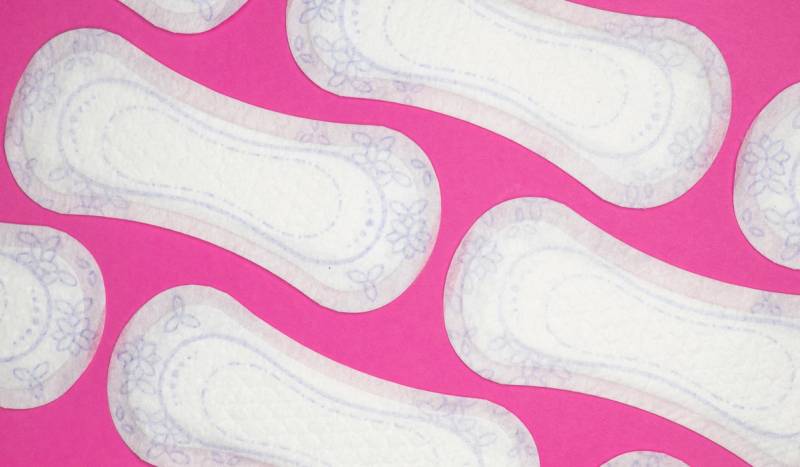
While you’re figuring out what’s behind the change, period underwear, overnight or high-absorbency pads and extra products kept nearby can make heavy days more manageable. Tracking your periods, flow, clots and other symptoms can also give your doctor useful information.
“Exercise, a Mediterranean or anti-inflammatory diet, iron-rich foods and, when needed, iron supplementation are lifestyle tips that can help, too,” says Dr. McBride. “Heat and, when medically appropriate, NSAIDs such as ibuprofen may also help with cramping.”
Keep your doctor in the loop if heavy bleeding persists, even if you’re managing it day to day. “Women experiencing persistent heavy bleeding should also ask about checking their iron levels rather than trying to manage the problem solely at home,” says Dr. Malekzadeh.