In 2017, a routine round of lab testing by the Korean Women’s Environmental Network turned up something unsettling: trace volatile organic compounds in conventional sanitary pads sold across the country.
The finding didn’t stay a footnote. “It sparked a nationwide conversation about menstrual health and ingredient transparency, with women asking more questions about materials, manufacturing processes and what goes into the products they use every month,” says Yanghee Paik, CEO and co-founder of Rael, a Korean American–founded period and holistic wellness brand. “That awareness raised expectations for the entire category and accelerated innovation—from organic cotton and more thoughtful materials to new formats and technologies designed around women’s changing needs.”
Nine years later, the gap that moment created is still visible in the numbers. Clean period care now makes up more than 40 percent of the South Korean market, Paik says, compared with less than 10 percent in the U.S. It’s a wide enough margin to call it innovative. “I wouldn’t necessarily say K-Beauty is ahead, but I do think the same discerning consumer culture that has driven innovation in Korean beauty has also encouraged a more intentional approach to femcare in Korea,” says Hyoyi Kim, co-founder and CEO of INERTIA, a South Korean femtech brand. “The conversation has expanded beyond absorbency to include materials, comfort, safety and the overall experience of period care.”
Whatever the framing, both founders trace their companies back to the same frustration: A category that women have used for decades without ever expecting it to improve. For Paik, that frustration surfaced when she moved to the U.S. “I was surprised by how little the U.S. period care category had evolved compared to what I grew up with in Korea,” she says. She founded Rael in Los Angeles in 2017, starting with Organic Cotton Cover Pads ($15) that have since become a consistent number-one seller on Amazon and landed on shelves at Target, Walmart and Ulta Beauty. Two years later, she expanded back into Korea, building a product development team there specifically to stay close to what she calls the country’s “culture of continuous innovation.”
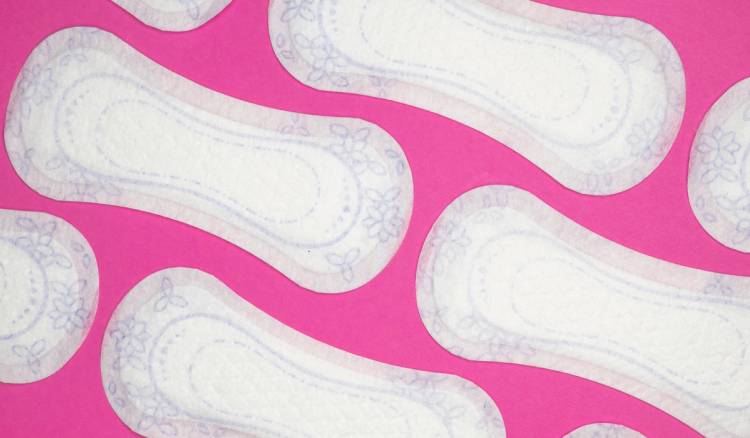
For Kim, the starting point was personal. She spent years managing severe menstrual cramps and, alongside three fellow female scientists, set out to build the pad she wished existed. The result, INERTIA’s PRISM Pad ($10), centers on a patented absorbent core called LABOCELL, which the team spent more than 30,000 hours developing. “We wanted a pad that could absorb quickly, lock liquid away and stay thin and comfortable throughout the day,” Kim says. PRISM pairs a 100-percent organic cotton topsheet with the plant-based, microplastic-free core, and skips chlorine, fragrance and dye entirely—choices Kim says are necessary for a product that touches “one of the most sensitive areas of the body.”
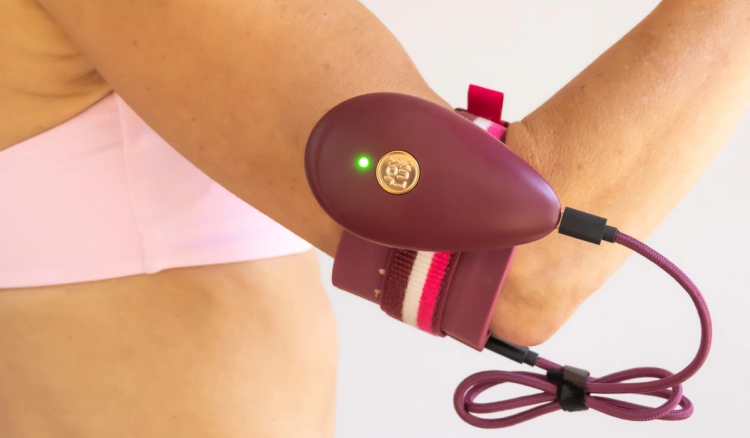
Rael’s answer to the same brief has taken a more sprawling form. Its pads, now in their eighth iteration, use what the brand calls Leak Locker Technology to quickly capture and hold flow, and are dermatologist-tested with a cotton cover verified through the Organic Content Standard. But the innovation Paik points to goes beyond the core pad. Rael brought disposable period underwear with an organic cotton cover to U.S. shelves (a format Paik says has long been standard in Korea for overnight and heavy-flow days), combining the absorbency of four pads with 360-degree leakproof coverage. It also launched Airy Cool Pads in Korea, engineered with a more breathable cover and odor control that can lower surface temperature by up to 4 degrees Celsius, a direct response to the country’s humid summers. Newer Slim Applicator Tampons ($19) use what Rael calls 360-Degree Expansion Technology to let a certified organic cotton core expand in all directions, paired with a BPA-free, contoured applicator. There’s even Heating Patches ($13), infused with botanical ingredients, for cramp relief on the go.
What both founders describe, underneath the specific technologies, is a category that’s stopped treating the period as an isolated event to manage and started treating it as one phase of a cycle worth designing around. Rael calls its version of this Holistic Cycle Care, a philosophy built around the idea that hormone shifts across the menstrual, follicular, ovulatory and luteal phases affect everything from skin to cramps to mood, and that a single brand can serve all of it. That’s why Rael’s catalog now includes acne patches and an acne-focused skin-care line, sheet masks women can rotate based on how their skin feels that week, a cramp roll-on and hormone-support supplements, in addition to its period products. Kim describes a similar widening at INERTIA, where the same scrutiny applied to PRISM is now moving into intimate care, nutritional supplements and hair and scalp care. “Brands are asking different questions than they were ten years ago,” she says, “and women are expecting more from every product they use to support their health and well-being.”
Also worth noting is that this shift hasn’t come only from the product side. Paik points to Rael’s donation partnerships—more than a million products given through I Support the Girls, plus 2.2 million more distributed after the January 2025 Los Angeles wildfires through the LA Food Bank, Baby2Baby and The Pad Project—as evidence that “better period care should also be more accessible,” not just better engineered.
Whether or not K-Beauty is technically “ahead,” as Paik puts it, or simply asking better questions, as Kim frames it, the American shelf is starting to look more like the Korean one: More organic cotton, more attention to what a pad is actually made of, more products designed around comfort rather than just containment. Kim sums up the goal in a line that could apply to any good brand’s entire strategy: “I’ve always believed that the best products are the ones you never have to think about. If women can go about their day feeling comfortable and confident without having to think about their period product, then we’ve done our job.”