If you’ve ever researched facelifts or other cosmetic procedures online, you’ve likely come across one of my educational articles on the risks, benefits, cost and anything else I thought a prospective patient would want to know before booking the procedure. The key word here is “thought.” Yes, the technical aspects in my articles were correct, but I missed some nuance that only comes from actually undergoing the procedure.
So, after 20-plus years and an infinite number of injectables and energy-based device treatments, what made me take the plunge? My sister. She told me it was time in that blunt way that only a sister can. That said, looking at my face on Zoom interviews while editing them also played a major role. (The Zoom Boom is very real.)
Here’s my story, starting from the beginning to where I am now, six weeks later.
Back Story
I come from a long line of vain people, peppered with a few not-so-vain family members. As such, a quick look around our Thanksgiving table provided a pre-artificial-intelligence before-and-after gallery of what I might look like if I aged naturally vs. intervened. This article title should tell you where I landed.
Many of my articles provide advice on how to choose the right provider for your cosmetic surgery procedure. After many official and unofficial part-of-my-job consultations, I chose New York facial plastic surgeon Mark Zimbler, MD. Why? Old-school word of mouth. I knew a handful of moms in adjacent social circles who went to him for similar concerns, and I was envious of how good they looked.
Of course, I still did the requisite research. Was he board-certified by the right boards? Check. Was he a super-specialist? Check. (Dr. Zimbler is a facial plastic surgeon, which means he treats only the head and neck.) Was his pedigree prestigious? Check. Were his online reviews solid? Check. (But even if they weren’t, I give a lot more cred to word-of-mouth reviews and results.)
The Consultation and the Procedure
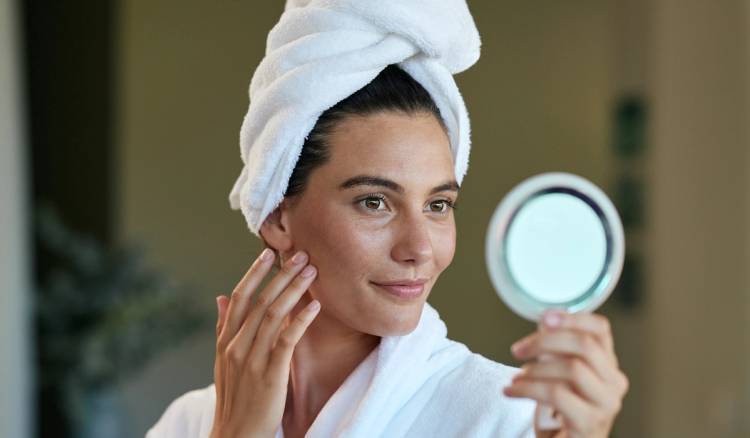
Dr. Zimbler’s office staff was pleasant and accessible, and the consultation focused on me. Holding a mirror in front of my face, he wanted to know what bothered me most. There was no upselling, no judgment and no posturing. He listened to my concerns and shared his professional opinion.
The diagnosis? Submental fullness, i.e., chins. The treatment? I am calling it a lower facelift with a little liposuction because that sounds less dramatic, but technically it was a modified deep plane facelift with platysmal band plication and facial liposuction.
Essentially, this procedure addresses the deeper layers of the face beneath the superficial musculoaponeurotic system (SMAS), i.e., muscles and fat pads. The surgeon repositions the midface, jawline and neck tissues by releasing key ligaments. Platysma plication repositions and tightens the platysma muscle, a broad, thin muscle just beneath the skin of the neck and lower jaw. (Note: I am highly claustrophobic and I can’t even bear to wear a turtleneck or a necklace, so I was pretty anxious about anyone tightening my neck, but so far, so good.) The liposuction vacuums up the extra fat in the area.
Surgery Day, Recovery and Unexpected Lessons
The procedure took three or four hours, but I don’t remember any of it. (Read: the drugs were awesome.) I spent 48 hours with a tightish wrap around my face. I did bruise on one side despite following all anti-bruising instructions to a T. (Arnica by mouth and topically, plus eating lots of bromelain-rich pineapple before surgery.) The incisions (or now fading scars) are well hidden behind my ears.
I have written about filler residue that can interfere with a facelift, and I have had fillers on my lower face (lots of them). I’ve also had the area treated with multiple energy-based devices to build collagen and sharpen my jawline. While I had no issues, these minimally invasive treatments can create obstacles. For example, lasers and other energy-based technologies tighten deeper tissue and can cause scarring, which can make surgery more difficult, Dr. Zimbler told me. This is another reason to choose a highly experienced provider—wouldn’t want this to be someone’s first rodeo.
Recovery was not extensive (and I am a known complainer). I ate soft foods for a few days: scrambled eggs, pastina with vegan low-salt butter and parmesan cheese (highly recommend), smoothies (only really smooth ones) and carrot soup were my go-tos. I had to sleep on my back for the first week—and a backrest pillow with arms proved to be a good investment. Some stitches were removed in a week, and the rest should dissolve on their own.
I also learned that derm rollers are more than just TikTok fodder. I have gotten many sent to me over the years with new must-try skin-care products, and I finally used a rose quartz and a jade roller to help with the swelling.
Something else I never knew: Your hair—even dry, frizzy hair like mine—will be greasy (like, really greasy) for a few weeks due to the ointment used during the procedure to keep your hair away from the incision sites. My hairdresser, Amanda Ramos (@amandaramos31), has straightened the hair of many post-facelift patients. Her advice? Use a clarifying shampoo. It helped!
What I Wish I Would Have Written
I’ve written tons of lists of questions to ask your surgeon before, during and after a procedure, but I realize there is only one question that matters, and it’s a multipurpose one: Is this normal?
I have a headache. Is this normal? Yes.
My jaw feels tight. Is this normal? Yes.
I feel something weird behind my ears. Is this normal? Yes.
I only have bruising on one side of my face. Is this normal? Yes.
I have very little feeling above my cheeks. Is this normal? Yes.
The requisite follow-up is how long will [said symptom] last, and there is no one-size-fits-all answer. My headache is gone, my jaw is back to normal, my bruise has (mainly) faded, my hair is back to being dry and frizzy, but I still can’t feel anything above my cheeks.
It’s almost six weeks out. I still haven’t gone back to the gym, but that’s largely on me; I am pretty sure I have the all-clear. I am still applying Biocorneum to the scars behind my ears—not the easiest area to see, so it’s hard to tell if it is working. My friends who knew I had the procedure have been complimentary, and my sister is especially pleased. That said, nobody else has really noticed a difference, or at least they haven’t said anything if they do. Looking natural and undone is kind of the point of aesthetic surgery today, so I’ll take this as a win.
I am happier when looking at my own face on Zoom and no longer have to fast-forward through the parts where I am talking—so that’s progress.