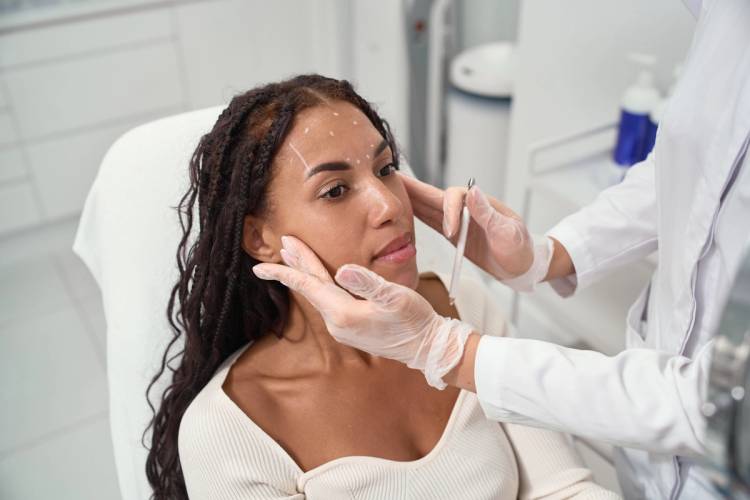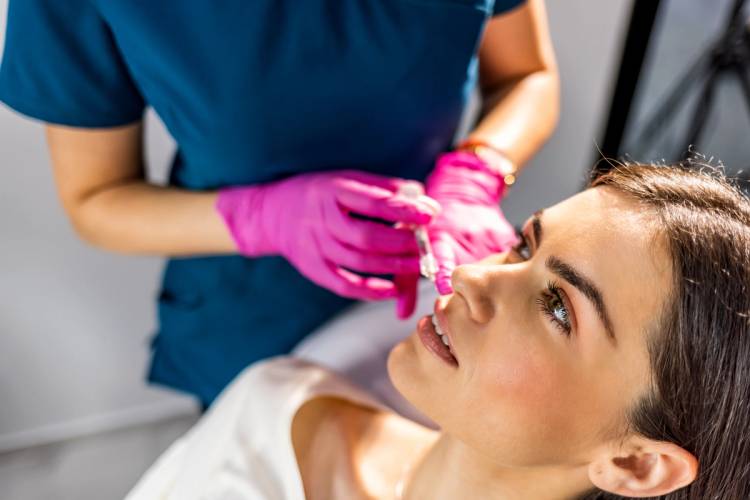
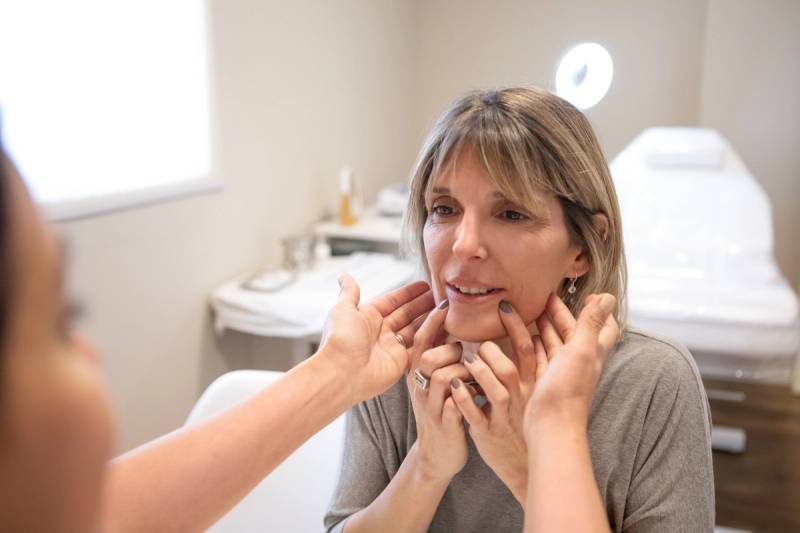
The most skillfully placed filler in the world can only take you so far if your skin isn't in good shape. Austin, TX oculoplastic surgeon Sheila Barbarino, MD explains it with a tailoring analogy: "I can tailor an old suit, but if the suit's still wrinkly and soiled, it's not going to look as good as it could if we ironed it out and got out the stain."
That thinking is behind one of the more interesting pairings in aesthetics right now. Obagi Medical, a name most of us know from skin care, now has two FDA-approved hyaluronic acid fillers in the U.S., Obagi saypha MagIQ and Obagi saypha ChIQ, both made by Austrian manufacturer Croma-Pharma. Dr. Barbarino traveled with me to Vienna to see how the fillers are made, and on the latest episode of The Beauty Authority, she breaks down what each one does and why she treats filler and skin care as a package deal. Press play to watch, or keep scrolling for the takeaways.
New to the U.S., Not New to Injectors
Croma's fillers have been used outside the U.S. for years, and Dr. Barbarino, who regularly attends international conferences, had heard about them long before they arrived here. "People have loved their products for years and we've never been able to experience them here in the United States," she says.
She now uses them in her own practice and points out that American patients aren't getting a trial run. "It's the same exact product," she says. "It's just that I finally get to use it in the United States."
What MagIQ and ChIQ Actually Do
ChIQ is the more robust of the two, with a higher G prime, the measure of how firm a gel is and how much lift it gives. Dr. Barbarino uses it to shape the cheeks and chin. As we age, the bone in the chin regresses and the skin loosens, and a small amount of filler can sharpen the jawline and frame the face. In the cheeks, the goal is the soft apple of a youthful face, not a sharp, sculpted ridge. "Nobody wants this alien-looking bold cheek," she says.
MagIQ is her pick "when someone just likes hydration and a little bit of shape and definition." She calls it seamless and easy to work with, and because it isn't highly hydrophilic, patients don't tend to swell much afterward.
Why Skin Care Is Part of the Plan
Dr. Barbarino says patients are finally catching up to what doctors have been saying for years. Injectables restore structure, but they can't fix texture, tone or elasticity. Now, once she has treated someone's midface, tear troughs or jawline, the next question is usually what they should be using at home. "If you've got leather skin that doesn't have good elasticity and hydration, then you've lost the game," she says.
Her approach to a routine is realistic. The best regimen is the one you'll actually use, so she points patients to the workhorses: retinol at night for anyone over 35, vitamin C during the day and daily sun protection. She keeps her own routine to about four products. "Once it gets onto fifth and sixth and seventh bottle, I just don't have the bandwidth," she admits.
She's also excited about the newer ingredients showing up in Obagi's latest launches, including copper peptides and NAD, and she's a fan of the brand's lash and brow serum. Fuller lashes and brows, she notes, are a subtle sign of youth that's easy to overlook.
Is It the Filler or the Injector?
Filler has had a rough few years, with overfilling and migration dominating the conversation. Dr. Barbarino traces it to a perfect storm: patients studying their faces on Zoom, a post-pandemic rush back into offices and the rise of GLP-1 medications causing facial volume loss.
The problem, she says, is relying on one tool for everything. "When you have a hammer, everything looks like a nail," she says. Some concerns call for energy-based devices, threads or surgery instead of, or in addition to, filler. "If you just keep filling up a saggy balloon, it's just going to look like an overfilled balloon."
Her benchmark for good filler is counterintuitive. "You should never, ever, ever look like you've gained 10 pounds when you've had filler," she says. "You should always look like you've lost weight." Once the initial swelling settles, you should look more structured and well-rested, and ideally no one, not even your injector, should be able to tell exactly what was done.
Go In With a Concern, Not a Request
Dr. Barbarino likes an educated patient, but she'd rather hear what's bothering you than a list of treatments you've already decided on. A good provider will weigh your downtime, budget and anatomy and may suggest something you hadn't considered. "Your provider might have a better option or better treatment that might actually give you the result you're looking for," she says.
Follow The Beauty Authority on Spotify, Apple Podcasts and Instagram at @thebeautyauthoritypod for more conversations with leading beauty experts.