
When it comes to hair health, misinformation runs rampant. Do supplements even work? Are silicones really the enemy?
We asked leading hair experts to separate fact from fiction on everything from scalp care to in-office treatments. Here’s what to know before changing your hair-care routine—or your expectations.
Featured Experts
- Shab Caspara is a board-certified trichologist and founder of Caspara Studio
- Jody A. Levine, MD is a board-certified dermatologist in New York
- Nina Hartman, MD is a board-certified dermatologist in Washington D.C.
Myth: You Shouldn't Wash Your Hair Every Day
Verdict: Fiction
While daily washing is not inherently bad, Shab Caspara, trichologist and founder of Caspara Studio, says it depends on your scalp type and the shampoo you’re using. “Unlike deep-cleansing and harsh shampoos, gentle and sulfate-free alternatives used daily or every other day can maintain a balanced scalp microbiome and prevent buildup that can clog follicles and cause thinning.”
TL;DR: Washing your hair every day is fine if you use gentle, sulfate-free cleansers.
Product to try: Neutrogena Hair Restore Strength + Purity Shampoo ($11)
Myth: Topical Products Can Help Reverse Thinning Hair
Verdict: Fact
Minoxidil (2 to 5 percent) remains the gold standard for reducing shedding and promoting growth, and is backed by numerous clinical trials and FDA-approval for men and women. For those seeking a non-minoxidil approach to fuller-looking hair, New York dermatologist Jody A. Levine, MD says “certain other topicals can encourage thicker, healthier hair depending on the cause of hair thinning.” She cites peptides, rosemary oil and caffeine for their potential to boost circulation and support a healthy follicle environment. Peptide-based serums, for example, aim to strengthen the scalp’s foundation and improve follicle signaling, making them a popular option.
Washington, D.C. dermatologist Nina Hartman, MD adds that emerging evidence shows topical finasteride or dutasteride can block hormonal effects of hair loss. “Rosemary oil also has some clinical evidence: a 2015 study showed that 1-percent rosemary oil performed similarly to 2-percent minoxidil in increasing hair counts, but the evidence is less robust than that for minoxidil,” she notes.
Both physicians recommend first consulting a board-certified dermatologist to identify the underlying cause of the hair thinning and determine the most effective treatment plan.
TL;DR: Minoxidil is a proven solution to reduce shedding. Rosemary oil, peptides and topical finasteride or dutasteride can also move the needle in some cases.
Product to try: NIOXIN Age Defense Serum ($50)
Myth: Silicones Are Bad for Hair Health
Verdict: Both
Silicones have gotten a bad reputation in recent years, but Caspara says that it’s only true for certain types. Heavy silicones like dimethicone can coat the scalp and lead to buildup, dullness and irritation if they’re overused. However, lightweight, water-soluble silicones can actually benefit hair when they’re properly formulated. “These include dimethicone copolyol, PEG-8 dimethicone, cyclomethicone and amodimethicone,” Caspara explains. “They rinse out easily, add slip and shine, and create a protective barrier that minimizes frizz and heat damage without weighing the hair down.”
TL;DR: Check your labels! Some silicones weigh hair down; others can help protect and smooth.
Myth: Heat Styling Damages Hair
Verdict: Fact
“Thermal styling tools can cause irreversible cuticle damage after even one use by breaking down the hydrogen and disulfide bonds that give hair its strength and structure,” says Caspara. Once these internal bonds are weakened, the hair becomes more brittle, dull and prone to breakage. “Always apply a heat protectant before styling to create a barrier that reduces bond degradation, protein loss and dryness.” If you want to skip the damage altogether, embrace air-drying with a styling cream that adds definition and smooths frizz without the heat.
TL;DR: Heat breaks hair bonds. Always use a protectant.
Product to try: Crown Affair The Smoothing Air Dry Cream ($38)
Myth: Frequent Trims Make Hair Grow Faster
Verdict: Fiction
Don’t cancel your next trim appointment just yet. Caspara says that while trimming doesn’t influence growth at the follicle level, “it does prevent split ends and breakage from traveling up the hair shaft, helping you maintain length and healthier-looking hair over time.”
TL;DR: Trims don’t speed up growth, but they help keep the length you have.
Myth: Switching Shampoos Regularly Can Keep Hair Healthy
Verdict: Fiction
Contrary to popular belief, your hair doesn’t “get used to” products. “Your shampoo may only seem less effective if you’ve changed your routine, like added heavy masks or styling products that coat strands with hard-to-remove silicones,” says Caspara. Her advice: Don’t swap shampoos unnecessarily. Instead, use a clarifying formula occasionally to remove buildup and restore your hair’s manageability.
TL;DR: Stick with what works, and clarify occasionally if buildup occurs.
Myth: Hair Supplements Don't Actually Work
Verdict: Fiction, with nuance
Hair supplements can help, but only under the right circumstances. “If thinning or shedding is linked to a nutritional deficiency like low iron, zinc, vitamin D or biotin, then supplements can absolutely make a difference,” says Dr. Levine. “But if the hair loss is driven by genetics or hormones, a supplement alone may not be very effective.”
Dr. Hartman says biotin “is only beneficial in cases of true biotin deficiency, which is extremely rare,” and warns that high doses can interfere with lab tests. She notes that other widely marketed ingredients like collagen and saw palmetto lack strong evidence for stimulating new hair growth, “but clinically studied options such as Nutrafol and Viviscal have published clinical trials supporting their benefits,” and she often recommends these to patients.
Still, supplements are seldom a cure-all. “They can be helpful, but they are rarely the only treatment needed for hair loss,” says Dr. Hartman. Addressing underlying causes with a doctor and combining therapies will provide the best results.
TL;DR: Supplements can help when a vitamin deficiency is the cause. Choose evidence-based brands and consult a dermatologist.
Product to try: Viviscal Shed Control Hair Supplement ($33.50)
Myth: A Healthy Scalp Equals Healthy Hair
Verdict: Fact
“There is no doubt that a healthy scalp is the foundation for growing healthy hair,” says Dr. Hartman, noting that the scalp houses the hair follicles, oil glands, blood vessels and many immune cells. “A well- balanced microenvironment around the hair follicle is essential to encourage healthy hair growth.”
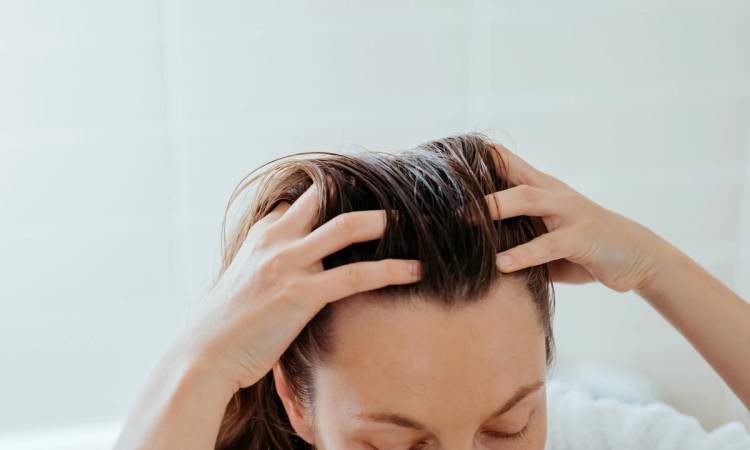
Regular cleansing, gentle exfoliation and hydration help maintain a calm, clean scalp. “When it’s clogged with oil, dead skin or product buildup, follicles can struggle to grow healthy strands,” Dr. Levine adds. However, while good scalp care creates the best environment for strong, shiny hair, both experts note that stress, diet and lifestyle choices also play a role, making a holistic approach essential.
TL;DR: Scalp health matters. Keep it clean, hydrated and balanced.
Myth: Hair Loss Is Always Genetic
Verdict: Fiction
While genetics play a major role in hair loss, they’re far from the only factor. “Stress, diet, medical conditions, hormonal shifts like pregnancy and menopause, and lifestyle choices such as smoking can all lead to hair thinning or loss,” Dr. Levine says.
Dr. Hartman adds that “most cases of hair loss are a mix of genetic predisposition and environmental triggers, which is why a comprehensive evaluation by a board-certified dermatologist is essential to pinpoint the cause and create an effective treatment plan.”
TL;DR: Genes matter, but so do stress, diet, hormones and health conditions.
Myth: Hair Transplants Are the Only In-Office Solution for Hair Loss
Verdict: Fiction
“There are many great in-office treatments that can help stimulate growth and improve density, like platelet-rich plasma (PRP),” says Dr. Levine. “PRP is supported by dozens of randomized controlled trials and meta-analyses showing significant improvements in hair density and thickness,” adds Dr. Hartman.
The process involves drawing a small amount of blood, spinning it in a centrifuge to isolate the platelets rich in growth factors, and then injecting those platelets into the scalp. Most patients need three to four sessions spaced four to six weeks apart, as well as maintenance every six to 12 months.
Emerging hair-growth options include exogenous growth factors or exosomes, which are often paired with lasers or microneedling to boost penetration, Dr. Hartman explains. “While this evidence is exciting, these treatments are not FDA-approved for injection at this time and are currently only used topically.”
TL;DR: PRP is proven, and new regenerative hair-loss treatments are on the horizon. Always consult a dermatologist or plastic surgeon to find what’s best for you.