You may have heard of lipedema in passing, and lately, you’re likely hearing about it more. Celebrities—including Doja Cat—have opened up about the condition, bringing attention to something many women didn’t even realize had a name. But even with that increased visibility, it’s not always easy to tell what you’re looking at. For many women, figuring out whether it’s lipedema or simply cellulite takes time and a closer look. Here’s how experts tell the difference.
Featured Experts
- C. Bob Basu, MD is a board-certified plastic surgeon in Houston and the president of the American Society of Plastic Surgeons
- Peter D. Geldner, MD is a board-certified plastic surgeon in Chicago
What Lipedema Actually Is
Lipedema is often mistaken for stubborn fat, but it behaves very differently. It is a progressive condition that changes how fat is stored and how it feels over time. “Lipedema was first described in 1940 at the Mayo Clinic and is a progressive, often painful, disproportionate deposition of subcutaneous fat,” says Chicago plastic surgeon Peter D. Geldner, MD. “Lipedema typically occurs in female patients and is not related to diabetes, obesity or lymphedema,” he adds.
The condition usually appears evenly on both sides of the body and does not change with diet or exercise. Over time, the feel of the tissue can shift as well. “Lipedema occurs in a bilateral fashion with palpable subcutaneous nodules that can coalesce and become tender. Easy bruising is often reported,” Dr. Geldner adds. In simple terms, the area may feel sore, lumpy or unusually sensitive, unlike typical cellulite.
Why It Gets Confused With Cellulite
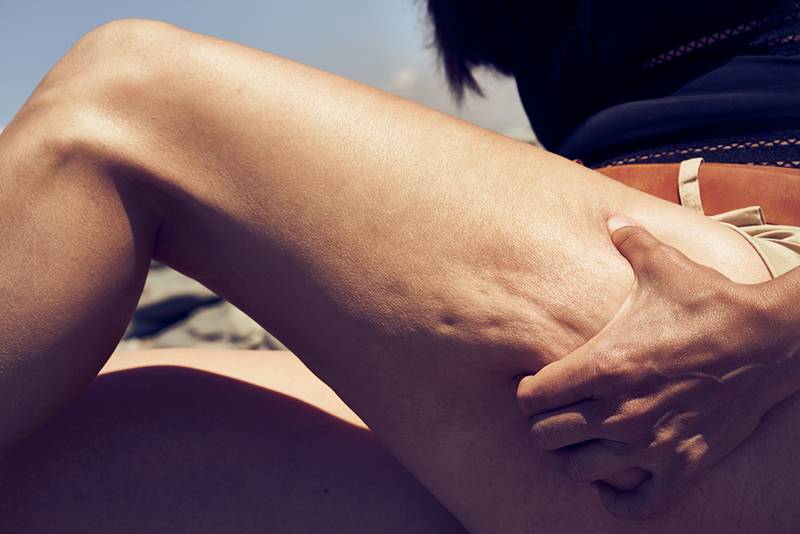
Lipedema can resemble cellulite, especially early on, but the underlying cause is different. “Cellulite is thought to be relative shortening of fibrous subcutaneous tissues which produce dimpling of the skin,” says Dr. Geldner. It is structural and extremely common.
Lipedema follows a different pattern. “Though the appearance can resemble cellulite, it is a distinct entity,” he says. “If the dimples are tender or progressive, lipedema is more likely.” While cellulite may appear uneven, it typically doesn’t hurt to the touch, bruise easily or become more painful over time, which is one of the clearest ways to tell the difference.
Signs That Point to Lipedema
Lipedema often presents in a recognizable way. “A key distinction is that the hands and feet are typically not impacted, which can create a noticeable transition,” says Houston plastic surgeon and ASPS President C. Bob Basu, MD.
It also does not respond to weight loss, which is often what leads people to question what they are seeing. “Common signs include a symmetrical buildup of fat that does not improve with weight loss,” Dr. Basu explains. Along with tenderness and swelling, many patients say their legs feel weighed down by day’s end, even without increased activity.
Why Diagnosis Is Tricky
Even with these signs, lipedema is not always easy to identify. “There is no single diagnostic test, so identification relies on recognizing characteristic patterns of fat distribution and symptoms,” says Dr. Basu.
It is also often confused with more familiar conditions. “The problem is that this diagnosis can resemble other conditions, so diagnosis can be problematic,” Dr. Geldner explains. Many patients are told it is related to weight or lifestyle before getting a more accurate answer. At the same time, cellulite can coexist with lipedema, making it harder to tell where one ends and the other begins.
What Treatment Looks Like for Each
Lipedema care is focused on managing symptoms over time. “Compression therapy is the first option,” says Dr. Geldner, noting that this may include compression stockings or sequential compression devices. Diet and lifestyle changes can help support comfort, but they do not remove the condition.
If those measures are not enough, surgery may be considered. “In lipedema, liposuction can play a role as part of a medical treatment plan by removing abnormal fat deposits and helping reduce symptoms such as pain and limited mobility,” says Dr. Basu.
Cellulite treatment is different. It is cosmetic and focused on improving skin texture. “For cellulite, liposuction is generally not a primary treatment option and can potentially make cellulite worse,” Dr. Basu says. Experts say energy-based treatments like Sofwave, which target the skin’s underlying structure, along with treatments that release fibrous bands, such as Avéli, can show some improvement.
If what you are seeing does not respond to the usual fixes or comes with pain, easy bruising or a heavy, uncomfortable feeling, it is worth looking into further. Cellulite is common. Lipedema is not. Knowing the difference is what helps you take the next step.