Hair glosses may have once been reserved for salon use only, but now we have many DIY options available. In less than 20 minutes (sometimes as little as five), in the comfort of our own bathroom, we can transform our hair. Grab a gloss when the goal is extending the life of your color between salon appointments, or adding next-level shine to natural hair. Here's everything to know about at-home hair glosses, and which ones are worth a try.
Featured Experts
- Donna Pohlad, founder of dpHUE
- Kristin Ess, a celebrity colorist and founder of Kristin Ess Hair
- Shvonne Perkins, a master colorist and education director for Madison Reed
- Tylor Johnson, a master colorist and founder of Nous Haircare
What Is a Hair Gloss?
"Think of gloss for your hair like gloss for your lips: it’s a more translucent, but tinted overlay of shine," says Shvonne Perkins, lead educator at Madison Reed. "We use glosses to either add in tones we want to see more of or use ash glosses to cancel out tones we want to see less of, like using an ash brunette gloss to get rid of redness. Glosses are great because they are easy to use at home, don’t raise the cuticle of the hair—causing damage—and do double duty to provide tone and shine."
Celebrity colorist Kristin Ess, founder of her eponymous hair brand, says, “The best way I can explain at-home hair glossing is this: It’s like a less-intense version of what your colorist would use. Depending on which gloss you choose, these treatments are incredible for keeping unwanted tones out—like brassiness—and the right tones in. Or, they can simply boost shine in a major way. And as a professional colorist, I can tell you that what we use in-salon is much more powerful and should be left to a pro!”
Tylor Johnson, a master colorist and founder of Nous Haircare, adds that unlike bleach or other dyes, glosses are ammonia-free, so they won't damage or dry out your hair.
What to Look for in the Best Hair Gloss
"A high-quality hair gloss should provide noticeable shine to your hair without creating buildup or weighing the hair down," says Donna Pohlad, founder of dpHUE. "Look for a formula that enhances softness and manageability and suits your hair type, whether that's color-treated or natural hair. If you're choosing a tinted or colored gloss, select a shade that complements your hair color or targets specific concerns like yellow or red brassiness. A good gloss should be easy to use at home and fade evenly over time. For dpHUE, we have two types of glosses: Glossy Glaze is lightweight with a hint of tint if you’re looking for something subtle that washes out after two or three washes. Gloss+ is a a deep conditioner with semi-permanent color that lasts up to eight washes."
As far as ingredients go, Johnson recommends choosing a gloss with salon-quality and nourishing ingredients, such as strengthening amino acids and silk or wheat proteins, panthenol, and smoothing oils like jojoba oil.
Who Should Use Hair Gloss?
Hair glosses are trending because they work on all hair types, as well as both color-treated or natural (non color-treated) hair. However, they're not meant to cover grays, so don't count on that benefit. "Everyone can and should use a hair gloss, as the results can be tailored to whatever results you are after," says Johnson. "Most glosses, at least salon-quality ones like Nous Haircare, will always make your hair feel better and add an immense amount of shine. The best part is, it fades out gradually so you don't ever have a line of demarcation. Even if you don't have color in your hair, you can use a gloss to enhance and brighten your natural color. I always recommends glosses, especially to brunettes who feel like their hair gets red/orange or brassy. A good gloss can elongate time in between salon appointments."
Pohlad adds that people with dull, dry or frizzy hair often see the biggest transformation, as glosses help smooth the hair surface and reflect more light.
How to Use Hair Gloss
At-home hair glosses are pretty foolproof, unless you use a dark gloss on light hair, which may create a funky result. If this were to happen, or if you just generally don't like the results of your gloss, you can typically use a clarifying shampoo to remove the color.
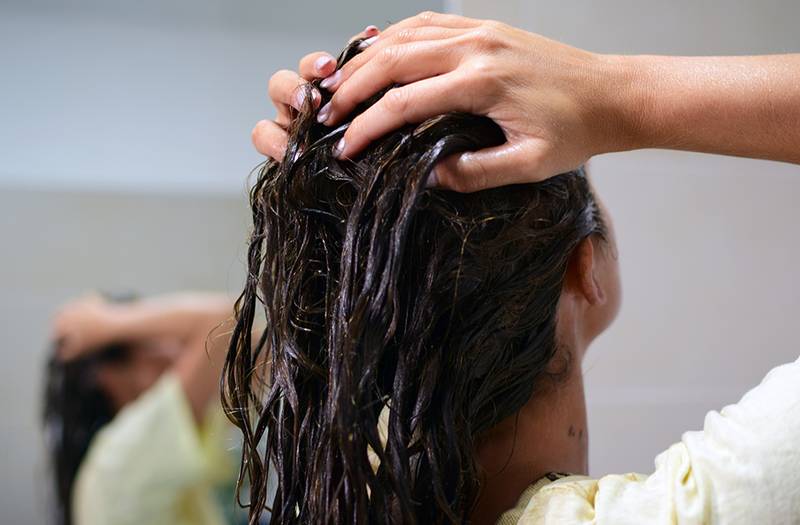
Though not all hair glosses are designed to be used in the shower, Johnson prefers these options. "I always feel that the best way to use a gloss is during an everything shower," she says. "Shampoo your hair, brush it out with a comb or wet brush in the shower, apply the gloss and put it up into a clip. Let it sit for five to 15 minutes [or however long the brand recommends] while you exfoliate, shave, etc., and then rinse and condition." Some glosses also act as deep-conditioning treatments and don't require a separate conditioning step, so be sure to check the directions for whichever product you choose to use. Pohlad adds that most glosses can be used weekly or whenever the color starts to fade.
You should also check to make sure the formula you're using won't stain clothes or towels, especially if it's a darker color. "A pro tip for all of our glosses, but especially our brunette shades, is to remember to use a darker towel while applying if you are applying out of the shower, as it can stain white linens!" Johnson says.
Shop the Best Hair Glosses
These 10 at-home hair glosses bring color back to life between salon appointments and add luster to natural hair.