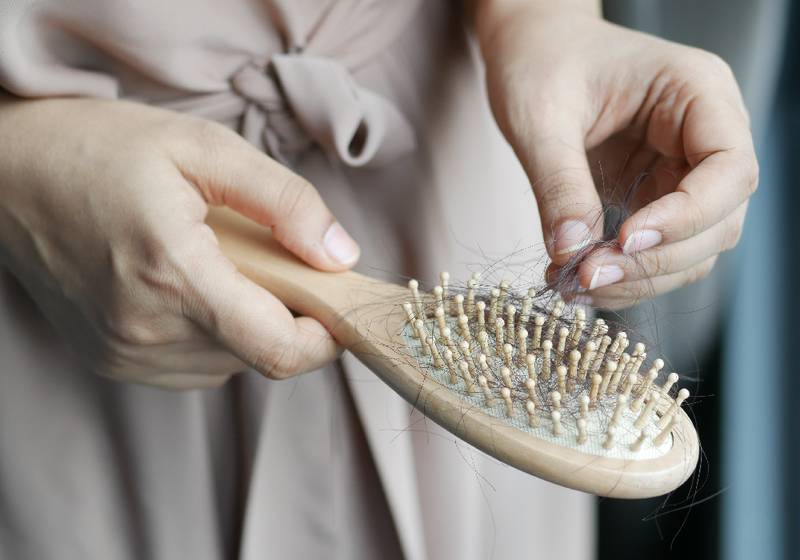
GLP-1 medications have transformed the weight-loss conversation, helping millions of patients achieve results that once felt out of reach. But alongside dramatic changes on the scale, many people are noticing another shift they didn’t expect: increased hair shedding.
According to New York dermatologist Julie Russak, MD, the issue is widely misunderstood. While patients often assume the medication itself is damaging their hair, the reality is more complex. Rapid metabolic changes, nutrient shifts and systemic stress can all influence the delicate environment that hair follicles depend on.
“The most common misconception is that GLP-1 medications directly cause hair loss,” Dr. Russak explains. “In reality, these medications create internal shifts that can compromise the environment hair follicles need to thrive."
Understanding what’s actually happening inside the body can help patients protect their hair and know when to seek support.
It’s not the medication itself
Hair shedding linked to GLP-1 medications often resembles a condition dermatologists call telogen effluvium, a temporary shift in the hair growth cycle triggered by stress on the body. Rapid weight loss can place the body into a metabolic state where it prioritizes essential functions over hair growth.“Rapid weight loss places the body into a catabolic state, can increase physiological stress signaling, alters gut absorption and temporarily shifts hair follicles out of the growth phase,” says Dr. Russak.
The follicles themselves are not permanently damaged, she notes. Instead, the growth cycle becomes disrupted while the body adjusts to changes in metabolism, nutrient intake and tissue composition.
Nutrient loss and metabolic stress play a role
One of the biggest contributors to shedding is nutritional depletion during rapid weight loss. Many patients consume fewer calories while taking GLP-1 medications, which can unintentionally reduce intake of essential nutrients needed for hair growth.
"The issue is not simply the number on the scale,” Dr. Russak explains. “Loss of scalp adipose support, lower protein intake and reduced intake of key micronutrients such as zinc, iron and vitamin D may all contribute to follicular stress and shedding.” Hair follicles behave similarly to muscle tissue during periods of restriction. When the body shifts into conservation mode,
nonessential growth processes slow down. That’s why patients who lose muscle mass quickly, experience poor sleep or develop nutrient deficiencies may be more vulnerable to shedding.
Timing matters when shedding appears
Hair shedding rarely starts immediately after beginning GLP-1 therapy. “Hair shedding typically begins around three months after starting a GLP-1,” Dr. Russak says. It often peaks between four and six months and gradually stabilizes if underlying factors are addressed.
Regrowth timelines vary from patient to patient. While some people may begin seeing improvement around nine months, recovery depends largely on restoring metabolic balance and correcting deficiencies. “Regrowth is not purely time-dependent,” she notes. “It relies on restoring metabolic stability, reducing inflammatory signaling and reestablishing adequate nutrient delivery to the follicle.” Patients who maintain lean muscle mass and address nutrient deficiencies early often recover more quickly.
Stabilizing the body is the first step
“Before stimulating regrowth, we focus on stabilization,” Dr. Russak explains. “This includes optimizing protein intake, restoring nutrient levels and gut microbiome, improving sleep quality and supporting circadian rhythm, all of which influence follicular metabolism.
Once the body is supported metabolically, treatments such as topical minoxidil, regenerative therapies like PRP or exosomes and low-level laser therapy can help encourage follicles to reenter the growth phase.
For patients considering GLP-1 therapy, prevention can start even earlier. “Building metabolic and follicular resilience ahead of weight loss makes a meaningful difference,” says Dr. Russak. With the right support, she adds, patients can successfully navigate medical weight loss without sacrificing hair health.