Every year, the American Society for Dermatologic Surgery (ASDS) meeting gives us an inside look at what’s next in aesthetics. At this year's event in San Diego, held Nov. 5-8, dermatologists were talking about more choices in injectables, new laser technology and the ways weight loss and menopause are changing treatment plans. We caught up with doctors throughout the meeting to find out what has their attention heading into 2027.
More Injectable Options Than Ever
Not long ago, patients had just a handful of neurotoxins to choose from. Today, there are six FDA-approved cosmetic options in the U.S., with more on the way. Allergan Aesthetics’ Boey (trenibotulinumtoxinE), already approved in Europe and Canada but not yet in the U.S., is made to work faster and wear off in weeks rather than months. “A rapid-onset, shorter-duration treatment could be particularly appealing to people considering a neurotoxin treatment for the first time who may prefer a shorter-duration option,” says Vancouver, BC dermatologist Shannon Humphrey, MD.
On the other end of the spectrum, Galderma’s Relfydess, a ready-to-use liquid neurotoxin available internationally, has shown results lasting up to six months in clinical studies and is being pursued for U.S. approval. Fillers are becoming more specialized, too. Merz Aesthetics’ newly FDA-approved Belotero Volume (+) targets the midface, and Belotero Intense (+) is for the lips.
“Each of these products, they’re not interchangeable,” says Plymouth, MI dermatologist Farhaad Riyaz, MD. “It will take a year or two to figure out the nuances of some of these products.” For patients, that could eventually mean more choice in duration, treatment area and overall approach.
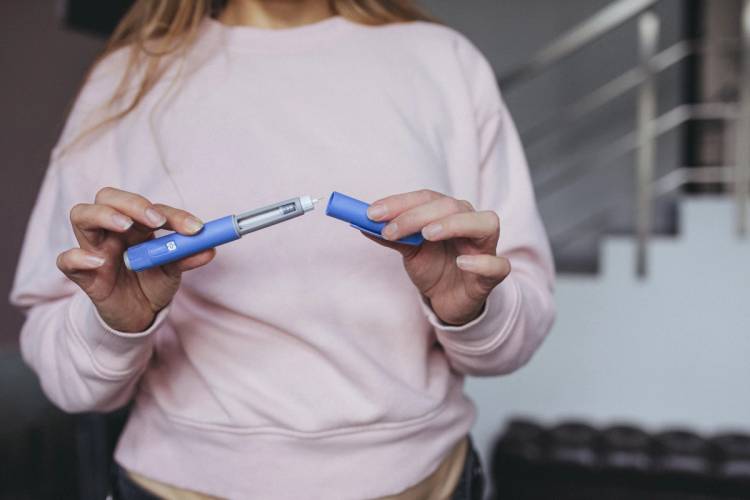
The GLP-1 Effect
As more patients take GLP-1 medications for weight loss, dermatologists are rethinking how and when they treat the face. “When I teach GLP-1 to colleagues, I say your weight loss doesn’t stop at your jawline,” says New York dermatologist Marina Peredo, MD.
As patients lose facial fat and support, more doctors are starting aesthetic treatments before patients reach their goal weight. West Palm Beach, FL dermatologist Dr. Mojgan Hosseinipour plans for one vial of Sculptra for roughly every 10 pounds of expected weight loss, an approach she tailors to each patient. New York dermatologist Erin Kil, MD says filler is becoming “less about pumping up the volume and more so about repositioning the skin.”
New research is looking at how these patients respond. Allergan Aesthetics presented nine abstracts at ASDS, including two Phase 4 studies of patients taking GLP-1 medications. In an interim analysis of Allergan’s HALO study, which included 25 of the 75 participants treated, 95.7 percent were satisfied or very satisfied that they still looked like themselves after hyaluronic acid filler treatment. “For patients on GLP-1 medications who may be concerned about looking overfilled or unlike themselves, this finding is particularly meaningful,” says San Diego dermatologist Sabrina Fabi, MD. The results are early and from a small group, so more data is needed.
Menopause Changes the Plan
Menopause received attention in scientific and industry sessions, with researchers looking beyond wrinkles to skin quality. In an eight-month, Galderma-supported trial of menopausal women, those who received Restylane Skinboosters before Sculptra had a 27.3 percent increase in facial dermal thickness, compared with 15.7 percent when the order was reversed. These early findings suggest sequencing may matter, though more research is needed. These uses of Restylane Skinboosters and Sculptra are not currently FDA approved in the U.S.
Skin longevity was part of the conversation, too. Treatments that worked well in your 30s may not work as well in perimenopause, and New York dermatologist Doris Day, MD, co-founder of Rapalogix Health, points to a cellular reason. “This one essential element of your skin called TORC1 gets stuck in the on position, which makes the fibroblasts, the cells that are building collagen, exhausted,” she says. TORC1 is part of the mTOR pathway, a cellular signaling system linked to aging. Her company’s Re-Q serum contains RLX-201, a molecule designed to calm that pathway so skin can “repair better.”
Some doctors are looking at hormones directly. “Estrogen plays a central role in maintaining skin collagen, hydration, thickness and resilience,” says Monroe, LA and Southlake, TX dermatologist Janine Hopkins, MD, who emphasizes looking at hormonal health alongside skin care and procedures. Germantown, TN dermatologist Purvisha Patel, MD sees a similar intersection with weight loss: “Everything is one big bucket.” Hormone therapy isn’t appropriate for everyone and should be considered through an individual medical evaluation.
A New Era of Resurfacing
Denver dermatologist Joel Cohen, MD is liking the results achievable with UltraClear’s Laser-Coring Elite, which removes microscopic columns of skin with laser energy to target laxity. Compared with the original technology’s roughly 360-micron openings, he says the newer version creates openings smaller than 300 microns. “They’re actually healing up more quickly and they pinch together,” he says. In his experience, patients often heal in about five or six days, depending on treatment settings and individual recovery.
Some doctors are finding new efficiencies with familiar lasers, too. Anchorage, AK dermatologist Janine Miller, MD says a randomized treatment pattern has sped up CO2 resurfacing in her practice. “Now I can do a full-face CO2 in like 20 minutes,” she says.
Korean Aesthetics Arrive
K-beauty’s influence is moving beyond topical skin care. Hugel’s Letybo, a Korean-developed neurotoxin FDA-approved in 2024 for frown lines, has drawn interest for what its manufacturer calls a “focused field of effect.” That description is not evidence that it spreads less than other toxins. In Phase 3 trials, the median time to noticeable improvement was three days.
“When I think of K-aesthetics, kind of within that conversation, K-beauty, it’s really focused on skin quality,” says Davie, FL dermatologist Lesley Clark-Loeser, MD. Omaha, NE dermatologist Daniel Schlessinger, MD also expects more interest in Korean devices. At Wontech’s booth, he pointed to Pico Majesty, a picosecond laser used for pigmentation and tattoos, and Oligio X, a radio frequency device for tightening. Affordability may help drive adoption: “Some of these devices are also a lot more affordable than their U.S. equivalent,” he says.
A Precise Approach to Scars
Washington, DC dermatologist Tina Alster, MD says successful scar treatment starts with identifying the type of scar and choosing the appropriate technology. “You always start with the color: Are they red or not red?” she says. “Red scars often respond to vascular lasers, while indented acne scars may benefit from resurfacing. Raised scars and keloids can require injections, lasers or a combination of approaches. It’s always a recipe,” she adds. “It’s very rarely just one treatment.”
‘Natural’ Nonsurgical Improvements
After years of talk about overfilled faces, Fresno, CA dermatologist Rohini Shantharam, MD is hearing more requests for subtle improvements and skin that looks good without makeup. “They don’t want to just go to someone who’s going to be injecting,” she says. “How do we treat the skin? How do we treat skin quality?” In her practice, that can mean addressing pigment and texture, sometimes with intense pulsed light (IPL) and a resurfacing laser in the same visit.
Merion Station, PA dermatologist Lynn Klein, MD is seeing a similar shift. “Patients don’t want the overfilled syndrome,” says Dr. Klein, who has been using Sculptra since 2004 and says she’s doing more of it than ever. She also relies on a combination of lasers, radio-frequency microneedling, ultrasound and injectables rather than one treatment alone. “Honestly, combination treatment works the best of all,” she says. “I stack a lot of different devices.”
Even facials are getting more targeted. Hydrafacial’s newest booster, HydraClear, combines salicylic, succinic and tranexamic acids to address clogged pores, excess oil and the discoloration that can linger after breakouts. “It’s an excellent option for patients looking to improve congestion and achieve a clearer, more even complexion,” says Los Angeles dermatologist H. Ray Jalian, MD.
Male Aesthetics Get Personal
Livonia, MI dermatologist Rohit Kakar, MD co-directed an ASDS session on male facial aesthetics, covering patient assessment, neurotoxins, fillers and hair restoration. “Usually, they’ll come in saying they look tired or hair loss is an issue,” he says of male patients. When it comes to injectables, his focus is “creating natural results” and “having them look like themselves.” He adds, “If they want to maintain a masculine look, then we want to maintain that masculine look and achieve that for them.” But there’s a limit. “You also don't want to go too far because you can also overmasculinize someone.”
New Hair Loss Options
Hair restoration is expanding beyond the usual daily topicals, pills and surgery. Dr. Riyaz is encouraged by research on pairing platelet-rich plasma (PRP) with microneedling. Brooklyn, NY dermatologist Dennis Porto, MD is watching a delayed-release oral minoxidil formulation in development: “Phase 2 stuff is out, and it looks really promising,” he says. Dr. Hosseinipour also describes using off-label dutasteride mesotherapy, which involves scalp injections, approximately every three months in her practice. These approaches have different levels of evidence and are not interchangeable options for every patient.
What’s Coming Next?
Regenerative treatments remain on doctors’ radar, including injectable PDRN, a salmon-derived DNA ingredient familiar to Korean skin-care fans. PDRN serums are sold as cosmetics, but injectable PDRN is not FDA-approved for aesthetic use in the U.S., and clinical evidence remains limited.
Dr. Kil, who attended a presentation about the treatment, is urging caution about possible nodules and vascular complications. “I think it’s just good to know what can go wrong potentially before doing anything,” she says.
From new neurotoxins to the ways weight loss and menopause are reshaping treatment plans, ASDS gave us plenty to watch heading into 2027.