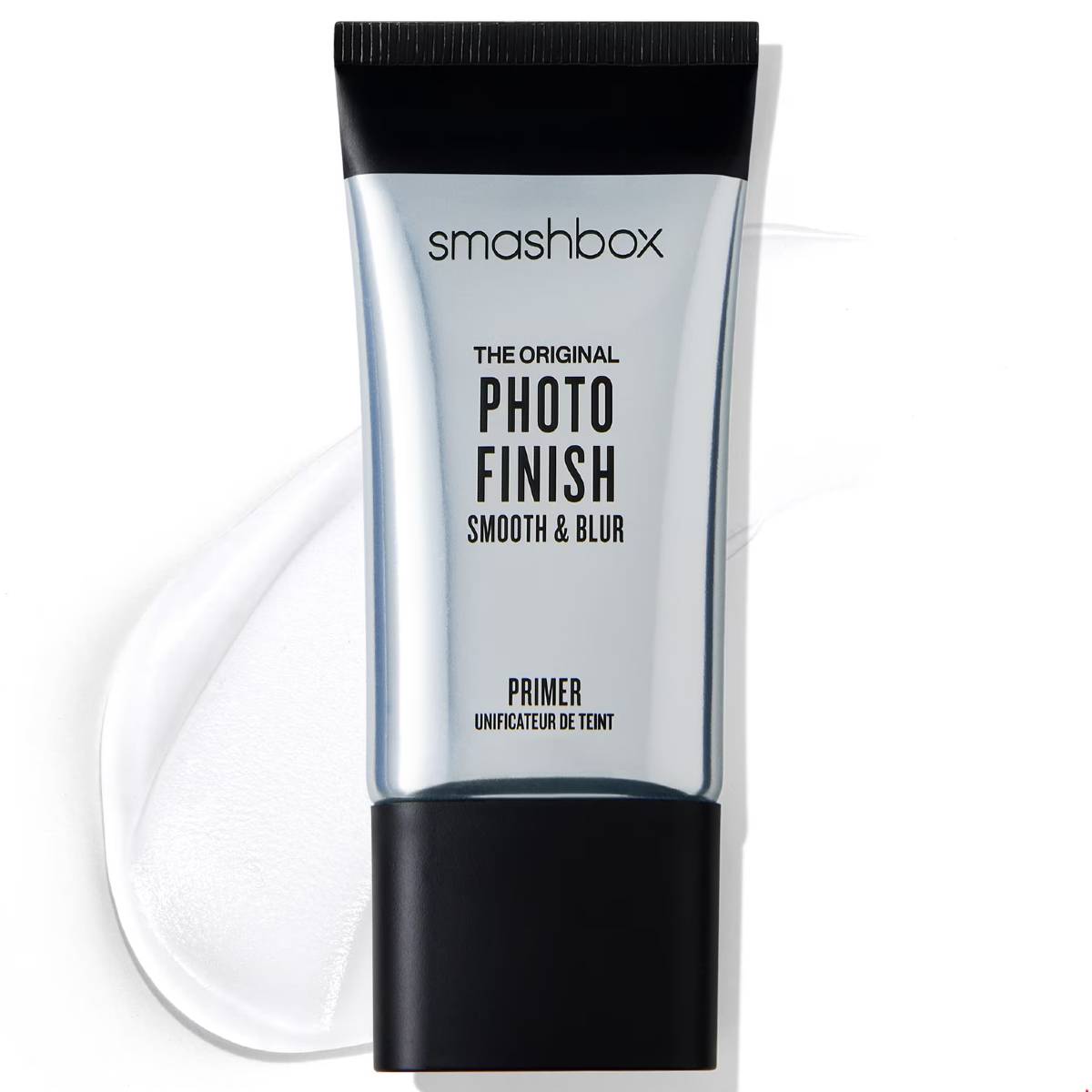
Long before makeup primers had their own dedicated aisle at Sephora, before "skin prep" was a TikTok genre, before anyone had a "base routine," there was a silver tube that makeup artists kept slipping into their kits at the end of a shoot at Smashbox—a Los Angeles photography studio that would eventually become one of beauty's most recognizable brands. The year was 1996. The formula didn't even have a name yet, but the artists who used it already knew—this product was a game-changer
The story of Smashbox Photo Finish Foundation Primer is really the story of what happens when a photographer decides that makeup should work as hard as he does—and what happens when the beauty industry finally catches up.
A Studio Built on Legacy
It helps to know who Davis Factor is. He and his brother Dean are the great-grandsons of Max Factor—the Polish-born Hollywood makeup legend who essentially invented modern cosmetics, coining the very term “makeup” and creating products for the silver screen that eventually made their way into every woman’s vanity. Makeup, in other words, is literally in the family DNA.
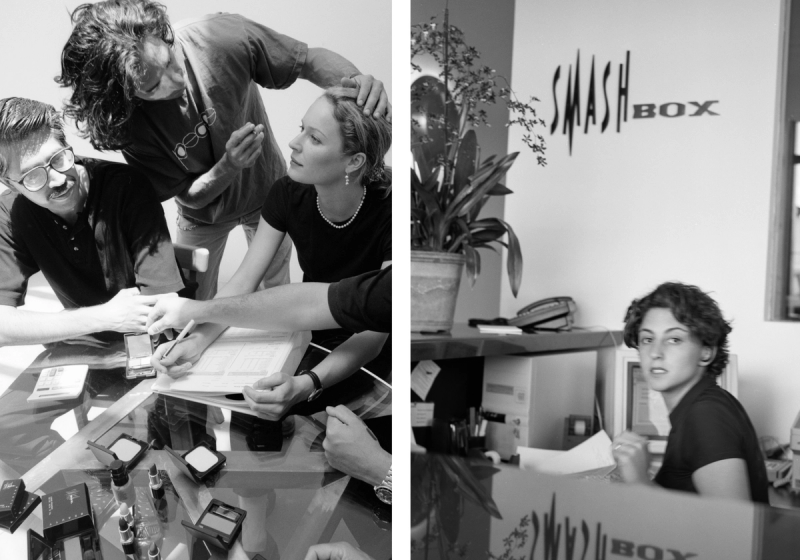
In 1990, Davis, an acclaimed photographer, founded Smashbox Studios in Los Angeles with his brother Dean. The name itself is a nod to the box-style camera introduced in the early 1900s to capture everyday life. From day one, the studio became a magnet for world-class photographers, models, actors and musicians.
“I wanted to create a culture. Not just a studio,” Davis has said. “I didn’t want to exclude anybody. I wanted to plant a seed so people could grow, and that meant everyone was welcome.”
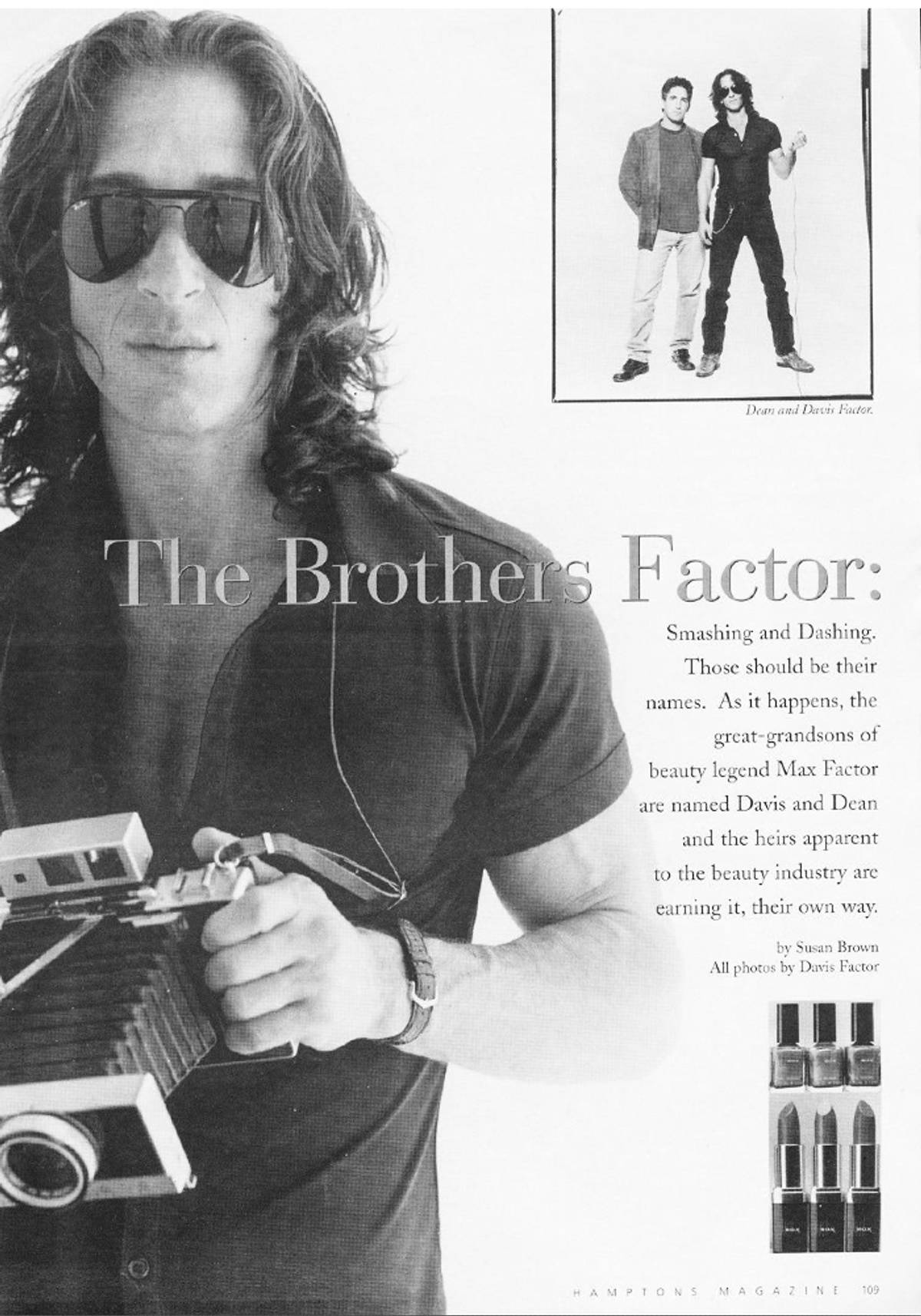
An archival ‘Hamptons Magazine’ spread.

AN ARCHIVAL 1996 ‘Harper's Bazaar’ article.
The Idea That Changed Everything
For all its creative energy, Smashbox Studios had a recurring frustration: Shoots kept stopping for makeup touch-ups. Hot lights, long hours and the unforgiving eye of a camera lens meant that foundation slid, concealer creased and powder caked.
Davis saw it daily. And, eventually, the solution clicked. “I came up with the idea because I thought, what if I could put a barrier between the skin and the foundation?” he tells us. “Kind of like when you paint a house, you put primer on first. I took that same principle and applied it to skin, and that’s how Photo Finish was born.”
As a photographer, his wish list was pretty specific. “What it did instantly was correct a lot of the things that were bothering me,” he says. “When you put foundation on top, you didn’t see the redness, the spots, certain fine lines or some of the texture underneath. The colors looked brighter, the makeup stayed on longer and it worked really well under the hot lights of the studio during long days of shooting.” The practical upside was equally significant: “I didn’t have to retouch photos nearly as much afterward. It saved time, cut down on retouching costs and meant less work before those images went on magazine covers.”

The Primer That Makeup Artists Kept Stealing
Even before it had an official name, the formula had a reputation. Makeup artists working at Smashbox Studios started requesting it for shoots. Then, they started taking it with them when the shoot was over and sharing their love for it with other artists. By word of mouth alone—no advertising, no influencers, no launch campaign—the product became a cult object among the people who mattered most.
Lori Taylor-Davis, Smashbox’s Global Pro Lead Artist, has been one of those artists. She’s relied on Photo Finish throughout her career—from backstage at LA Fashion Week to celebrity appearances, television and countless photo shoots. “One memory that stands out is using it backstage during LA Fashion Week, where makeup had to withstand long hours, quick changes, hot lights and constant photography,” she says. “It consistently delivered the smooth, long-wearing finish we needed under pressure.” She’s also used it on celebrities, including Shay Mitchell and Lilly Singh, “whose makeup always needed to look flawless both in person and under the scrutiny of high-definition cameras. That’s where the product truly shines.”
But Davis’s favorite test subject wasn’t a makeup artist or a model, but someone who was even a tougher customer. “The first person I ever tested it on was my mom, and she absolutely loved it,” he says. “I always joke that if she likes it, everybody’s going to like it.” The joke has held up. “She hoards the primer now. She keeps asking me for more, so I keep giving her more. I think she must have a hundred primers sitting at her house in a little bowl somewhere. When she walks into the room, she sees those silver primers and they remind her of her sons who created them.” He pauses. “She’s Hollywood royalty. If she gives it the thumbs up, then it’s good.”
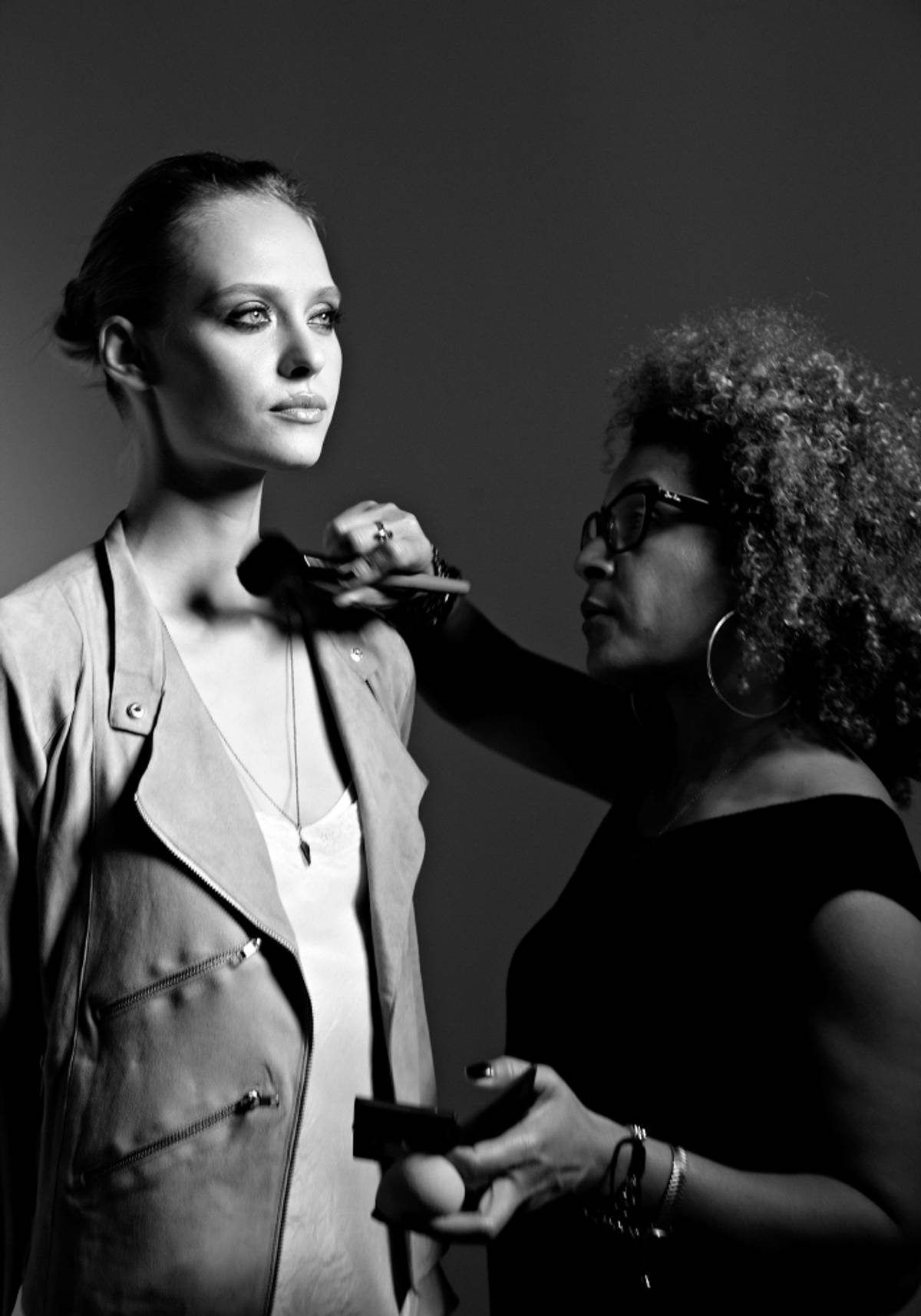

Smashbox Global Pro Lead Artist Lori Taylor-Davis applies makeup to a model on set (left); actress Shay Mitchell, one of her longtime clients, poses on a professional shoot (right)
The Launch That Created a Category
In 2000, the perfected Photo Finish Foundation Primer officially launched to the public. It was the first product of its kind to cross over from professional use to consumer retail, and it introduced an entirely new step to the beauty routine.
Global GM Michelle Shigemasa traces its staying power back to something simple. “The success of the OG primer comes down to credible product truth—performance that was genuinely validated under demanding studio conditions, not just marketed,” she says. “It solved a real, unmet need at the time—creating a new category by delivering smoother, longer-wear, camera-ready skin, which quickly became essential in both professional and everyday routines.” Crucially, the impact went beyond a single SKU: “Smashbox created a whole new category in makeup, which helped shape a new behavior in makeup application. That’s why we call Photo Finish Primer the OG.”
Davis, for his part, didn’t see the scale of it coming. “I didn’t think it was going to be as successful as it became,” he admits. “I wasn’t really thinking about that. I just knew it worked really well on shoots, felt great on the skin and worked in real life, too.”
How the Category Evolved
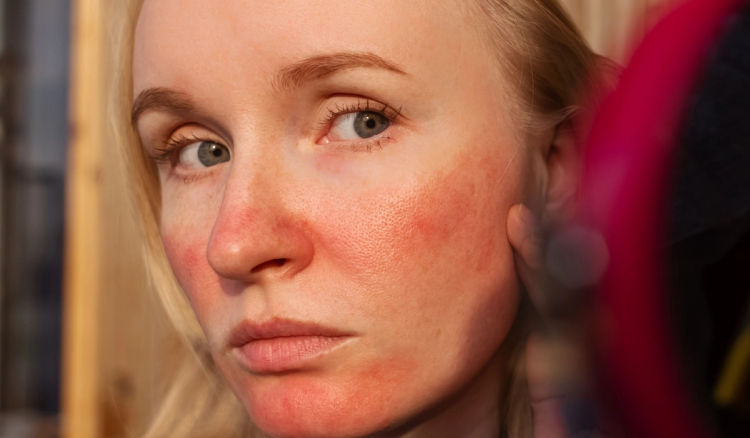
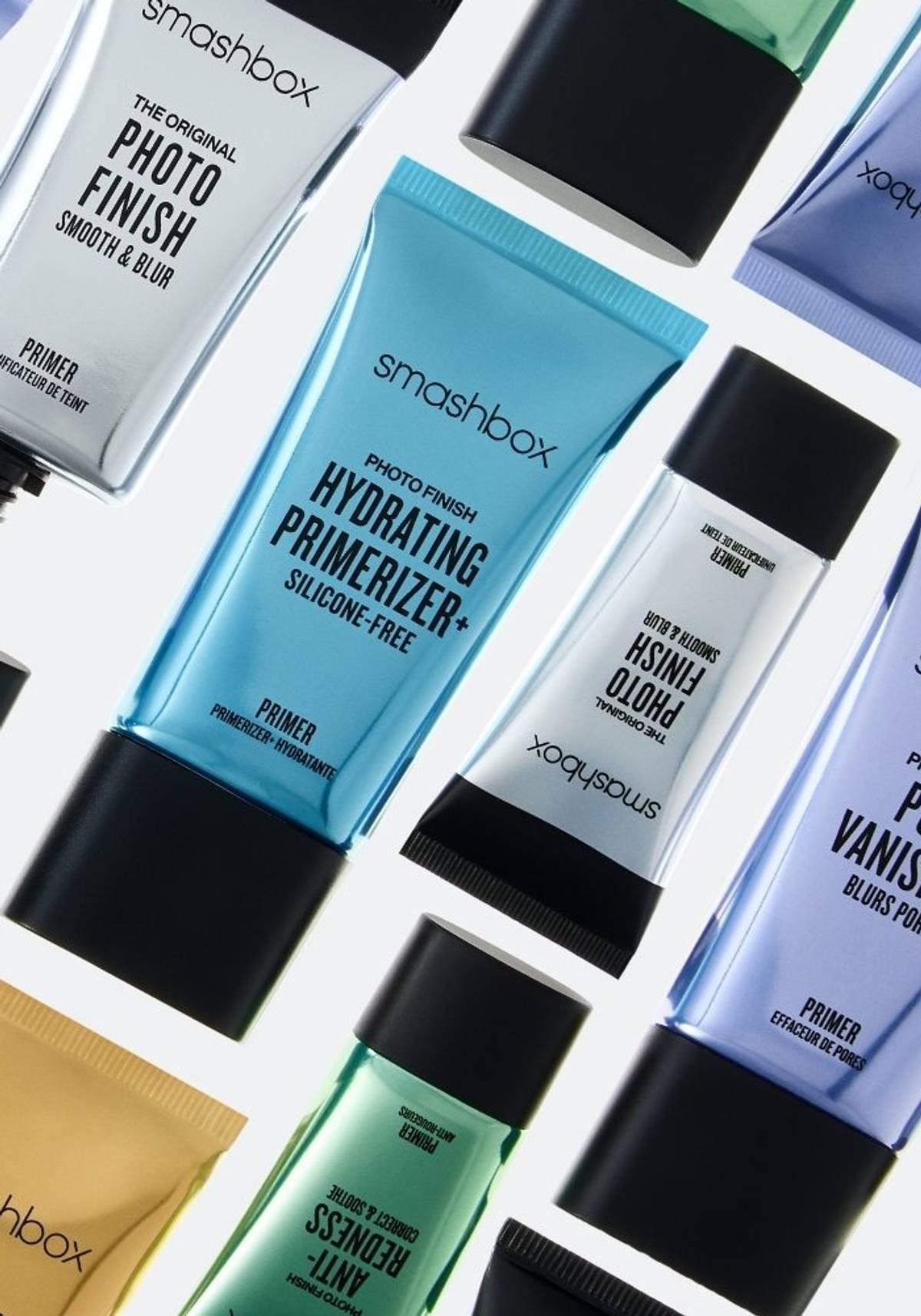
“As the primer category evolved, I kept looking at faces and thinking about how we could solve different problems,” Davis says. “That’s how we ended up creating pore-minimizing primers, color-correcting primers for redness and rosacea, and other targeted formulas. We just kept building from real needs we saw in the studio.”
Jill Tomandl, VP of Global Product Development, has been at the center of that evolution. “Primer was invented to minimize retouching in photos,” she says. “Today, you can look retouched in real life and always be photo-ready. Primers make makeup look better and last longer, but now they do so much more and can be worn alone. Primers enhance the skin with smooth blurring to glowy finishes, prep the skin for makeup and are loaded with efficacious skin-care ingredients to address skin concerns.” The format innovation has been just as significant: “Smashbox continues to innovate and was first to launch primers in many different forms, including serum, sticks, sprays and for different areas of the face, including shadow and lashes.”
The Next Chapter: SPF
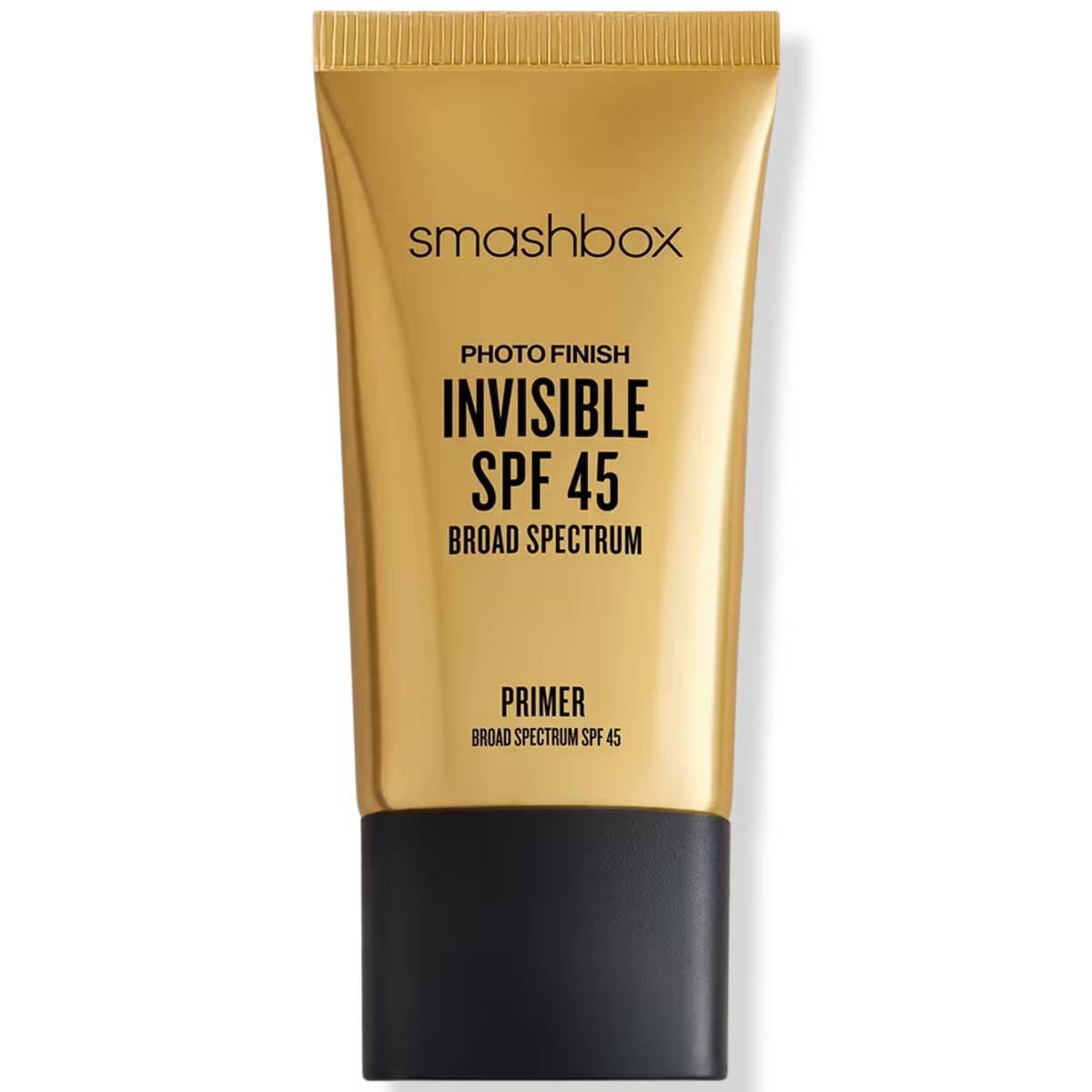
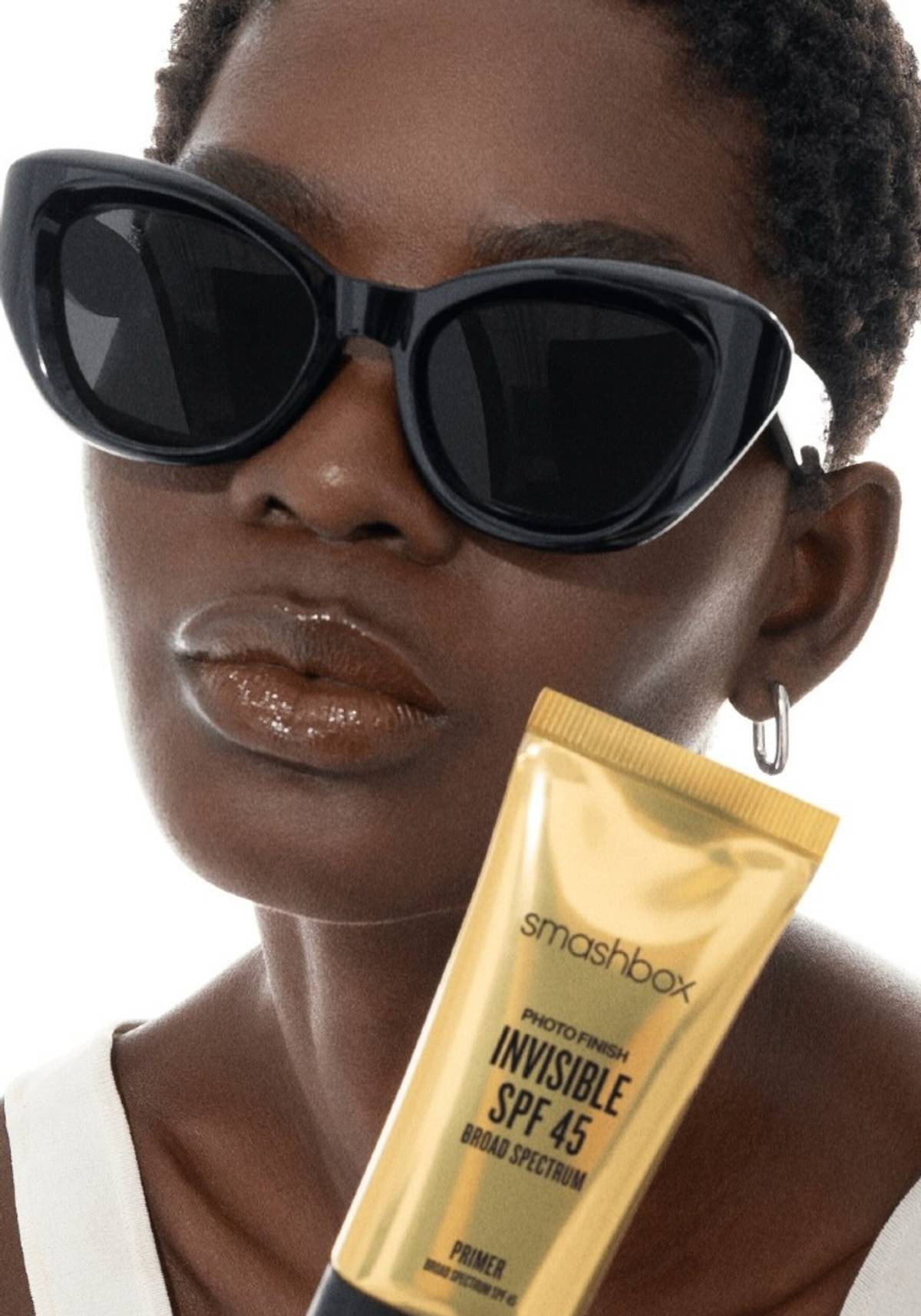
The newest expression of that thinking is the Photo Finish Invisible Primer SPF 45, built with the same studio-first rigor as the original. “It was developed specifically to be photo-friendly and transparent upon application with no white cast, no color change to your complexion products and no flashback on camera and in everyday life,” Tomandl says. “The product was tested on a wide range of skin tones during development.” The formula goes further than a simple SPF add-on: “Your makeup stays smooth and looks better longer with no pilling because this primer hydrates your skin with a blend of skin-care ingredients, including resveratrol, vitamins and hyaluronic acid. SPF 45 and antioxidants protect your skin from environmental aggressors.” True to the brand’s origin, it was perfected at the brand’s home base: “This product was tested alone and with makeup at Smashbox Studios with a team of professionals, including a photographer, pro makeup artist, lighting expert and product developers, to ensure it will perform in your daily life.”
Shigemasa frames the SPF launch as a strategic move, not just a product one. “Launching SPF primer was a natural evolution of our core strength, bringing performance-driven innovation into where the consumer is going,” she says. “We’re seeing a strong shift toward hybrid, skin care–infused makeup, particularly with younger consumers who expect multifunctional products without trade-offs. SPF allowed us to layer in protection alongside proven primer performance, reinforcing our authority while making the product more relevant to everyday use.”
Taylor-Davis sees it the same way: “It’s not a reinvention of the brand’s DNA—it’s a continuation of the brand’s original vision, reimagined for the way we live and create in today’s world. Smashbox Primer helps to deliver high-performance makeup for a camera-first world.”
Is Primer Having a Moment?
Ask Shigemasa if primers are having a comeback, and she doesn’t hesitate. “Yes—but more importantly, primer is being redefined for a new generation,” she says. “The category is benefiting from strong tailwinds: rising demand for long-wear makeup, camera-ready skin and hybrid skin-care formats, all of which play directly into primer benefits.” The numbers back it up: “By 2030, forecasts predict the primer category will become a top-four category in makeup. Smashbox is uniquely positioned to lead the next evolution of the category, expanding into adjacent spaces like glow and setting while continuing to build on our authority.”
A Product Built on Loyalty
Perhaps the most telling sign of the primer’s staying power is what Taylor-Davis has witnessed firsthand. “One of the things I love most about Photo Finish Primer is the incredible loyalty it has inspired over the years,” she says. “I’ve met women who started using the Original Photo Finish Primer when it first launched and still won’t do their makeup without it today. Many of them have introduced it to their daughters, creating a true generational connection to the brand. That’s a testament to the fact that the product was built on performance—not trends.”