This year marks the 50th anniversary of the French manicure, one of the most recognizable and longest-running looks in modern beauty. To celebrate the milestone, ORLY, the company founded by the manicure’s creator, Jeff Pink, is leading a campaign to formally preserve its place in American beauty history. The effort includes a proposal to establish French Manicure Day, the submission of the original ORLY French Manicure Kit ($15) for consideration by the Smithsonian’s Personal Care and Cosmetics Collection, a historical archive documenting the look’s evolution and anniversary programming tied to New York Fashion Week.
It’s a significant undertaking for a look that started as a practical fix for a scheduling headache. Ahead, the untold origin story of the French manicure, how it went from a Hollywood set to a household name and why it's endured for 50 years.
A Director’s Problem, Solved
At the time, Pink was operating one of the largest beauty supply stores serving nail salons, movie studios and the professional beauty industry. “A director approached me with an ongoing problem they were having on set,” he recalls. “Women’s nails often had to be repainted every time they changed wardrobes to match their dresses and accessories. With drying time taking up to an hour, it was slowing down production and costing the studios money. He asked if I had a nail color that could solve the problem. I had already seen a trend in my store where women were buying white pencils to draw underneath the tips of their nails to exaggerate a clean, natural look. The problem was that the pencil wore off quickly. I thought, why not create a polish that would give them that same look but actually stay on? And that’s how the French manicure was born.”
Pink had recently seen a trend at the Paris fashion shows, where models used a white pencil under the tips of their nails to create a clean, exaggerated, natural look. “I’d brought a manicurist with me to paint the ‘natural nail’ look on models. On the flight back home after one visit, I considered a more catchy name and landed on the ‘French Manicure.’”
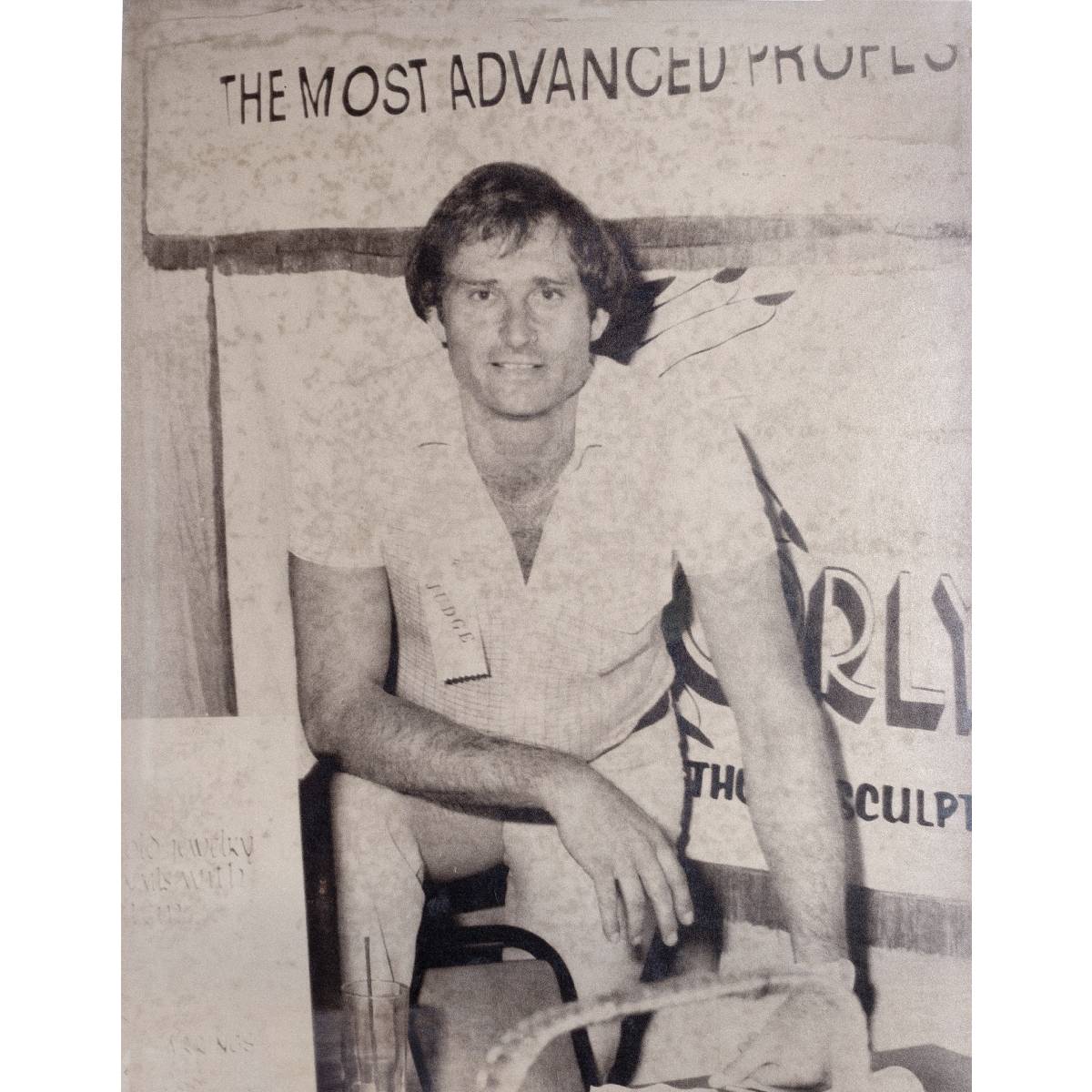
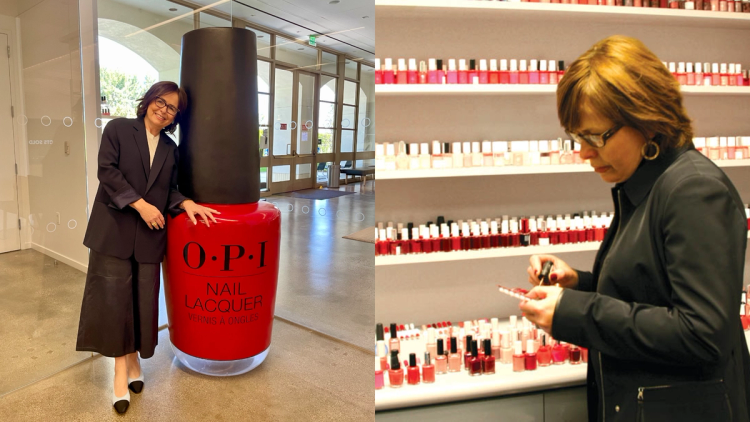
Jeff Pink, wearing a “Judge” badge, at a nail industry trade event backed by an ORLY banner.
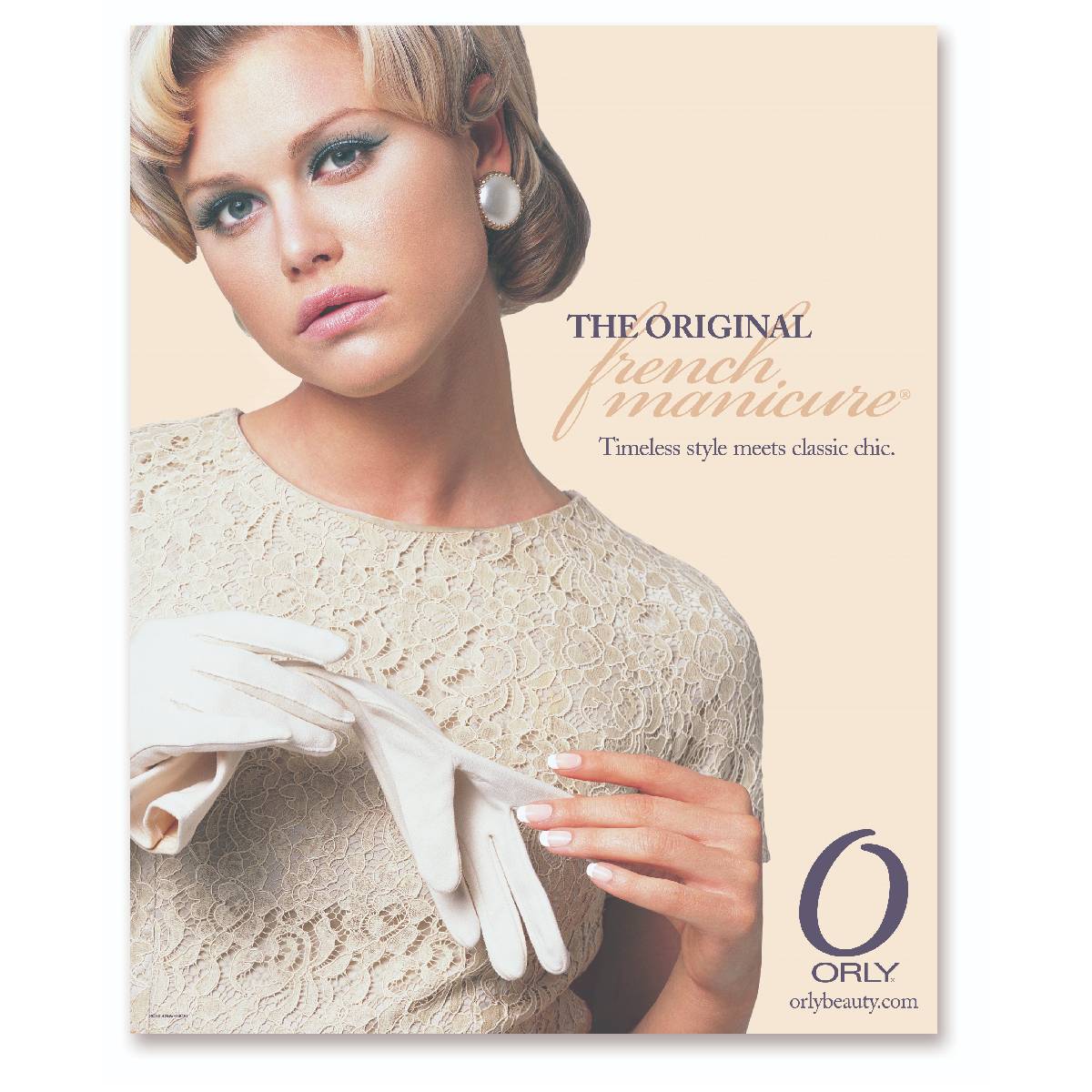
An ORLY campaign poster for “The Original French Manicure” from the brand’s archives.
Born in Hollywood, Named for Paris
Even though the French manicure has outlived every trend cycle since, the irony is that it has no strong ties to France. The “French” came from where Pink first spotted the white-tip concept, not where he engineered it. “Despite the name, the French manicure was made in Hollywood, not France,” shares Pink, adding that it’s a distinction he still finds himself correcting five decades later.
What sealed the look’s crossover from studio fix to household name was a pair of high-wattage endorsements neither Pink nor ORLY had to buy. “Very early on, Barbara Streisand and Cher appeared on talk shows wearing the French manicure,” says Pink. “When they were asked about their nails, they talked about the look and helped introduce it to a much larger audience. At the time, they wore a much thicker, more noticeable white tip than what we typically see today, so it really stood out as something new.”
From a Two-Piece Kit to a Category
The original French Manicure Kit was minimal by today’s standards, including only a moon-shaped guide and a chevron guide. Over the following decades, that two-piece starter kit expanded into an entire category of shapes, guides and application methods, opening the look up to salons and home manicurists well beyond its Hollywood origins.
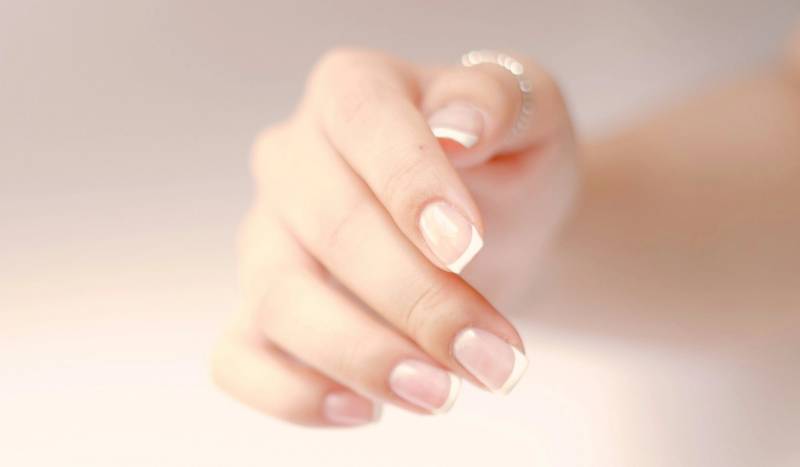
That adaptability is, in Pink’s view, exactly why the look never aged out the way most of its 1970s contemporaries did. “The French manicure is probably the closest thing to a natural-looking nail,” he says. “It goes with almost anything, it’s timeless and it enhances the natural look and feel of the nails without overpowering them.” Fifty years on, it shows up everywhere from bridal beauty and boardrooms to red carpets and Fashion Week runways—a range few single nail looks ever achieve—and it keeps absorbing new colors, shapes and finishes without losing what made it recognizable in the first place.
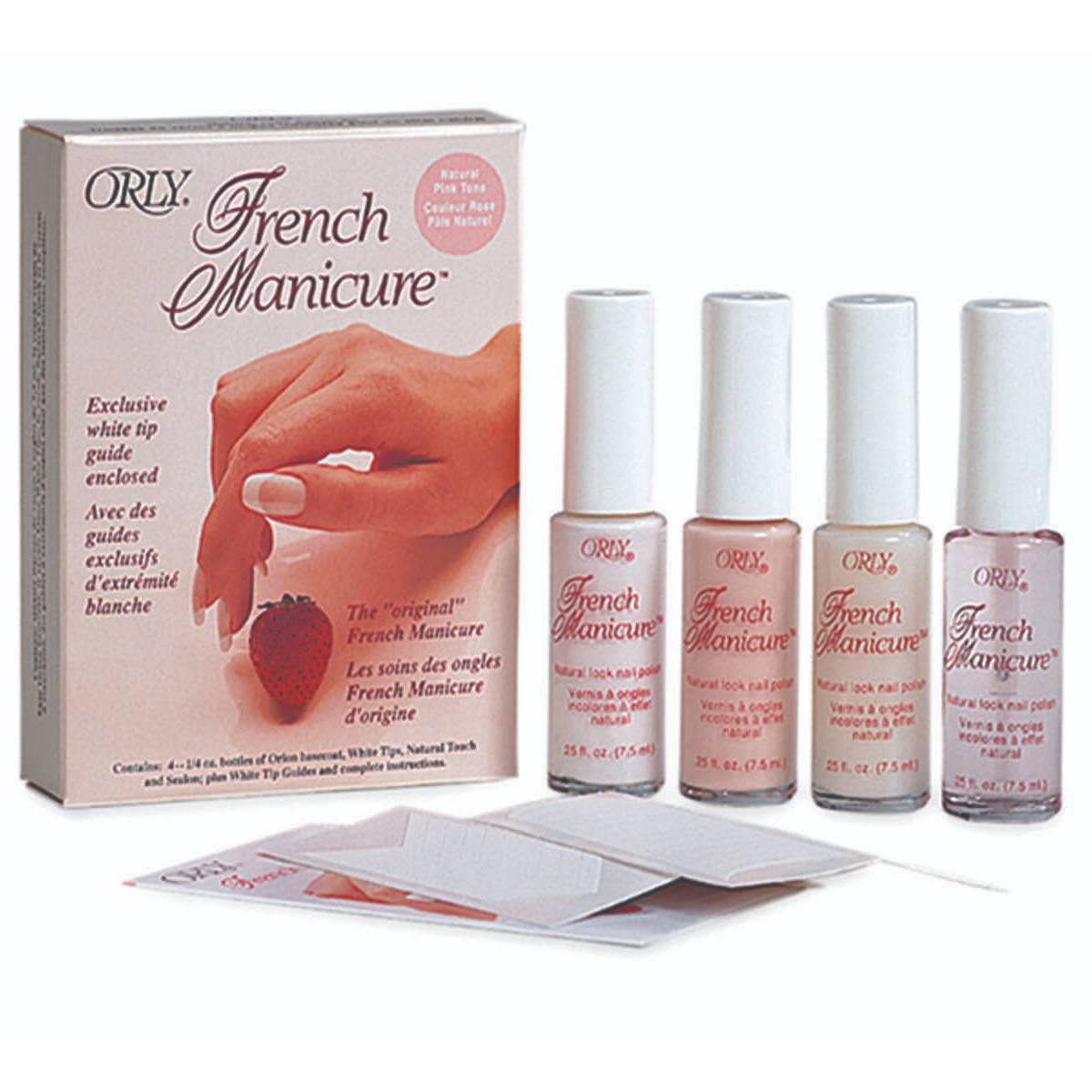
The original ORLY French Manicure kit with its original white-tip guides, four polishes and instructions.
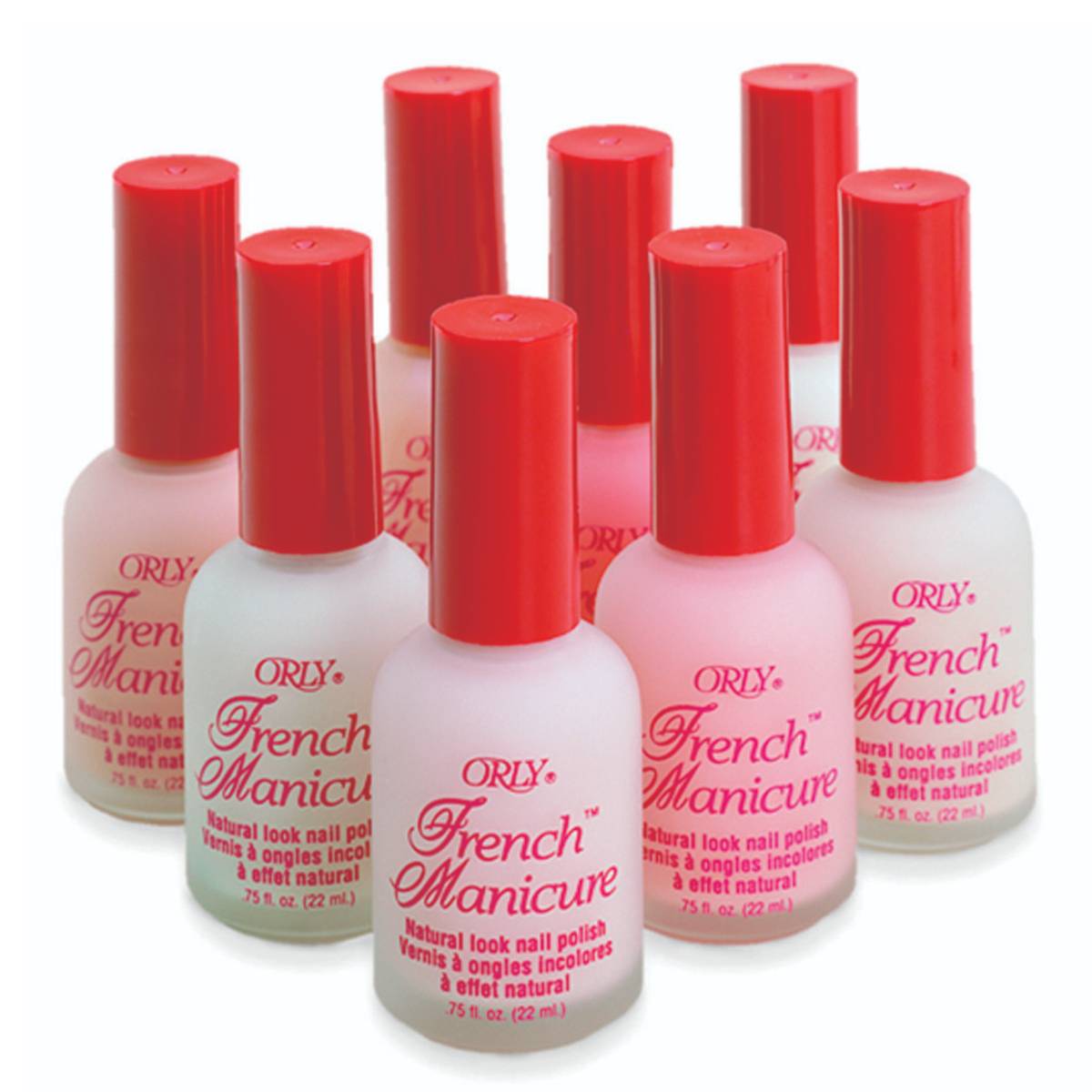
A group of ORLY French Manicure natural look nail polish bottles in soft, sheer shades.
Preserving a Piece of Beauty History
ORLY’s anniversary push treats that longevity as something worth formally documenting. Alongside the proposed French Manicure Day and the Smithsonian submission, the brand is building a historical archive tracing the look’s origins and cultural footprint across five decades, and planning programming around New York Fashion Week to mark the anniversary in the setting that gave the manicure its name.
“This anniversary is about preserving beauty history,” says Tal Pink, ORLY’s vice president. “The French manicure is part of the broader story of American innovation, fashion and culture. Our hope is to honor not only its origins, but also the artists, nail professionals and consumers who have kept it relevant for 50 years.”
For Jeff Pink, the scale of what a scheduling fix turned into still isn’t something he takes for granted. “What began as a simple solution for Hollywood became something far greater than I ever imagined,” he says. “Seeing the French manicure embraced by generations of people around the world has been one of the greatest privileges of my career. Fifty years later, I’m humbled that it continues to inspire confidence, creativity and timeless style.”