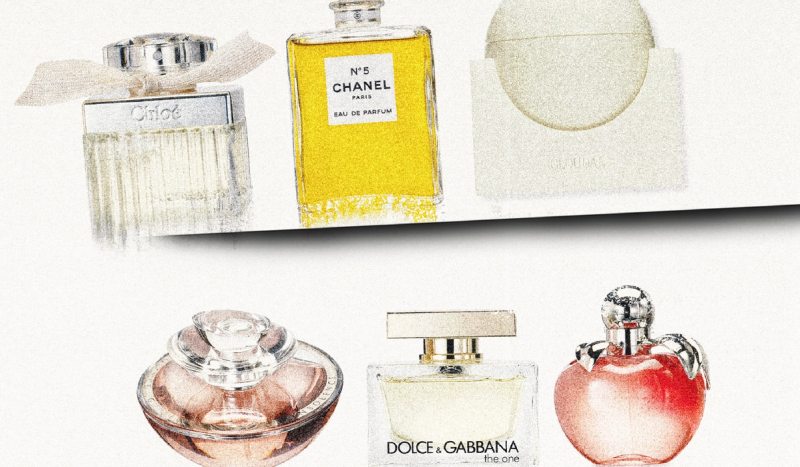
In the ’90s and 2000s, it felt like everyone had a signature scent. My mom’s DKNY Be Delicious, my mema’s musk she could only find at the flea market, my best friend’s magical lavender concoction from the drugstore that no longer exists. Each scent would overwhelm my senses, and I knew its wearer was near before I saw her. Now that same best friend has an extensive fragrance wardrobe with dozens of notes and bottles from a handful of brands.
The shift from a signature scent to a fragrance wardrobe
“We’re seeing a clear evolution from the idea of a single ‘signature scent’ to what I would call a more fluid fragrance wardrobe. Consumers are selecting fragrance based on how they want to feel in a particular moment, whether that’s energized, comforted, confident or relaxed,” says Olivia Jan, senior perfumer for Givaudan. Ahead of his time, as always, perfumer and artistic director of Maison Francis Kurkdjian, Francis Kurkdjian, tells me he’s never believed in a single signature fragrance. “People cannot be summed up in one scent, as everyone’s personality evolves throughout life,” he explains.
A fragrance wardrobe is a collection of scents that can be mixed, matched and worn depending on your mood or routine. “Think of it like a clothing wardrobe, where you choose different scents depending on how you want to feel or express yourself that day,” says Erwan Raguenes, a perfumer for dsm-firmenich.
Walter Johnsen, vice president of product development for Interparfums, says, “You probably wouldn’t wear the same outfit to the gym, a wedding, the office and a beach vacation. Fragrance is becoming much the same: Someone might have one scent for work, another for evenings, one for summer, one for winter and another simply because it matches their mood that day.” However, a fragrance wardrobe doesn’t need to be large to feel well-rounded, says Nina Blazevski, fragrance development manager at Maesa and Being Frenshe. “The goal isn’t to collect the most fragrances. It’s to curate a few scents that feel authentic to you and fit naturally into your life.”
Jan notes that while the shift initially gained momentum with Gen Z shoppers who tend to view fragrance as a form of daily self-expression rather than a fixed identity, it’s no longer generational, with consumers of all ages building out fragrance wardrobes that serve different occasions, moods, seasons and even times of day. “It’s a combination of generational, cultural and industry influences,” says Blazevski. “Social media has also made fragrance more accessible and given consumers a stronger understanding of notes, families and layering.” Jan agrees that social media has undoubtedly played a role, “encouraging discovery, experimentation and conversations about fragrance that weren’t happening at the same scale a decade ago.”
Nonetheless, Johnsen doesn’t think the signature scent is fully defunct. Rather than a shift, he thinks we’re experiencing an expansion. “For decades, fragrance was often about finding the scent that became part of your identity,” he says. “Today, consumers—particularly younger ones—are far more comfortable expressing different versions of themselves. Fragrance has become another form of self-expression, much like fashion. That said, I don’t think signature scents disappear. Most people still have one fragrance they instinctively reach for—the one that feels like home. The difference is that today, it shares shelf space with several others rather than standing alone. So, I see it as a combination of cultural shifts, generational attitudes and industry innovation. None of those factors exist in isolation; they’ve reinforced one another.”
There are layers to it
Originally, fragrance layering referred to using multiple products from the same fragrance collection to build and extend the scent experience, like matching your shower gel, body cream and perfume, says Johnsen. “More recently, the term has evolved. Many consumers now use fragrance layering to describe wearing different perfumes together to create a unique scent,” he adds.
“Layering is one of the biggest trends we’re seeing today, as consumers increasingly incorporate fragrance throughout their daily routines, from the shower and body care to hair fragrance and fine fragrance,” says Jan, noting that layering allows the wearer to adjust intensity, longevity and expression while creating a scent that feels uniquely their own. “It reflects a broader desire for personalization and allows people to tailor their scent experience in the same way they curate the rest of their beauty and wellness rituals.”
While Kurkdjian believes that his fragrances are designed to stand on their own, he understands that fragrance is personal. “It’s not up to me to judge how people should wear them; it’s about everyone’s freedom to experiment with scents. If layering helps someone create a scent that feels uniquely theirs, I fully respect that freedom.”
The modern approach
A person’s signature scent used to be part of their identity, but that connection has evolved. “Today we express our personalities differently than we did 10 or more years ago,” says Kurkdjian. “Perfume still expresses our identity, but we are now comfortable showing different facets of the same identity.”
We’re also seeing fragrance become more integrated into wellness and self-care. “People aren’t just choosing scents based on how they want to smell; they’re choosing them based on how they want to feel,” Jan says. “As a perfumer, that’s really exciting because it expands fragrance beyond personal style and into emotional expression. Rather than being attached to a single fragrance, consumers are building deeper relationships with multiple scents that serve different moods, occasions and moments in their lives.”
“At the end of the day, consumers don’t buy trends—they buy emotions. They buy memories, confidence, aspiration, comfort and joy,” says Johnsen. “Those motivations haven’t changed. The ways consumers discover and wear fragrance may continue to evolve, but the emotional reason people wear fragrance is remarkably consistent.”