
If it feels like everyone you know is suddenly talking about hair loss, you’re not imagining it. On a recent episode of The Beauty Authority, Miami, FL board-certified dermatologist and chief medical advisor at Nutrafol, Heather Woolery-Lloyd, MD told us she’s seeing more of it in her practice, a trend she traces back to the pandemic, when dermatologists first noticed an uptick.
Now, she says, GLP-1 medications are fueling another wave. Add hormonal changes, menopause and aging, and for many people, several hair-loss triggers can converge at once. It also helps that people are more comfortable than ever talking about it, and that greater awareness of treatment options is encouraging more patients to seek help.
Our conversation with Dr. Woolery-Lloyd below, and keep scrolling for key takeaways.
How Stress Triggers Hair Loss
Stress-related shedding can happen to both men and women and may not appear immediately after the triggering event. A major stressor can push hair out of its active growth phase and into its resting phase, Dr. Woolery-Lloyd explains, with increased shedding and thinning showing up three to six months later.
GLP-1 Hair Loss Isn’t Just About Rapid Weight Loss
When it comes to GLP-1-related hair thinning, Dr. Woolery-Lloyd says the explanation isn’t as simple as one cause.
Nutrition is one piece. Eating less can mean consuming fewer calories and, importantly, less protein. “That is one of the biggest drivers of hair thinning in GLP-1 users, is that lack of protein,” she says. When the body isn’t getting adequate nutrition, it prioritizes more essential functions. “Your body sees your hair as a nonessential luxury.”
Then there’s the weight loss itself. Significant weight loss can act as a stressor on the body and contribute to shedding, and it doesn’t necessarily have to happen quickly. “People always say GLP-1s cause rapid weight loss,” she says. “It can also just be slow but significant.” It’s why experts increasingly recommend addressing hair health early during GLP-1 treatment rather than waiting for significant shedding to appear.
There is still plenty we don’t know. When asked what she thinks we’ll understand better five years from now, Dr. Woolery-Lloyd pointed directly to GLP-1s. “We will understand better exactly the mechanism associated with GLP-1 hair thinning because it really is very prominent,” she says. “It’s something I see in my practice every single day.”
Menopause Adds Another Layer
For women in midlife, GLP-1-related changes may be happening alongside another major hair trigger: menopause. Dr. Woolery-Lloyd calls it one of the most common reasons women come to her with hair thinning.
Estrogen helps prolong the hair’s growth phase. When it drops during menopause, “you have a relative androgen dominance,” she explains. For women susceptible to hormonal hair thinning, those androgens can contribute to thinning, particularly along the central part.
And hormones aren’t the only factor. “Separate from that, we’re just aging, you know, and we all thin with age,” she says. Women may also notice their hair becoming drier or losing some of its luster. Her advice? Don’t wait for things to get worse. “Act early,” she says. “Early intervention gives the best results.”
Your Scalp Routine Matters, Too
One of Dr. Woolery-Lloyd’s simplest pieces of advice may also be one of the most overlooked: Keep washing your hair. “I find that a lot of patients who have hair thinning will say they don’t want to wash their hair because they’re scared so much hair comes out in the shower,” she says. But avoiding washing can leave the scalp less healthy.
“The scalp is a scaffold that our hair grows from,” she says. Keeping it clean and supporting a healthy scalp microbiome are important parts of overall hair health. She recommends a gentle shampoo that doesn’t overly strip the hair or scalp, along with conditioner and minimizing high heat when possible.
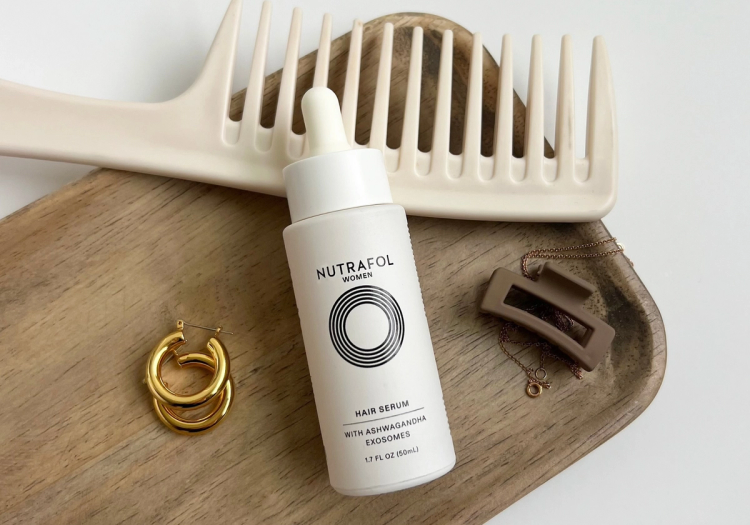
And yes, she likes scalp serums. “I love scalp serums, especially if you’re complaining of hair thinning,” she says.
The Hair-Growth Myth She Wants to Go Away
There’s one claim Dr. Woolery-Lloyd wishes would disappear: the idea that meaningful hair growth can happen overnight.
Hair moves through active growth, resting and shedding phases, so any intervention needs time to work. “Patience and consistency is key,” she says. But patience doesn’t mean ignoring a change. Whether the trigger turns out to be stress, hormones, menopause, a GLP-1 or something else, getting evaluated early can help you understand what your hair is trying to tell you and what to do next.
Watch the full episode of The Beauty Authority above for the full interview.