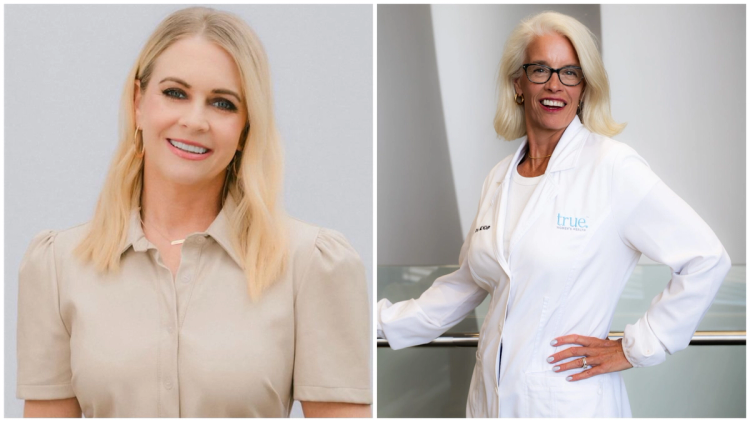
If the menopause patient is changing, the next question is whether aesthetic medicine is changing with her. Manhattan Beach, CA dermatologist Glynis Ablon, MD says the training hasn’t caught up to the patient. “The biggest gap is that most aesthetic training still treats skin aging as a single, linear timeline, rather than something that shifts in character once hormonal changes enter the picture,” she says. “We are now aware of the nonlinear nature of aging, with two big jumps at 44 and 60.”
The Demand Is Already There
In NewBeauty’s State of Aesthetics Summer 2026 report, 76.6 percent of women said they want energy-based treatments for menopause-related skin and body changes. Asked what matters most in choosing one, they ranked efficacy first, ahead of both cost and safety. These are not patients shopping for reassurance. They are paying for an outcome, and they expect the person recommending it to know how to deliver it.
What the survey doesn’t measure is whether the providers those women see have been trained to read hormonal change when it walks in the door.
What Revance Is Building
Revance has established a council focused on women’s regenerative and functional medicine, with a provider-education program as its first order of business. The program is built on an extensive review of the clinical literature and direct feedback from providers rather than on a product line, and findings like those in the NewBeauty survey confirmed for the company that it was time to act. It runs as its own workstream, parallel to the company’s advisory board of dermatologists and surgeons rather than reporting into it. The aim across both is to help providers coach and advocate for women through this stage instead of treating its symptoms one at a time.
What that education covers is less a product list than a sequence of judgment calls: recognizing menopause-related changes when they arrive disguised as something else, adapting the consultation to ask about hormonal stage rather than age alone, sequencing treatments instead of stacking them, and collaborating with the hormone or primary-care provider when the next question stops being a dermatologic one. Dr. Ablon’s approach maps that territory.
Perimenopause and Menopause Aren’t the Same Problem
“They’re not the same, and treating them the same is a mistake,” Dr. Ablon says. “Perimenopause is about fluctuation: estrogen swings up and down, so patients get a mix of symptoms: breakouts one week, dryness the next, unpredictable sensitivity,” she says. The work there is “stabilizing the skin barrier with gentle retinoids, peptides, and consistent sun protection,” and staying flexible, since what works one month may not the next.
After menopause, estrogen settles at a consistently low level and the problem becomes cumulative: collagen loss, thinning and lasting dryness. “That’s when I shift from ‘calm and stabilize’ to ‘rebuild and protect,’” she says, leaning harder into collagen-stimulating treatments, richer barrier repair and, for appropriate candidates, a conversation about hormone therapy with a gynecologist.
The literature backs the split. Reviews of estrogen-deficient skin put dermal collagen loss at up to 30 percent in the first five years after menopause and roughly 2.1 percent a year after that, with skin thickness declining about 1.1 percent annually, alongside reduced sebum production, thinner elastin and slower wound healing.
Skin Quality Comes Before the Wrinkle
The evaluation changes before the treatment does. Dr. Ablon grades skin quality first, using the Glogau scale for photoaging alongside validated scales that measure hydration, elasticity and pore visibility. “I always start with skin quality, not individual lines or volume loss,” she says, “so from the surface all the way down to bone.”
The reason is practical. “If the skin itself is dehydrated and its barrier is compromised, fillers or lasers won’t perform the way patients expect.” Only then does she prioritize by what’s aging the face fastest, which is usually more than one thing. “Multiple structures (skin, fat, muscle, bone) are changing simultaneously, so no single treatment addresses everything,” she says. “The goal is a plan that layers treatments in the right order rather than trying to fix everything in one visit.”
Why Regeneration Moves Up the List
“Regenerative treatments are exactly where I start when skin quality itself is the issue, since they work by stimulating the skin’s own collagen and repair processes rather than just filling or freezing a problem,” Dr. Ablon says.
For Dr. Ablon, microneedling is a critical piece of the puzzle. “It’s a great option early on, when the main concerns are texture, mild laxity, and overall dullness, because it improves the skin’s foundation with minimal downtime,” she says. “I love combining it with growth factors or peptides for improved efficacy.”
As laxity and volume loss progress, she layers in biostimulators, tightening devices or fillers. “It’s rarely either/or,” she says. “It’s about matching the tool to how much the underlying structure has changed.”
Hair Belongs in the Conversation, Too
“Hair thinning during this transition is really the same hormonal story playing out on the scalp: as estrogen declines, the relative effect of androgens increases, which shortens the hair growth cycle and miniaturizes follicles, especially along the part line and temples,” Dr. Ablon says.
Naming it correctly is the provider’s job. “It’s important providers recognize this as a legitimate hormonal pattern, not just ‘stress’ or normal aging, so it gets worked up and treated appropriately.”
Scalp microneedling helps “improve blood flow and product absorption,” she says, which makes topical growth factors or platelet-rich plasma more effective, “but it’s rarely a standalone fix.” She pairs it with medical therapy and, when appropriate, a hormonal or nutritional workup.
The Injectables You Know, Used Differently
Does the transition change how she treats a patient she has seen for years? “It does, mainly because the canvas you’re working on is changing under you,” Dr. Ablon explains. Skin gets thinner and less elastic with age, which makes product placement and pairing critical. “I’m more deliberate about sequencing barrier repair and collagen-building treatments before or alongside neurotoxins and fillers, rather than treating each concern in isolation,” she says.
What to Ask at Your Consultation
The tell is in the intake. “Listen for whether the provider asks about your hormonal stage at all, not just your age, and whether you’re noticing new dryness, breakouts, hair thinning, or unpredictable skin changes,” Dr. Ablon says.
Then listen to the order. “A menopause-informed provider will talk about skin quality and barrier health before jumping to fillers or devices and should be comfortable discussing how your plan might need to evolve over the next several years, not just today’s concerns.”
And notice who else they’re willing to bring in. “If a provider seems open to collaborating with your gynecologist or primary care doctor on hormone-related questions, rather than treating skin in isolation, that’s usually a good sign they’re seeing the full picture.”
How the Pieces Fit Together
The core problem is that menopause still gets little focus in aesthetic training, and few providers are equipped to treat the patient going through it. Some are starting to close that gap on their own. “Some dermatologists are understanding the sparsity of menopausal specialists and are training in more detail to help themselves and their patients,” Dr. Ablon says.
Closing it faster is what the council and its provider education are built for. The advisory board works the same problem from the other direction, bringing the experience of practicing dermatologists and surgeons to bear on what that education has to say. The literature review and provider feedback behind the program set the evidence both lean on.
That’s the real shift: moving beyond a checklist of concerns to a more meaningful conversation. “Building trust and diving deeper into each individual female patient’s history is not only critical,” Dr. Ablon says, “but life-changing.”