
Menopause is supposed to arrive in your late 40s or 50s (the average age in the United States is 52, according to the National Institute on Aging). But for some women, it shows up years earlier (sometimes even before 40), often right in the middle of fertility plans, career moves or family decisions that never accounted for it. And because no one expects it that soon, the early signs are easy to miss or blame on something else.
Irregular periods get chalked up to stress, hot flashes and night sweats to a warm bedroom. Since doctors don't always screen for it proactively, many women spend months trying to figure out what's going on. It can bring major changes to your skin, too. Ahead, an OBGYN and a dermatologist explain the early signs to watch for, what causes them, how early menopause is diagnosed and treated and what it means for your skin.
Featured Experts
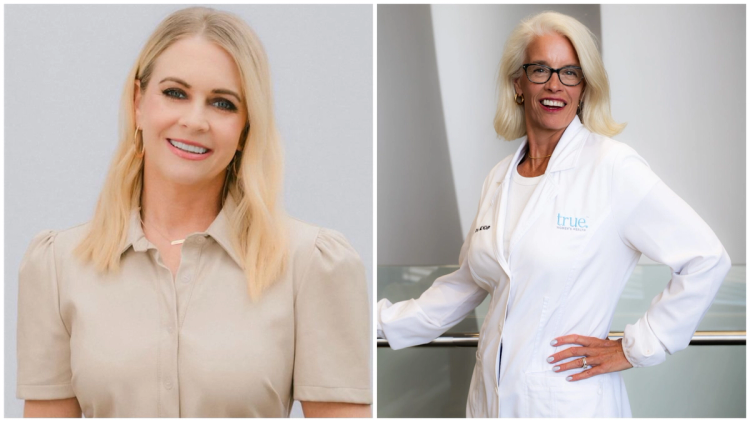
- Janine Hopkins, MD is a board-certified dermatologist in Southlake, TX
- Jennifer Choe, MD, is a board-certified OBGYN at Montefiore Einstein Advanced Care
What Is Early Menopause?
Officially, you've reached menopause once you've gone 12 months in a row without a period, which marks the natural end of your reproductive years. When that happens between ages 40 and 45, it's considered early menopause, says New York OBGYN Jennifer Choe, MD, and it affects about 5 percent of women, according to Cleveland Clinic. If it happens before 40, it's called premature menopause, which is rarer, at roughly 1 percent. That distinction matters, since it helps doctors decide how hard to look for an underlying cause.
What Are the Signs and Symptoms of Early Menopause?
Early menopause symptoms can look a lot like the regular kind, just sooner. According to Dr. Choe, the most common signs are missed or absent periods, hot flashes, vaginal dryness and painful intercourse—and premature menopause symptoms look much the same. Your skin may give you a heads-up, too, since dryness and dullness can show up before periods stop altogether (more on that below). If you’re under 45 and haven’t had a period in three months, she recommends booking an appointment with your doctor rather than waiting it out.
What Causes Early Menopause?
Menopause can happen on its own or be triggered by medical treatment, such as surgery or chemotherapy, Dr. Choe says. But early cases that happen on their own are harder to explain and, unfortunately, “usually unknown.”
Still, research has pinpointed several factors that raise the odds, including smoking and being underweight. Early menopause can also run in families, she adds, and certain genetic conditions, such as Turner syndrome, can cause it directly. Autoimmune diseases such as type 1 diabetes and Addison’s disease can also play a role. In fact, a 2024 study published in The Journal of Clinical Endocrinology & Metabolism found that a quarter of women with primary ovarian insufficiency had at least one autoimmune disease.
How Is Early Menopause Diagnosed?
Many conditions can mimic early menopause. On the bright side, “blood work can help doctors tell the difference between menopause or perimenopause and other medical conditions,” Dr. Choe explains. Those include pregnancy, thyroid issues and prolactin disorders (prolactin is a hormone that can interfere with your cycle), as well as polyendocrine metabolic ovarian syndrome (PMOS, formerly known as PCOS) and anemia.
How Is Early Menopause Treated, and Can You Still Get Pregnant?
Fertility is one of the biggest concerns for women diagnosed early, and it’s often the first thing patients ask about. “While there is no way to fully guarantee fertility protection, pregnancy can still happen naturally through spontaneous ovulation,” Dr. Choe says. In other words, the ovaries can occasionally still release an egg on their own, even after periods have become irregular or stopped. Bone and heart health, on the other hand, can be actively protected, typically through hormone replacement therapy (HRT), she adds.
Menopause Skin Changes: How Early Menopause Affects Your Skin
Most of us think of estrogen as a reproductive hormone, but Southlake, TX dermatologist Janine Hopkins, MD says skin depends on it, too. “Estrogen plays an important role in collagen production, skin thickness, hydration, elasticity and barrier function,” she explains. So when estrogen drops earlier than expected, skin tends to follow suit. It can get drier, thinner and less firm, with more visible fine lines and wrinkles, and it may bruise more easily or heal more slowly.
In her practice, Dr. Hopkins says the most common complaint she hears is that skin suddenly feels like it’s “aging faster.” And no, it’s not just in their heads. “This is not simply chronological aging; estrogen deficiency can become an additional biological driver of skin aging,” she says.
The timing matters, too. “Collagen loss accelerates around menopause and can be especially significant during the first several years following the decline in estrogen,” she adds, so when menopause arrives early, the clock on that starts sooner. Changes can even show up during perimenopause, often starting with dryness and dullness before progressing to sagging and fine lines. And the numbers add up quickly. Skin loses about 30 percent of its collagen in the first five years of menopause, then about 2 percent a year for the next 20 years, according to the American Academy of Dermatology.
How to Care for Skin During Early Menopause
Because of all these changes, Dr. Hopkins treats menopausal skin differently than typical age-related concerns. It tends to be drier and more sensitive, so she keeps things simple at first, with a routine that protects the skin barrier (the outer layer that keeps moisture in and irritants out). That means a gentle cleanser, plenty of hydration and antioxidants, a retinoid if your skin can handle it and sunscreen every single day (no exceptions!).
If estrogen isn’t an option, or you’d rather skip it, she reaches for non-hormonal products like Emepelle. She also likes growth factors and peptides such as GHK-Cu, a copper peptide she says shows promise for supporting collagen and calming inflammation.
For sagging and volume loss, in-office treatments can help, from lasers and resurfacing to biostimulatory injectables (which prompt your skin to make its own collagen) and hyaluronic acid fillers, such as Revance’s RHA Collection, made to move naturally with facial expressions.
Hormone therapy can also improve skin’s collagen, thickness, hydration and elasticity for the right patients, according to Dr. Hopkins, but it should never be prescribed just for cosmetic reasons. “HRT requires an individualized medical evaluation of symptoms, health history, risks and benefits,” she says.
The TL;DR: Early Menopause
Menopause before 45 is considered early if it happens between ages 40 and 45, and premature if it happens before 40. The most common early signs are missed periods, hot flashes and vaginal dryness. The cause is often unknown, but family history, autoimmune conditions, smoking and medical treatments can raise the risk. If you're under 45 and haven't had a period in three months, see your doctor for blood work. Because losing estrogen early speeds up collagen loss, a gentle, barrier-first routine can help, and hormone therapy may benefit skin, too, after an individualized medical evaluation.