Facelifts are having a moment, at least when it comes to plastic surgery. From celebrities’ transformative results to younger people opting for the surgery in their 30s and 40s in the name of “prejuvenation,” there’s been a noticeable shift toward natural, lifted—not overly pulled—looks. But what about those who want similar results without going under the knife? Or those hoping to maintain results post-procedure? That’s where face-lifting masks claim to come in.
Marketed as a way to temporarily sculpt, lift and tighten the look of the face, especially around the jawline, face-lifting masks are clearly catching consumers’ attention. According to Spate, the category has seen more than 780 percent year-over-year growth, indicating serious interest. But do they actually work? Temporarily, yes—but long term, no. Ahead, everything to know about face-lifting masks and whether they’re worth the buy.
What Are Face-Lifting Masks?
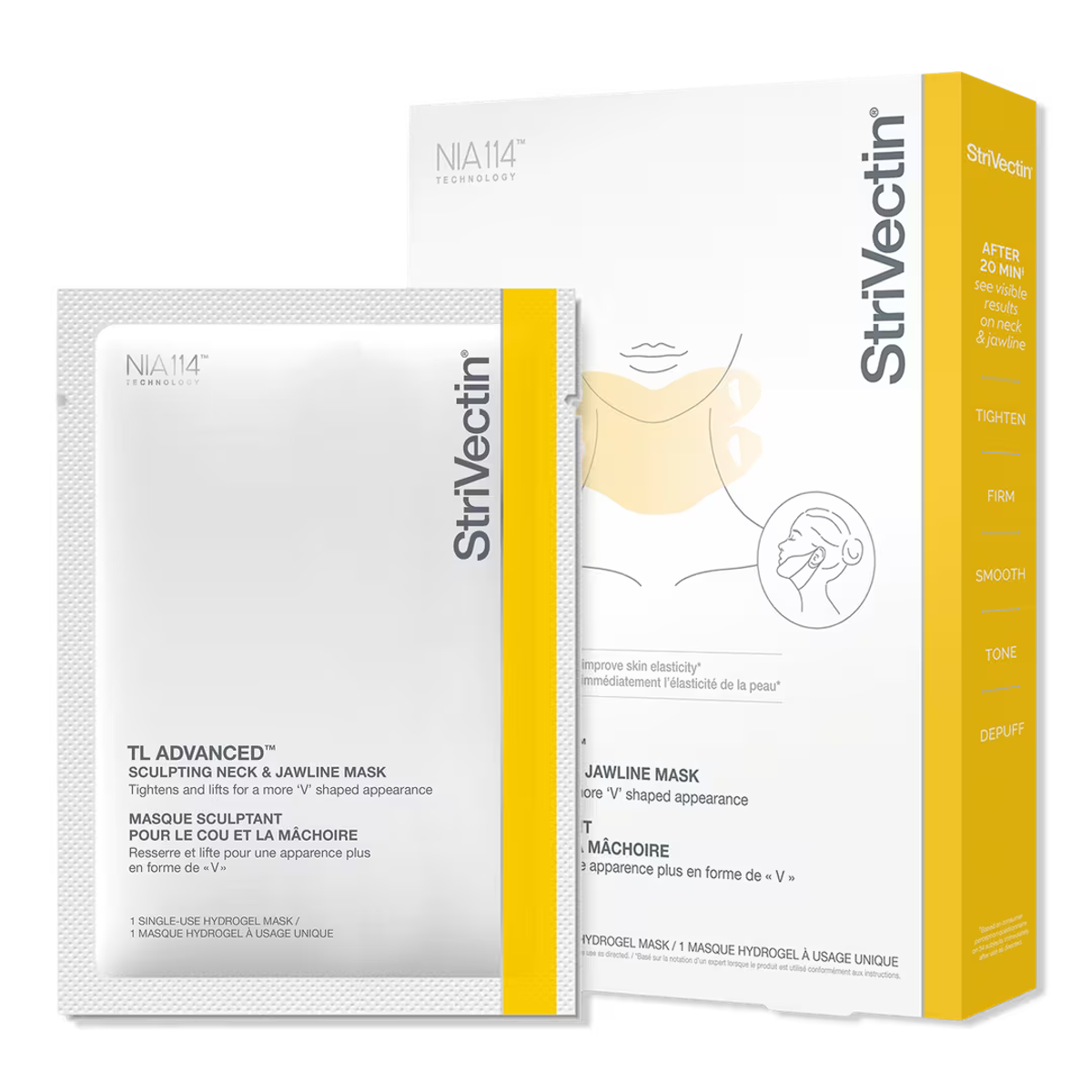
Face-lifting masks come in several forms, including tightening masks, compression chin straps and V-masks, which are V-shaped masks meant to temporarily slim the look of the face. Think of them as sheet masks meet chin straps. They’re often promoted for facial slimming, depuffing, contouring and defining, but these are all short-term effects. They “sound sculpting and snatching in theory, but biologically they don’t really make sense long term,” says Beverly Hills, CA aesthetician Candace Marino, LE, also known as The LA Facialist.
Why Are Face-Lifting Masks Popular?
The appeal is pretty straightforward: Face-lifting masks promise a temporary sculpted, lifted look without an appointment, downtime or major price tag. Many also come from the K-beauty space, where V-line masks and compression-style face masks have long been part of the conversation. For someone looking for a quick jawline-defining effect before an event or photo, that instant gratification is the draw.

What Are the Benefits?
Here’s where it gets nuanced. “A lot of the compression-style masks claim to lift, depuff or define the jawline,” says Marino. So that’s what you can expect they’ll do, but don’t be surprised if they don’t deliver dramatic results. Any meaningful depuffing effect depends on lymphatic drainage. “Your lymphatic system relies on gentle movement and circulation to drain fluid properly,” she says. “Wrapping the face tightly for hours at a time may temporarily compress swelling, but it can also potentially slow normal lymphatic flow and create rebound puffiness once the mask comes off.”
Do Face-Lifting Masks Really Work?
Not exactly. You shouldn’t expect results comparable to a facelift, chin or neck liposuction or buccal fat removal. You may see a temporarily snatched jawline before an event or photoshoot, though, but don’t expect much more. “There’s no evidence that these masks can structurally lift skin, tighten fascia or reverse laxity,” says Marino. “Any ‘snatched’ effect is usually temporary compression, dehydration of tissue or changes in posture and swelling.”
But why don’t they work the same way a surgery does? “Skin laxity occurs deeper in the skin and connective tissue,” says Marino. “It’s not something a tight piece of fabric can permanently reposition.”
When Can You See Results?
You may see temporary benefits, like less puffiness or a more defined jawline, during and immediately after use, but it’s critical to know these are temporary. “Many of these products are marketed like skin-care technology, but they are really just modern shapewear for the face,” says Marino. She compares them to a bra: “If someone has sagging breasts, wearing a push-up bra all day will temporarily lift and reposition them while it’s on, but once the bra comes off, the tissue goes right back to its original state,” she explains. “The bra didn’t structurally change the skin, ligaments or tissue itself.”
Face-lifting masks function similarly, so while you may experience the benefits they claim to give in the moment while you’re wearing the mask and slightly after, they are not actually changing the structure of your face. “Compression can temporarily move fluid and hold tissue in place for a few hours, but it’s not actually lifting or tightening the underlying structures long term,” Marino explains.
What to Try Instead
Marino recommends sticking to using these masks “post-surgically, when recommended by a doctor in their post-op protocol,” she says. For a more consistent approach, “I’d rather encourage people to get into a massage practice, use an LED mask, a cryo tool or begin a lymphatic or gua sha ritual,” she adds. She recommends products like the Lyma Laser ($2,695) or Shark CryoGlow Mask ($349) as alternatives that may offer more cumulative skin-care benefits over time.