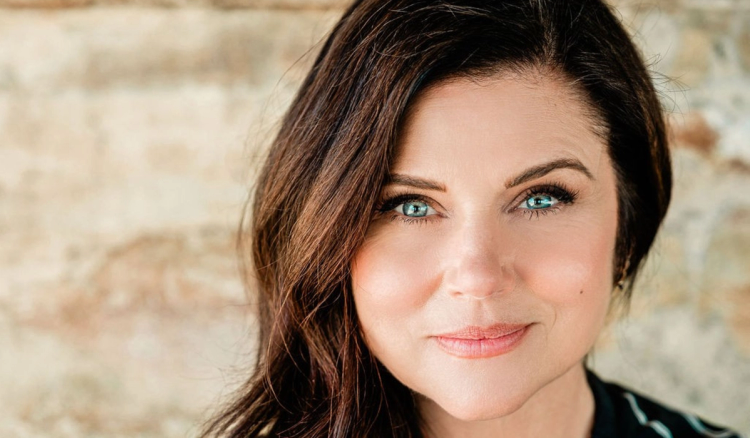
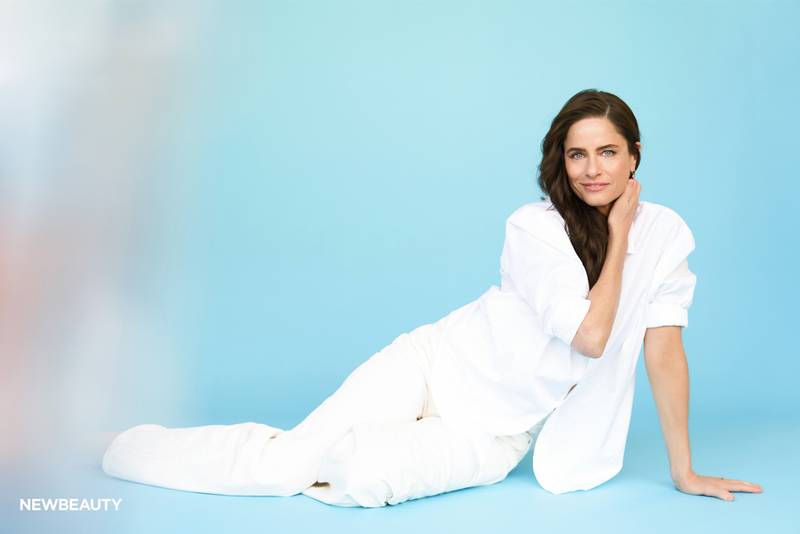
Amanda Peet is having a major month—and she’s earned every minute of it. Riding a wave of well-deserved recognition this spring, the actress and creator returns as the sharp, complicated Mel in season two of Apple TV+’s Your Friends & Neighbors alongside Jon Hamm, while generating serious awards buzz for her leading role in Fantasy Life, the indie film that swept SXSW 2025 with both the Audience Award and a Special Jury Award for her performance.
But what makes the star so magnetic right now isn’t just the projects—it’s her perspective. Navigating a recent breast cancer diagnosis with characteristic candor, weighing facelifts against ancient fables about fate and championing the kind of roles that let women be “funny and weird,” Peet is refreshingly unfiltered about the realities of aging in Hollywood. And we should all be ready to listen.
What’s something about the industry today that feels most different from when you first started?
“When I was offered The Whole Nine Yards, I told them I didn’t want to do full nudity. I thought they were going to be so taken by my acting that they’d acquiesce, but they said they were going to recast the role. I asked if I could just do upper body nudity, and they said they would find someone else. Then we haggled over the duration of nudity, and I lost that battle, too.
Thankfully, my role was funny and weird—not just a seductress—and the movie turned out to be my acting break. Nowadays, there isn’t as much pressure on women to be agreeable. Having an intimacy coordinator helps because you can protest and ask questions without being seen as a whiner. Bruce [Willis] was very protective of me in his own way, but it would’ve been helpful to have Lizzy, our intimacy coordinator on Your Friends & Neighbors, with me. Unfortunately, she wasn’t born yet.”
You’ve had such a wide-ranging career—what kinds of roles have challenged you the most at different stages of your life?
“Making The Chair was the most challenging ‘role’ because I had never made a TV show before. I knew how to talk to actors, but the rest of it was a new experience. One of my favorite parts of showrunning was arriving to the set in my old bib snowpants and no makeup. The way I looked was not part of my day-to-day agenda—partly because I didn’t have time to worry about it, but it was also just irrelevant.”
What initially drew you toYour Friends & Neighbors and what makes the character of Mel stand out to you?
“I was excited to have a famous novelist as a showrunner. And I loved that Jonathan Tropper decided to have divorcees who still carry a torch for each other. If there wasn’t a spark between Mel and Coop, it would be boring.”
You are getting a lot of rave reviews for Fantasy Life as well. What themes in the film do you think audiences will connect with most?
“I love that the characters are normal people with low-grade mental illness. When we see mental illness in movies, it’s usually Sybil or people who are stark raving mad. I have a lot of respect for athletes and celebrities who are open about their emotional struggles, and admiration for Matthew Shear for choosing to write about this. The fact that he made it funny is even better.”
You’ve spoken—and written—about your recent cancer diagnosis. How has that experience shifted your perspective? And how are you doing now?
“I’ll be doing endocrine therapy for five years. Probably longer since I had lobular cancer, which has a higher rate of distant recurrence. Sometimes, I get angry that everything about me is dried up. But I try to remember that I’m insanely lucky, and that Tamoxifen is my friend and is suffocating whatever little flecks of cancer got away.”
Are there conversations or awareness efforts you feel especially passionate about now?
“We have a lot of doctors in my family, and science is the thing. The fact that cancer research funds, among others, have been cut by this administration is heartbreaking. Pausing longitudinal studies that require following subjects over time is asinine. Also, the best and the brightest scientists, doctors and biotech engineers aren’t going to want to come to the NIH or even to this country anymore.”
You’ve described a tension between wanting to look younger and wanting to accept aging—how do you navigate that day to day?
“I go back and forth on whether to get a facelift. We live in a death-denying culture. My guess is that if I got a facelift, I would still feel anxiety about the fact that I’m in the back nine. My dad loved the ancient fable Appointment in Samarra, in which a servant bumps into Death in Baghdad, so he runs away to Samarra. Then you realize Death was set to be there, too. I guess the idea is that the servant would’ve been better off if he’d confronted his fear and stayed put. Maybe I feel like getting a facelift is the same as fleeing to Samarra.”
You’ve written about not crossing the “Botox Rubicon.” Do you have the same thoughts on the subject 10 years later?
“As I was leaving the afterparty for the premiere of Fantasy Life, a beautiful older woman hollered from across the room, ‘Amanda!’ She jumped up and made a beeline for me, and she seemed kind of emotional. I thought she was going to compliment my performance, but nope. She yelled: ‘I LOVE…your wrinkles!’ The fact that my wrinkles were the salient part of the movie for her made me really depressed. Maybe it’s time to get some Botox. I guess we’ve gotten to the point where a ton of cosmetic surgery and a ton of wrinkles are equally distracting.”
If you could remove one expectation placed on women as they age, what would it be?
“That we don’t want to keep working.”