Evidence supporting the Mediterranean diet has been building for years—lower risk of heart disease, better cognitive function, longer life. But what scientists haven't been able to fully explain, until now, is the how behind those benefits.
New research out of the USC Leonard Davis School of Gerontology is filling in that picture, and the findings go deeper than anything previously understood about how diet shapes the aging process, including how our cells age from the inside out.
Ahead, we're diving deeper into the research and what it means for your longevity—and your skin.
The Discovery
The study found that people who closely follow the Mediterranean diet have significantly higher levels of two protective microproteins—humanin and SHMOOSE—produced in the mitochondria of our cells, which play a key role in shielding the body from damage linked to aging and disease.
“These microproteins may act as molecular messengers that translate what we eat into how our cells function and age,” says Roberto Vicinanza, Instructional Associate Professor of Gerontology at USC Leonard Davis School of Gerontology and lead author of the study. “It’s a new biological pathway that helps explain why the Mediterranean diet is so powerful.”
Participants who adhered most closely to the diet also showed measurably lower levels of oxidative stress, the kind of cellular damage that accelerates aging and shows up as fine lines, dullness and loss of elasticity in skin.
What the Experts Say
Clinical pharmacist and nutritionist Jim LaValle finds the association meaningful, though measured: "I would be careful not to overstate it," he says, noting the study was a small pilot of 49 older adults. "What it does show is a very interesting association between Mediterranean-style eating, higher humanin and SHMOOSE levels, and lower oxidative-stress markers."
In his view, it adds another layer to the longevity conversation, suggesting the diet may support healthy aging not only by improving cholesterol, blood sugar and inflammation, but also by improving mitochondrial resilience.
The Foods in Question
Specific foods made a notable difference. Olive oil emerged as a major driver, with daily consumers showing higher levels of both microproteins. "Extra-virgin olive oil provides monounsaturated fats that support cardiovascular and metabolic health, but the real longevity interest is in its polyphenols," LaValle explains, pointing to compounds like hydroxytyrosol and oleuropein that help regulate oxidative stress and inflammatory signaling.
Fish and legumes were linked to higher humanin levels, while limiting refined foods like white bread was associated with higher SHMOOSE levels. "The benefit is not just olive oil alone," LaValle notes, "but olive oil within a broader Mediterranean pattern that is lower in refined carbohydrates and richer in whole-food nutrients."
What Are Humanin and SHMOOSE?
“Humanin and SHMOOSE are mitochondrial microproteins: small signaling molecules produced from mitochondrial DNA," LaValle explains. Humanin has been linked to cellular stress resistance and vascular protection, while SHMOOSE has been connected to mitochondrial energy metabolism and Alzheimer's-related biology.
"These peptides are emerging as key regulators of aging biology," notes Pinchas Cohen, MD, dean of the USC Leonard Davis School of Gerontology. "They connect mitochondrial function to diseases like Alzheimer's and heart disease—and now, potentially, to nutrition."
The Takeaway
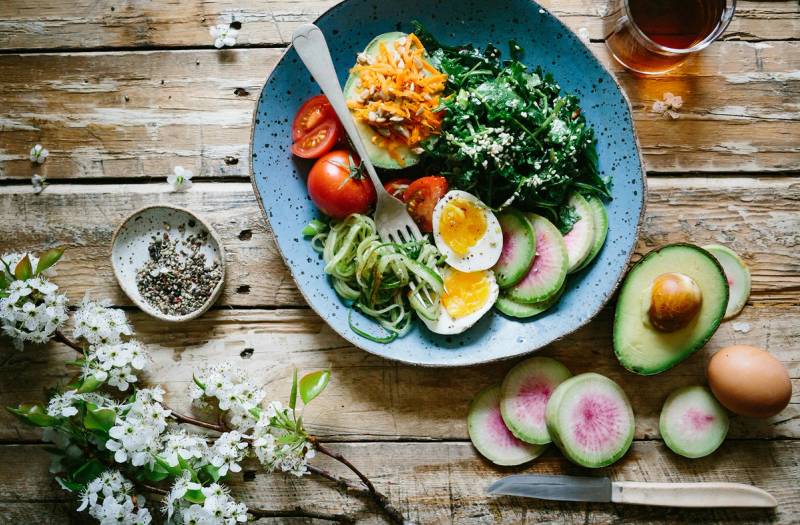
The study was small, and researchers are clear that more work is needed to establish direct causality. But LaValle is quick to zoom out: "The Mediterranean diet is not a single 'superfood' approach. It is a pattern: extra-virgin olive oil, vegetables, legumes, fruit, nuts, fish, whole grains, and fewer refined carbohydrates and ultra-processed foods. That pattern helps lower the biological stressors that accelerate aging, including oxidative stress, insulin resistance, chronic inflammation and endothelial dysfunction."
The data backs him up—a large 2024 JAMA Network Open cohort study of 25,315 women followed for 25 years found that higher Mediterranean diet adherence was associated with a 23-percent lower risk of all-cause mortality. The bottom line, says LaValle: "Food is information for the cell. A Mediterranean-style diet may help create the biochemical environment where mitochondria function better and cells age more resiliently." And when your cells age better, everything from your skin to your energy levels shows it.