
In times of crunching numbers, shopping sales and tightening belts, we tend to hold on to the little luxuries that keep us going. The fabled "lipstick index"—which gained traction in 2001 after lipstick sales spiked despite a recession—isn't a perfect bellwether for the beauty industry. When the economy slows, everyone in the aesthetic industry feels it. But thanks to NewBeauty’s The State of Aesthetics Summer 2025 report, powered by the BeautyEngine platform, we have a direct line to the most engaged members of the beauty community. And that gives us clear insight into what matters most to them when times get tough.
Featured Experts
- Anna Chacon, MD is a board-certified dermatologist practicing national telehealth
- Tina Alster, MD is a board-certified dermatologist in Washington, DC
- Janine Hopkins, MD is a board-certified dermatologist with practices in Monroe, LA and Southlake, TX
- Joel Schlessinger, MD is a board-certified dermatologist in Omaha, NE
Suspected Trend, Confirmed Habit
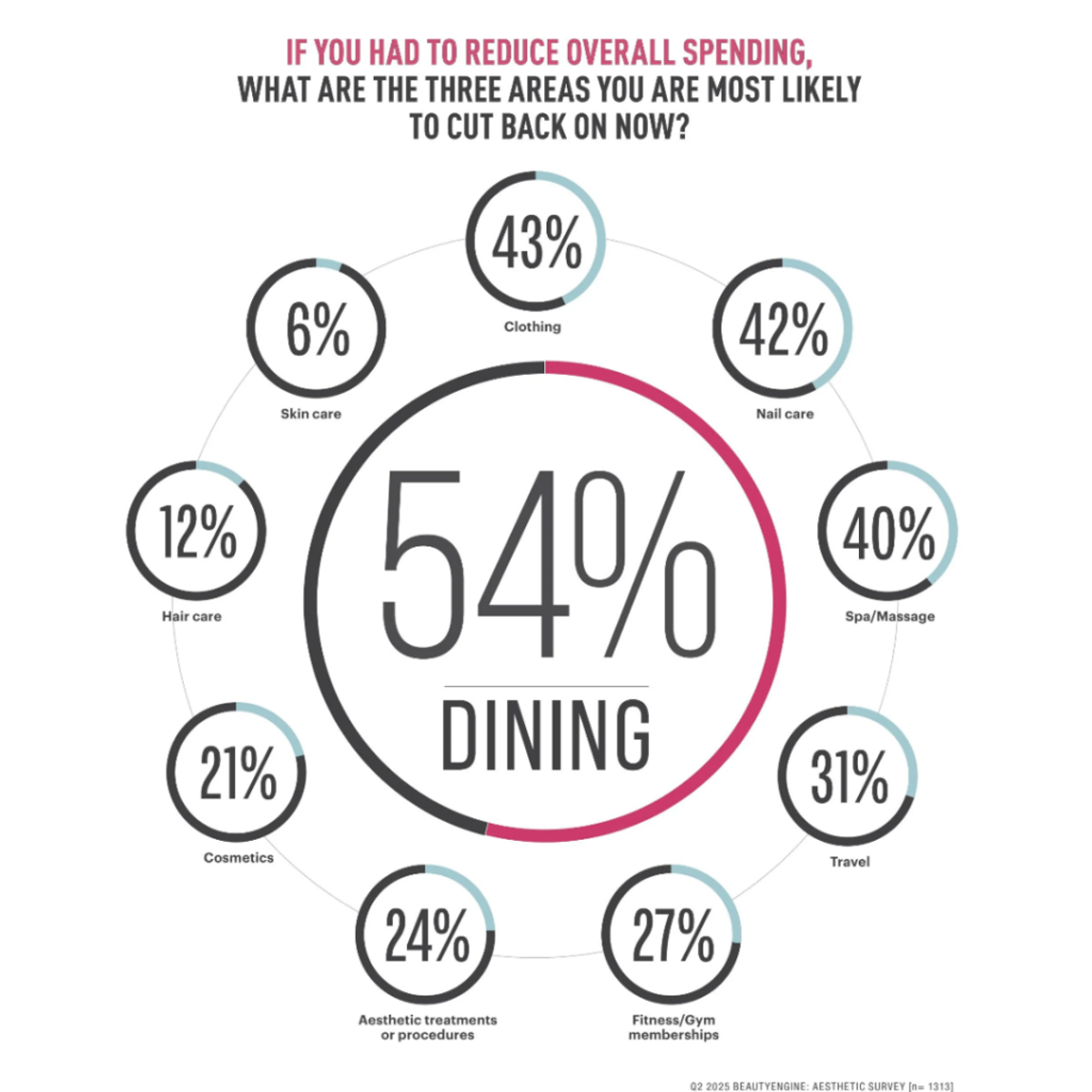
This year, we gathered critical and trending real-time data from real beauty consumers, and the way they budget their spending was a major priority. And with over a thousand responses, NewBeautyreaders made their must-haves clear: given the choice, consumers would rather cut back on options like dining (54 percent) and and clothing (43 percent) than part ways with their skin care (6 percent) and hair care (12 percent).
"This aligns perfectly with what I’m hearing from patients—for many, skin care has shifted from being a luxury to something essential," says national telehealth dermatologist Anna Chacon, MD. "Rather than chasing trends or overloading their routines, they’re becoming more selective, often focusing on dermatologist-recommended essentials like retinoids, antioxidants and barrier-repair moisturizers."
What we heard from our beauty community confirms that this trend applies to in-office treatments as well. “Personally, the decision to spend on a treatment comes down to value. If It’s going to last, and I trust the science behind it, I don’t mind the cost," says Rachel D., 44. "I’ll skip out on the small splurges to prioritize a treatment."
The Value in Skin Care
From essential routines to targeted treatments, consumers are clearly focused on long-term self-investment over short-term indulgences like massages. According to Omaha, NE dermatologist Joel Schlessinger, MD, that's not necessarily surprising. "Items such as dining out, don't necessarily last as long as a better looking face or body, and the happiness they provide is fleeting at best," he says. "They also have significantly less expensive alternatives, such as cooking at home, which investing in your skin doesn't necessarily have."
Monroe, LA dermatologist Janine Hopkins, MD, adds that many patients don't see skin care as optional anymore. "In today’s highly visual culture—where first impressions are often formed on screens before in person—healthy, radiant skin is more than a luxury; it’s a social asset," she says. "Patients increasingly view skin care as part of their self-care and wellness strategy, not just cosmetic enhancement. For many, investing in skin care is a way to show up as their best self, both personally and professionally."
For the experts, this data confirms the long-held wisdom that consumers prioritize beauty, even in tough times.
"I don’t recall a day when patients haven’t proclaimed that their investments in skin care and in-office dermatologic treatments superior to dining out — presumably because they last longer and make them feel better!" says Washington, DC dermatologist Tina Alster, MD. "This data demonstrates that sentiment."