
If you’ve ever come home from a trip to Europe or Asia clutching a sunscreen that felt nothing like anything available at home—lighter, sheerer, more luxurious—you’ve already felt the gap that this story is about. Today, that gap got a little smaller.
As of today, the FDA has officially approved bemotrizinol, adding it to the list of permitted sunscreen active ingredients for the first time in the agency's history under the streamlined process established by the CARES Act. It's the first new active ingredient added to the OTC sunscreen monograph since the late 1990s.
"As promised in the Trump Administration's MAHA Strategy Report, HHS is advancing innovation by bringing a new sunscreen ingredient to the U.S. market for the first time in 20 years," said HHS Secretary Robert F. Kennedy, Jr. "Bemotrizinol has been used safely in Europe for decades, and FDA's action will increase competition and consumer confidence in sunscreen products."
To understand the full significance of what just happened, here's the context.
Why It Took So Long
First, the U.S. is unusual in how it treats sunscreen. While much of the world classifies these products as cosmetics, the FDA regulates them as over-the-counter drugs, which means every active ingredient must meet a drug-level standard for safety and efficacy before it can appear on a label.
That distinction matters enormously. It's why, despite bemotrizinol being used in sunscreens internationally for roughly two decades, its U.S. debut took so long to arrive.
"The FDA's review of bemotrizinol is important because it suggests regulators are trying to modernize sunscreen options without lowering the safety bar," says Dallas dermatologist Elizabeth Houshmand, MD. "Bemotrizinol's review shows that innovation is possible when newer filters are supported by modern safety, absorption, toxicology and efficacy data."
Cosmetic chemist Kelly Dobos agrees. "The nearly 20-year path bemotrizinol has taken reflects just how rigorous the U.S. sunscreen approval process has become. The FDA did not shortcut safety in order to approve a modern filter, and bemotrizinol is arguably now one of the most comprehensively evaluated sunscreen active ingredients the U.S. has ever reviewed."
Six other UV filter candidates were pursued under a process called the Time and Extent Application (TEA) in the early 2000s, and all of those efforts have since been largely abandoned. The process proved too slow and too expensive for ingredient manufacturers to see through to completion. Today's approval represents a meaningful shift in how that works.
The Science That Changed the Conversation
One reason past sunscreen ingredients have drawn scrutiny is systemic absorption—the question of how much of what you apply to your skin ends up in your bloodstream. Bemotrizinol was designed, from the start, with this problem in mind.
"Past concerns around sunscreen ingredients have focused on systemic absorption, especially after studies showed that some filters can be detected in the bloodstream," explains Dr. Houshmand. "Bemotrizinol appears to address that concern because it has low skin penetration and a favorable irritation profile."
Dobos calls out the engineering behind that performance. "Bemotrizinol was specifically formulated to have a higher molecular weight to minimize skin penetration. That design intent proved successful, even in studies investigating extreme use conditions, known as maximal usage trials, it showed very low systemic exposure."
The FDA has determined bemotrizinol to be generally recognized as safe and effective (GRASE) for use in sunscreens by adults and children six months of age and older—making it only the third sunscreen ingredient approved for use in infants, alongside zinc oxide and titanium dioxide.
What Bemotrizinol Means for Your Sunscreen
For most people, the most immediate impact will be felt not in a lab report, but in a texture. The filters currently available in U.S. sunscreens come with well-known trade-offs: Avobenzone can degrade in sunlight without stabilizers; zinc oxide and titanium dioxide provide excellent protection but often leave a white cast that limits adherence, particularly among people with deeper skin tones.
Bemotrizinol absorbs efficiently across both UVA and UVB wavelengths and can help stabilize other filters in a formula, giving formulators far more flexibility to build high-SPF, truly broad-spectrum products without relying as heavily on ingredients consumers find cosmetically challenging.
Dr. Houshmand said ahead of today's announcement: "It is broad-spectrum, photostable and can help strengthen UVA protection while supporting high-SPF, more cosmetically elegant formulas. That matters because the best sunscreen is ultimately the one patients will use consistently."
Dobos echoes that point. "Lighter textures and less whitening are attributes that matter enormously for consumers. Cosmetic elegance is often the strongest predictor of whether people will actually use a sunscreen as directed, and that's what ultimately protects skin."
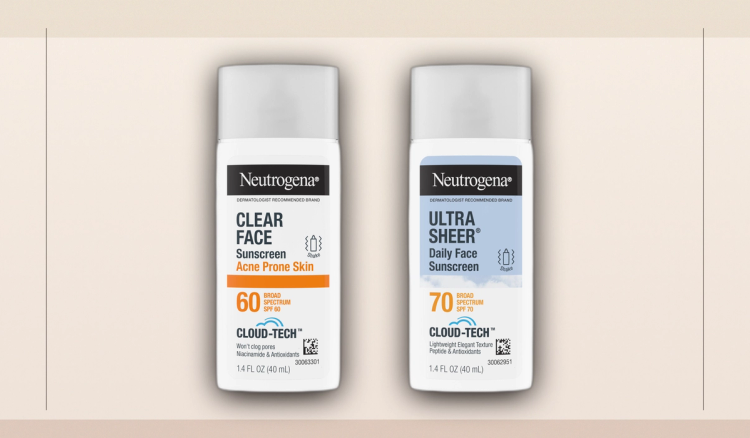
Neutrogena, whose parent company Kenvue was closely involved in the advocacy around this approval, is already preparing to integrate the new filter. "Bemotrizinol has high solubility in cosmetic emollients, which supports superior water resistance and long-lasting broad-spectrum sun protection," says Erica Sinclair, VP of Regulatory Affairs at Kenvue North America. "Neutrogena will integrate this filter into its sunscreen innovation pipeline, leveraging its aesthetic benefits and gentle formulation profile."
Closing the Global Gap—and What Comes Next
For global brands, the U.S. sunscreen market has long required a workaround: Formulate one product for markets where modern filters are available, and a different, more limited version for American shelves. Today's approval begins to close that divide.
"Europe and Asia have had access to more advanced filters for years, which has allowed lighter textures, better UVA coverage and fewer issues like chalkiness or heavy feel," says Dr. Houshmand. "Adding bemotrizinol makes U.S. sunscreens more globally competitive."
Dobos agrees, while noting how much further there is to go. "Approval of bemotrizinol allows U.S. products to move closer to global performance expectations, especially in UVA protection. U.S. formulations will be able to achieve aesthetics that more closely resemble their international counterparts, but we still could use a few more modern filters to truly get on par with the rest of the world."
Today's action was made possible by DSM Nutritional Products LLC, which submitted the original OTC monograph order request. "We really have to thank dsm-firmenich for bringing bemotrizinol to the finish line," says Dobos. "The story shows that approval is possible, but it also emphasizes the complications that the lengthy and costly process brings."
Whether this becomes the first of many or remains a one-time milestone remains to be seen. But for now, the best formulas on American shelves are about to get meaningfully better—and the sunscreen you've been sneaking home from abroad may soon have a worthy domestic rival.