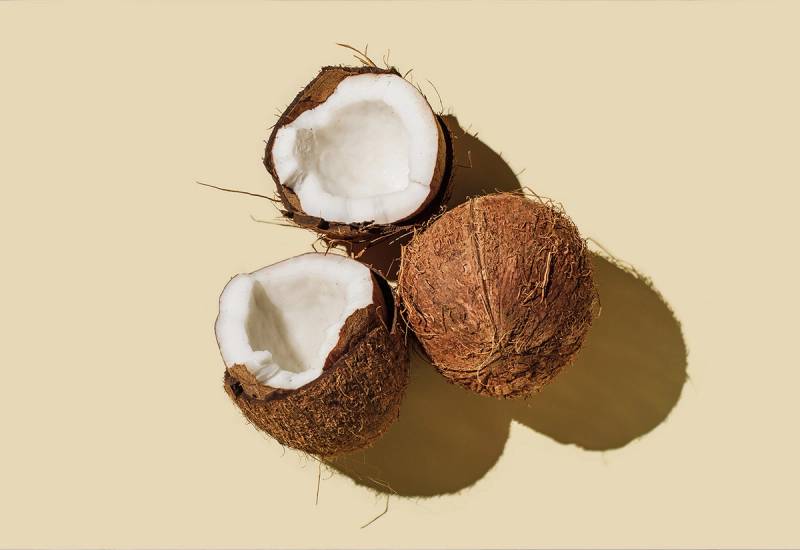
Coconut oil is one of those natural skin and hair ingredients that can sound too good to be true. It’s known as an excellent hydrator, and is often the star in moisturizers, shampoos and conditioners, and even facial cleansers. But does it belong in all of those products? And is every skin type going to benefit from using it?
We asked the experts how exactly we should be using coconut oil and what benefits we can really count on.
Skin-care ingredient you can't live without: - Powered By PickUp
Let’s Start Positive
Coconut oil has been a staple for tropical cultures for centuries, frequently used as a cooking oil, moisturizer, and as a medicine. It’s stuck around so long for a reason.
According to Davie, FL dermatologist Marianna Blyumin-Karasik, MD, coconut oil’s most significant skin-health claims are backed by scientific evidence. “I am aligned with the claims that coconut oil is an excellent skin hydrator and moisturizer,” Dr. Blyumin-Karasik explains. “It has good scientific evidence in babies and adults to improve moisture retention in the skin.”
Introduced fairly late to Western culture, coconut oil has become hugely popular in both cooking and in cosmetics. That said, it suffered a severe dip in popularity as a cooking oil back in 2017 when the American Heart Association issued a warning regarding the high saturated fat content. Interestingly, that high saturated fat content is exactly what makes it such a good skin and hair care ingredient.
“Coconut oil from Cocos nucifera is well known as a skin barrier reinforcer to help skin dryness and eczema due to its occlusive properties from the rich omega-6 fatty acid content,” Dr. Blyumin-Karasik explains.
Clean cosmetic chemist and founder of KKT Consultants Krupa Koestline adds that the chemical makeup of coconut oil has a lot of beneficial components. “Coconut oil is a fantastic ingredient with a plethora of benefits for skin and hair. Virgin coconut oil (VCO) is composed of a 45-50% lauric acid, 19-22% myristic acid, 7-10% palmitic acid, and other minor saturated and unsaturated fats,” Koestline explains. “It has a longer shelf life compared to other vegetables because it’s mainly composed of medium chain triglycerides, making it resistant to peroxidation.”
Lauric acid helps reduce inflammation and fights acne-causing bacteria. Myristic acid is commonly used as an emulsifier and has been shown to help repair the skin barrier. Palmitic acid acts as an emollient, which helps soften the skin and traps moisture. All of these provide excellent benefits to both the skin and hair.
Benefits Beyond Hydration
Coconut oil is a staple in wellness and self-care rituals not just for its power as a moisturizer. “Coconut oil also has a gentle tropical aroma therapy quality which is great for sensorially pleasant, mindful skincare or haircare ritual which enhances wellness,” Dr. Blyumin-Karasik explains.
Alongside its ability to enhance mindful self-care routines, studies on coconut oil have also determined its benefits for the skin barrier.
“It contains antimicrobial properties to improve surface skin microbe balance,” says Dr. Blyumin-Karasik. Antimicrobials are key player in the defense-line of the skin.
“The skin is the first line of the body’s immune system against pathogens, including bacteria,” Koestline explains. “Utilizing something with mild antimicrobial properties can help keep the microbiome balanced and any potential skin infections at bay.”
This is why coconut oil has been used as a topical medicine for so long.
“For skin, it’s been clinically shown to reduce inflammation, help with wound healing, improve the skin’s natural lipid barrier, reduce transpeidermal water loss (TEWL), and nourish the moisturize the skin,” Koestline says. “It’s also antipruritic and shown to alleviate all symptoms of eczema better than mineral oil for people with mild to moderate eczema.”
Antipuritics help alleviate symptoms of itching, sunburn, and allergic reactions. That said, it isn’t a replacement for antibiotics.
The Acne Concern
All this can make coconut oil look like a perfect ingredient, but that wouldn’t be the full truth.
According to New York dermatologist Jennifer Segal, MD, coconut oil isn’t necessarily appropriate for all skin types. “While enticing in feel and aroma, coconut oil (like most fragrant oils) should be used with caution, especially in acne and rosacea prone skin,” Dr. Segal explains. “The lovely fragrance doesn't always agree with more sensitive skin and can lead to irritation and breakouts.”
As a result, coconut oil has developed somewhat of a reputation for causing acne.
“Some forms of coconut oil can be comedogenic, aka pore clogging,” Dr. Blyumin-Karasik says. “If an individual is prone to acne on the scalp, it's best to avoid using coconut oil as a hair moisturizing or styling agent.”
If you struggle with acne along the hair line, you may want to avoid products that heavily feature coconut oil.
“Oils can be comedogenic, especially in thicker preparations,” Dr. Segal explains, "making skin and hair care products with coconut oil more problematic for conditions such as ‘pomade acne,’ in which clogged pores and breakouts are more common along the hairline where hair (and hair care products) come into contact with facial skin.”
But this doesn’t mean people with acne-prone skin can’t use coconut oil at all.
“Coconut oil does have the reputation of clogging pores and causing acne,” Koestline says. “While raw coconut oil can be too occlusive for some, this is highly dependent on each individual’s skin. For some, coconut oil may even benefit acne because it’s rich in lauric acid, a wonderful anti-acne agent.”
Using Coconut Oil Wisely
Whether or not coconut oil will be beneficial to the skin also comes down to what form you’re using. Raw coconut oil is a solid at room temperature, a thick and creamy texture that can clog your pores, so you may not want to replace your body lotion with 100% coconut oil. But most skin and hair care products that feature coconut oil also include ingredients that balance out those properties.
“It's essential to look for non-comedogenic labels on the skin products to attain hydrating oil benefits from the coconut oil containing products and avoid breakouts at the same time,” Dr. Blyumin-Karasik explains. Even for those who are acne-prone, “coconut-based shampoo or conditioner with short-term application would be fine.”
So, if you’re prone to acne, you probably want to avoid using pure, raw coconut oil on your face or scalp. When it comes to products, you’ll likely not want to build your skin and hair care entirely around coconut oil as a star ingredient.
“If using products with coconut oil, try them on the body first!” Dr. Segal advises. “The skin tends to be less sensitive there.”
If you want the benefits coconut oil can provide, but are concerned about the potential for breakouts, you can look to formulas that are meant for short-term application and wash-off products.
“Even though coconut oil contains antibacterial and anti-inflammatory properties, because of its heavy oily-based quality, it can be congestive to the pores, and its best to minimize its exposure to acne-prone skin types to short contact therapy,” Dr. Blyumin-Karasik says. “This is why we integrated this incredible natural ingredient into our Stamina Blemish Remedy Mask which purifies, calms, and brightens the skin within 15-30 minute application with the help of coconut oil, yet avoiding long-term pore clogging.”
According to Koestline, you can get the benefits of coconut oil in both face and body products. “The benefits can be enjoyed when coconut oil is formulated into products like face and body moisturizers, such as Kopari and KP Away, face and body cleansers, makeup removers, and even deodorants. These tend to be more cosmetically elegant and easier to use,” Koestline explains. “It should never be used in place of sunscreen; however, it’s fantastic when used in a sunscreen formulation.”