“I’m fine” may be the most common and socially acceptable answer to “How are you?”—and, according to new research from Lancôme, one of the least honest. In partnership with Ipsos, the brand surveyed women around the world and found that 80 percent of respondents admit to saying “I’m fine” when they’re not, and 72 percent regret hiding how they truly felt. More than 60 percent say mental health is difficult to talk about—a higher percentage than for fertility or menopause—and 52 percent avoid opening up because they don’t want to burden others.
Those findings are the foundation of “I’m Fine,” a long-term global initiative Lancôme launched ahead of World Mental Health Day. Through IMFINE.COM and Lancôme.com, women can take free, clinically validated anxiety and depression self-assessments, read stories from women around the world, access expert-led resources and connect with trusted mental health organizations. By 2030, the program aims to help three million people recognize the early signs of anxiety and depression.
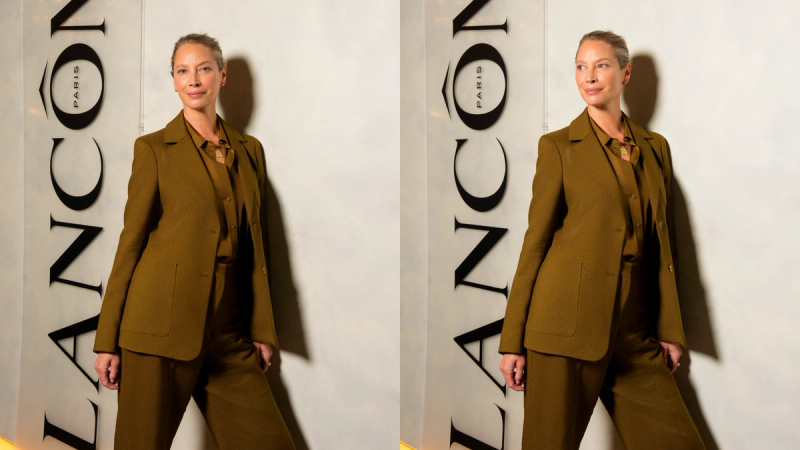
Christy Turlington is one of four Lancôme ambassadors, along with Demi Moore, Zoë Saldaña and Vanessa Kirby, sharing their own stories for the campaign. Following the launch event at Le Coucou in New York, we spoke with her about the pressure to always look “on,” why postpartum never really ends and why she believes this is the most important thing a beauty brand could do.
Why was now the right time for you to talk about this?
“I guess it was the invitation. I really haven’t been asked about my mental health over the years. I think it’s a good sign that this is the conversation that needs to be had—with everybody, anybody.”
There have surely been times in your life when you said you were fine and you weren’t. Why do you think that still is the natural answer for most of us?
“Yes. I think most of us are busy. There’s a little bit of that ‘you’ve got to keep going’ feeling. You say ‘I’m fine’ to get through whatever it is you’re going through, and you don’t take the time to actually unpack whatever it is you might be struggling with. I think you really need to build in space and time to be reflective, to give yourself a chance to check in and ask yourself, ‘Am I really fine or am I just saying that?’
“It’s a conversation to have with the people around us, but also, more importantly, to have with ourselves. If we really asked ourselves, oftentimes we probably would not be saying ‘I’m fine.’”
You came up in an industry that’s all about looking fine and being ‘on.’ How did that shape things for you?
“I think it’s as hard for anyone as the next person…I spent many years in my first career [modeling] not even thinking about it, just getting to work, getting made up. That’s part of the job, right? To present happy, healthy, well. And obviously not all of us are that way. If it’s your job, you show up, and you show up doing the thing you’re supposed to do when you get there.
But it’s been a long time since that was my real job. Now, I have more space and more control, honestly, over how I spend my time and who I surround myself with than I did when I was younger, so that helps.”
You’re such a strong advocate for mothers and postpartum care. How does that tie into this?
“The whole of our lives—reproductive health, generally—is a continuum. Different phases require different kinds of care. I think it’s so integrated in every phase of our lives. The part I’ve spent the most time thinking about is the postpartum period, because it’s connected to pregnancy and childbirth. But postpartum is forever. Well beyond a child’s arrival, there are different transitions and struggles and stressors you face as a mom, and that doesn’t ever end, frankly. That’s my way in, but it’s certainly not the only way in, because I’m human.”
Why is it so important for a beauty brand to talk about mental health?
“I think it’s probably the most important thing a beauty brand could do. It touches everyone, and it can follow you throughout your whole life. It’s responsible to do, but it’s also the conversation that should be happening. Leadership in opening that door is really important. I’m really proud to be associated with a brand that has taken this on.”