Every generation believes it may be the one to discover the Fountain of Youth. While science continues to advance and each new era introduces its own promises of longer, healthier living, the underlying human desire has remained unchanged.
The ancient Epic of Gilgamesh told the story of a king searching for immortality. The Greeks imagined ambrosia, the food of the gods conferring eternal youth. Centuries later, Ponce de León became forever associated with the search for the Fountain of Youth. The mythology changed, but human nature did not. Today we no longer search with maps and ships but rather with NAD⁺ infusions, stem cells, exosomes, peptides and microbiome testing.
The white coat has replaced the explorer's armor, PowerPoint has succeeded the treasure map and social media has reinvented the modern campfire. Fantastical stories of forever youth and beauty now spread faster than evidence itself. To be clear, I don’t intend to demean the remarkable achievements in health and aging. Over the past century, average life expectancy has increased dramatically. Improvements in sanitation, antibiotics, cardiovascular medicine and cancer treatment have added decades of quality to human life. Many respected functional medicine physicians who I have had the pleasure of sitting on panels with have told me that living well beyond 100 will become increasingly common.
But alongside these extraordinary advances runs another, less admirable constant of human behavior: our willingness to quickly buy what the “experts” are selling. We have always been susceptible to the next miracle, breakthrough or slick spokesperson. And today I see an aesthetic community easily impressed with any product, procedure or technique that has the word “longevity” associated with it. Too often, life-extending cures sparked by an exciting discovery in a Petri dish have yet to prove themselves in double-blind, randomized, placebo-controlled trials or in the real world.
I remember when low-fat diets were considered nearly unquestionable. Then carbohydrates became the villain. Then came intermittent fasting, ketogenic diets, cold plunges, hyperbaric oxygen, resveratrol, telomeres, NAD⁺, biological age clocks and now an ever-growing list of peptides and longevity protocols.
Each emerged with threads of credible science and enormous promise. Some will undoubtedly prove transformative. Most will quietly disappear, replaced by the next exciting possibility. Nearly all arrived with enthusiasm that exceeded the available evidence. The problem is not the bold ideas or the creative insights; in fact, every breakthrough begins with a doubted thought leader and a disrupting challenge to conventional thinking. The problem is when certainty arrives before science or despite it. And increasingly that unbridled assuredness comes from within the scientific community itself.
Few specialties understand this cycle better than aesthetic medicine. Whether driven by market forces or humanity's innate desire to preserve attractiveness, we have watched wave after wave of revolutionary products and soothsayers arrive with extraordinary claims. A few have fundamentally changed patient care for the better; others generated more excitement and clicks than evidence. Most eventually settled somewhere in between.
Longevity medicine now risks following the same trajectory. I see the promise of longevity everywhere from scientific meetings and journal covers to conference podiums, social media carousels, podcasts and marketing campaigns. At times it feels less like a scientific discipline and more like an influencer selling a lifestyle movement.
Read enough medical publications, trade journals or social media posts and one might conclude that aging has become optional for those willing to purchase the right supplement, wear the right biometric device, inject the right peptide or subscribe to the right longevity clinic. But history suggests we should be more cautious. The pursuit of regenerative medicine deserves enthusiasm along with scholarly debate, but the commercialization of eternal youthfulness could benefit from greater responsibility. As physicians, we should be especially careful not to become participants in a modern retelling of the Fountain of Youth. Consumers, patients and perhaps even more importantly, young physicians and providers entering our profession do not need trusted scientific voices amplifying every exciting hypothesis. They need experienced clinicians capable of distinguishing compelling data from compelling storytelling, biological plausibility from clinical proof and genuine hope from manufactured hype.
None of this is an argument against longevity medicine or the impressive pioneering clinicians forging the space; rather, the opposite: it holds extraordinary promise. Cellular senescence, immunology and regenerative biology may fundamentally reshape the way we age and the quality of life we experience. The scientists pursuing these questions—many of whom I greatly respect—deserve enormous admiration. But as many of them also know, every meaningful scientific revolution requires clinical evidence, peer review, intellectual humility and the willingness to abandon a passionate theory when the data dictates.
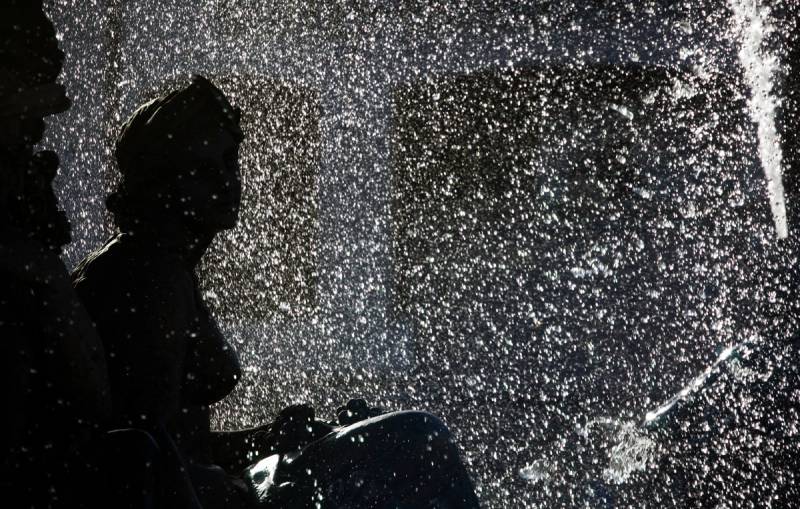
History reminds us that progress rarely arrives as its advertisements suggest. The Fountain of Youth may one day prove to be real, but more likely it will arrive through incremental discoveries that drip in over decades. And when the day comes that longevity medicine has arrived, we are unlikely to recognize it by a viral social media post, an influencer's testimonial or the new swanky anti-aging clinic opening in our neighborhood. Rather, it will waltz in quietly through clinically proven science that has led to a generation experiencing healthier, extended lifespans.
Until then, it would serve us well to remember that our greatest strength—insatiable curiosity—is countered by our greatest weakness: the temptation to accept without question. Gilgamesh taught us a lesson 4,000 years ago that still stands today. The desire for eternal youth is timeless, but so too is the temptation to believe we have found it.