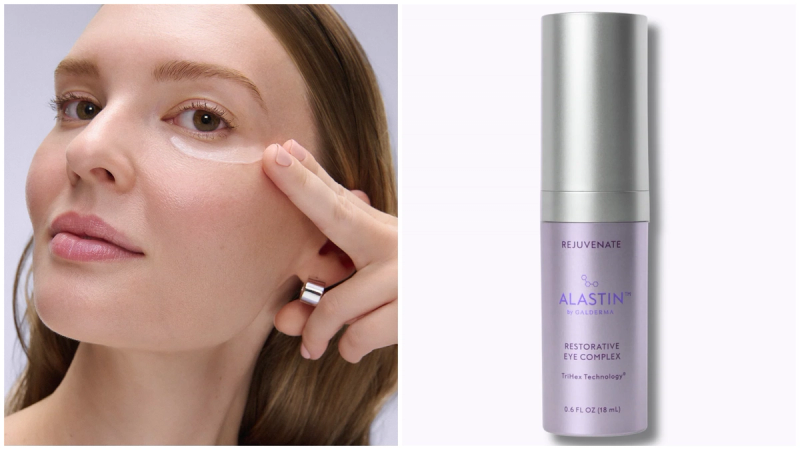
Most eye creams focus on dark circles, puffiness and crow’s feet, but what about the thin, crepey skin on our upper eyelids? It’s one of the first areas to show signs of aging, yet it rarely gets the same attention. Alastin is looking to change that with its newly updated Restorative Eye Complex with TriHex+ ($128), which takes a closer look at what skin care can actually do for the upper lids.
Why Upper Eyelids Need Special Attention
Upper-eyelid skin is among the thinnest on the face, and it gets quite a workout. Between blinking, squinting and everyday facial movement, the skin is constantly folding and stretching. Over time, it can become less firm and more crepey.
“That combination means a formula needs to be both cosmetically elegant and appropriate for this highly sensitive area, while addressing visible concerns such as crepiness and loss of smoothness without migrating into the eye,” says Alan Widgerow, MD, chief scientific officer at Alastin’s parent company, Galderma.
It’s also an area that’s been harder to study. Most eye cream research focuses on crow’s feet and the under-eye area, where changes are easier to photograph and measure. Upper-lid concerns can involve everything from fine wrinkling to excess skin, so researchers have to be more specific about what they’re measuring.
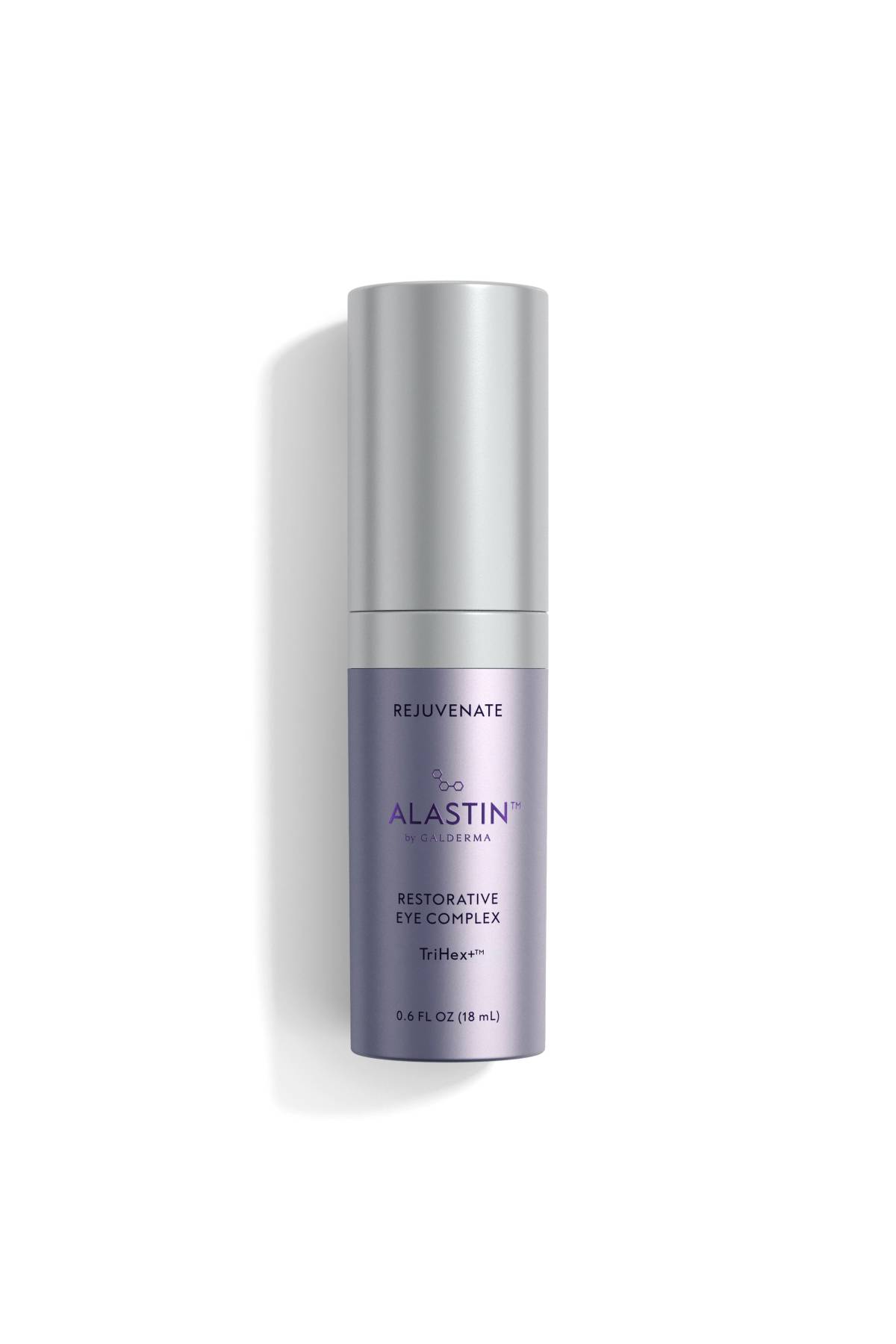
Alastin Restorative Eye Complex with TriHex+
What’s Different About This Formula?
Alastin has been updating its lineup with TriHex+, including Skin Nectar ($265) and Restorative Skin Complex ($258). Now it’s the eye cream’s turn. The updated formula combines the brand’s original TriHex Technology, developed to support collagen and elastin, with Octapeptide-45, a peptide the company says helps skin produce its own hyaluronic acid. It also contains ingredients aimed at improving the appearance of firmness around the eyes.
What the Clinical Results Show
So, can an eye cream actually make a difference on crepey upper lids? In a 12-week clinical evaluation, 29 adults ages 35 to 70 with moderate to severe signs of aging around the eyes used the updated formula.
By the end of the study, investigator assessments found a 22 percent reduction in upper-eyelid fine lines, a 34 percent improvement in under-eye puffiness and a 30 percent improvement in crow’s feet. While the study was small, the upper-lid findings are particularly interesting given how rarely this area is evaluated on its own.
What Eye Cream Can and Can’t Do
Interest in blepharoplasty continues to grow. According to the American Society of Plastic Surgeons, eyelid surgeries increased nearly 19 percent in 2025, making blepharoplasty the most popular facial surgery of the year. Younger patients are also asking about it.
“I recently saw a 33-year-old requesting blepharoplasty,” says Nashville, TN oculofacial plastic surgeon Brian Biesman, MD. “This is not uncommon today, whereas it was almost unheard of 10-plus years ago.”
Dr. Biesman, who evaluated the Alastin formula, says the important distinction is between improving skin quality and addressing the underlying anatomy. “Topical products, like Alastin, can help to improve skin quality and can reduce the look of fine wrinkles and visible discoloration,” he says. “Surgery manages excess skin, drooping of the eyelid (ptosis) and bulging fat pads.”
That means someone noticing the first signs of crepiness may benefit from a targeted topical, while someone dealing with significant hooding or excess skin will likely need a different approach. For patients considering eyelid surgery, he also sees a role for skin care before and after a procedure.
“It’s not always a one-or-another decision,” he says. “Products like Alastin can act as a complement to procedural treatments.”