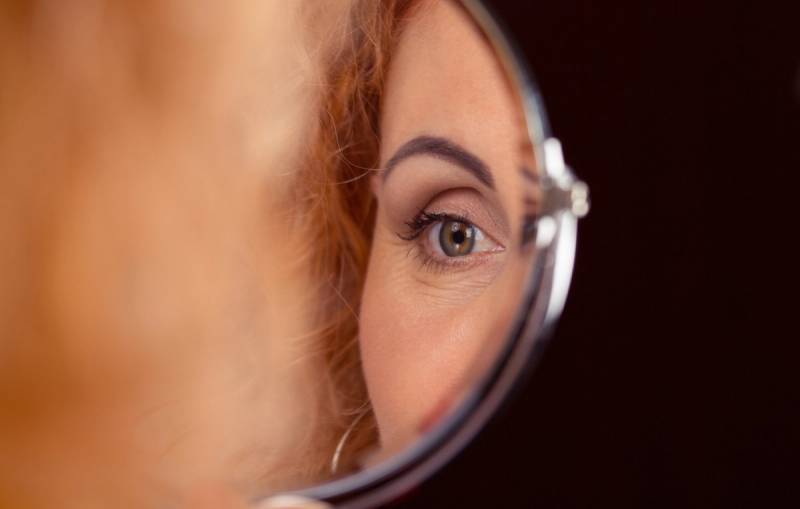
When people think about eyelid surgery, they often picture a pulled, hollowed-out look that immediately gives it away. That’s exactly what modern blepharoplasty is moving away from. According to Wayne, NJ facial plastic surgeon Jeffrey B. Wise, MD, today’s approach is more nuanced, more personalized and far more natural. “I interpret modern blepharoplasty as a movement that is a more holistic natural approach to eyelid surgery,” he says. “In the old days, surgeons would try to make the eyelid crease standardized for all patients… that effort could make patients look quite unnatural.” Now, the goal is to work with each patient’s anatomy, not against it.
It Starts with What’s Actually Bothering You
Most patients don’t come in asking for a specific procedure. They come in describing how they look. “Most people generally discuss concerns that their eyes make them appear tired or sad or angry,” Dr. Wise says. From there, the decision between upper, lower or combined blepharoplasty comes down to a detailed evaluation. Excess skin above the eye points to upper blepharoplasty, while puffiness, wrinkles or irregularities below the eye may require lower eyelid surgery. It’s less about age and more about what’s physically present.
Not All Under-Eye Concerns Are the Same
One of the biggest misconceptions is that all under-eye issues can be treated the same way. In reality, “bags,” hollowness, pigmentation and loose skin are completely different problems. “These issues may present as a constellation of symptoms that make the eyes look tired,” Dr. Wise explains. That distinction matters because each requires a different solution. True bags may benefit from fat removal, while hollowness often needs fat repositioning. Pigmentation may be better treated with non-surgical options, and skin laxity may call for tightening or conservative excision. Treating everything the same is where results start to look off.
The Biggest Mistake Is Taking Too Much
If there’s one thing that defines outdated eyelid surgery, it’s overcorrection. “The result of eyelid surgery that is nonnegotiable is that it must preserve the shape of an individual’s eye,” Dr. Wise says. That’s where many unnatural results come from, when the eye shape changes or the area looks hollowed out. Today’s approach focuses less on removing and more on repositioning or preserving volume where needed. “Fat transposition or free fat transfer can mitigate a hollowed-out appearance,” he adds.
Age Changes the Approach
Blepharoplasty isn’t one-size-fits-all, and age plays a role in how it’s performed. Patients in their 30s and 40s often have less skin laxity and may be candidates for less invasive techniques. “Often, we can treat people in their 30s and 40s with an ‘incisionless’ blepharoplasty,” Dr. Wise says, referring to transconjunctival lower blepharoplasty. Older patients tend to have more significant skin laxity, which may require more comprehensive correction. The key is tailoring the approach rather than applying the same technique across the board.
It’s About Knowing What to Do with the Fat
A major part of modern blepharoplasty comes down to fat. “A critical aspect to ensuring the success of any eye surgery is knowing ‘what to do with the fat,’” Dr. Wise explains. Some patients benefit from removal, others from repositioning and some from preservation. Getting that balance right is what creates a smooth, natural transition between the lower eyelid and the cheek instead of a hollow or surgical look.
Recovery Is Straightforward, If You Follow Instructions
Recovery is typically manageable but requires some discipline. Patients should plan for about two weeks of downtime and avoid strenuous activity.“I generally recommend that people don’t exercise for approximately two weeks. Head elevation and icing is extremely important,” Dr. Wise says. Temporary dryness is also common, making lubrication with drops or ointment helpful during healing.
The Bottom Line
Modern blepharoplasty isn’t about changing your eyes, it’s about restoring them. The best results come from preserving structure, respecting anatomy and treating the right problem in the right way. And when that happens, no one knows you had anything done. They just know you look less tired.