Seven years ago, Charlotte Palermino, a skin-care expert, aesthetician and cofounder of Dieux, says she started working on the product side of beauty and was shocked to learn that things like "dusting" were industry practice. (And no, we're not talking about a dusting vs. a trim at the salon.) So what is dusting in skin care exactly? Here, the self-proclaimed "skincare fairy godmother" breaks it down for us.
Why Do Skin-Care Brands 'Dust'?
"Just because a brand claims an ingredient, does not mean it's at a level that actually works," says Palermino. "It's a practice called 'dusting,' aka a sprinkling of a trending active ingredient so you think it's in there—but it's not, at an efficacious dose."
Palermino says sometimes "dusting" happens because brands just don't know. "At times, contract manufacturers do not share full formulas until certain production numbers are hit," she explains. Another reason, she continues, is that brands think it's a stronger marketing story and the formula delivers as a whole. "This is more common—aka, you know the powerhouse isn't the highlighted ingredient. For example, a brand boasts ceramides, but it's the dimethicone doing all the heavy lifting."
How Much of an Ingredient Is Needed to Be Considered Efficacious?
"Bigger isn't always better when it comes to skin-care ingredients," Palermino says. "It doesn't always make sense to go outside the 'zone' of efficacy. A good example is niacinamide. Research shows that it's a powerhouse between 2 and 5 percent. For barrier repair, 2 percent, for hyperpigmentation, 4 to 5 percent. Large doses over that? Unclear."
Another example is lactic acid. "Under 1 percent, it's usually a pH adjuster; 1 to 3 percent, it's usually a humectant," Palermino explains. "Pending the pH, 5 percent or more is when it's exfoliating. Lactic acid is water-soluble, so when there's no water in a formula—anhydrous—it's unclear how it works. Just because an ingredient is on the list, does not mean it's doing the thing it's known for. I love how BYOMA categorizes ingredients by what they do."
The 1 Percent Line on an Ingredient List
You probably know that the ingredients included at the beginning of the list are the most potent, and that's a rule brands must follow. "The FDA requires brands to order your ingredient list in order of potency up to 1 percent. Anything under that, you can reorder, which is unusual for large corporations," says Palermino, noting that every ingredient on Dieux labels is in order of potency. "There is a hydrating gel moisturizer we make called Air Angel. Anything under the blue [pictured below] is at or under 1 percent."
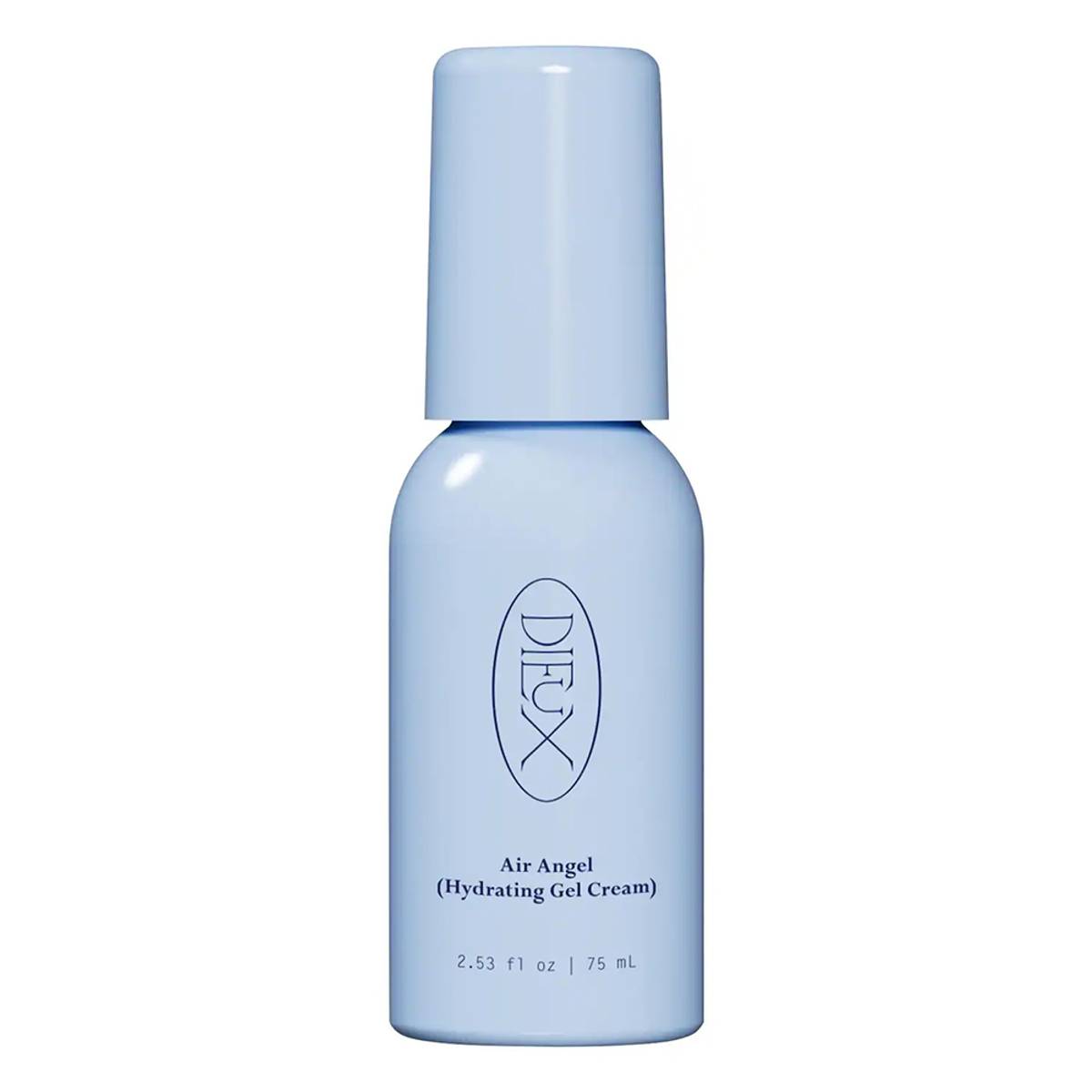
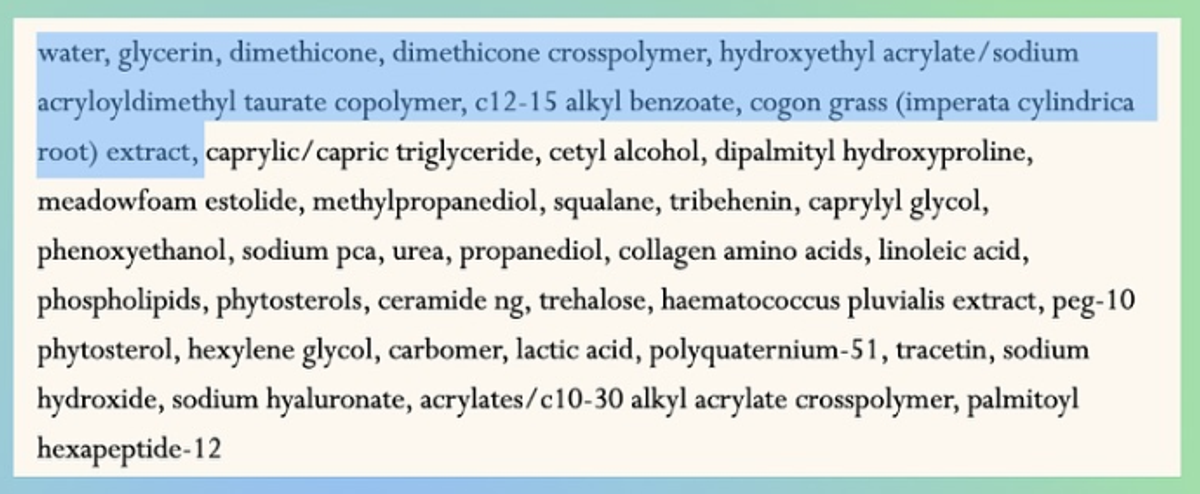
The skin-care guru also explains that one solution to dusting is when brands tell you the percentage of their hero ingredients included in a formula. For example, when a brand writes "10% glycerin" or 2% salicylic acid" and you know exactly what you're getting. However, Palermino explains that not all brands need to do this. "There are many reasons to omit percentages on products—one being that it's the formula, not a single ingredient that's the hero. Or, just list out the top one or two ingredients and share those percentages, which you see a lot with The Ordinary and The INKEY List."
The Bottom Line
"You don't need complicated or cutting-edge ingredients to have an incredible product," says Palermino. "Great skin care is available at all price points. What is less cool is claiming an expensive active, developing your marketing around the ingredient, and then sprinkling it in."