With age comes changes to the skin—most noticeably in the form of laxity. Skin starts to sag, and it doesn’t quite bounce back the way it used to, both on the face and body. It can be incredibly difficult to treat skin laxity without going under the knife, but energy-based devices such as Ultherapy can do a great job tightening the skin on the face and parts of the body that are starting to sag. With Ultherapy’s latest indication for the knees, there’s hope that FDA clearance will extend to other parts of the body as well. Ahead, dermatologists break down the best uses for Ultherapy below the neck.
Featured experts
- Jody A. Levine, MD is a board-certified dermatologist in New York
- Dr. Payvand Kamrani is a board-certified dermatologist in Chapel Hill, NC
What is Ultherapy?
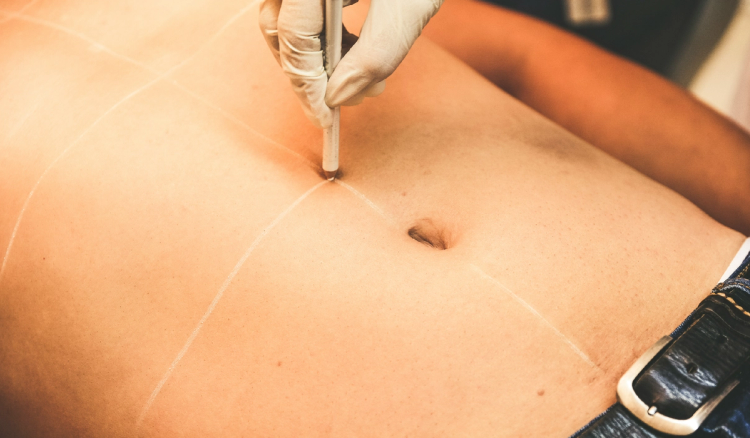
“Ultherapy is a non-invasive skin tightening treatment that uses ultrasound energy to stimulate the body's natural collagen and elastin production,” explains New York dermatologist Jody A. Levine, MD. Unlike lasers or radiofrequency devices that target the skin’s surface or superficial layers, Ultherapy delivers focused ultrasound energy beneath the skin. “This controlled thermal energy triggers the body's natural wound-healing response, stimulating collagen production,” adds Dr. Levine.
What’s unique about Ultherapy is that the device itself has a component that helps the provider visualize the tissue with ultrasound, allowing them to place the energy at very specific depths. Though the skin can appear tighter immediately after treatment due to swelling, collagen remodeling over the following months produces true, gradual tightening and lifting.
What areas of the body is it FDA-cleared to treat?
Ultherapy is FDA-cleared to treat the brows, neck and under the chin, as well as to improve the appearance of lines and wrinkles on the décolletage. More recently, FDA clearance expanded to include improving skin laxity on the knees, abdomen and the front and back of the upper arms with the next-generation device—Ultherapy PRIME.
What other parts of the body respond well to Ultherapy?
Ultherapy has been used off-label for some time to improve skin laxity in areas of the body, like the buttocks and thighs. “However, it's important to understand that results on the body are generally more subtle and less predictable than on the face and neck, because body skin is thicker and has the potential for greater laxity than Ultherapy is designed to correct,” says Dr. Levine. “Plus, gravity plays a major role in some hanging skin on the body.”
Ultherapy is generally recommended for patients with mild skin laxity, as they tend to see the best outcomes, while those who have more significant excess skin may ultimately require surgical solutions for meaningful improvement. “For the right patient though, I think the ability to stimulate collagen without incisions or significant downtime makes it a really interesting option for areas like the arms and abdomen,” says Chapel Hill, NC dermatologist Dr. Payvand Kamrani.