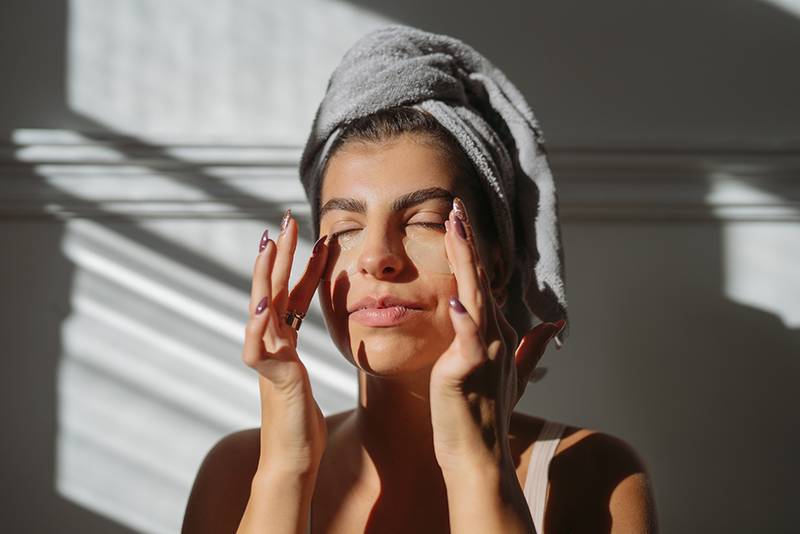
Korea has been at the heart of many of the beauty trends reshaping the industry. From glass skin to sheet masks and toner pads, you’d be hard-pressed to find a viral routine that hasn’t been influenced by K-beauty principles. But Korea isn’t the only East Asian country known for skin-boosting rituals. Japanese beauty, often referred to as J-beauty, is just as focused on achieving a radiant, healthy and youthful appearance. Though J-beauty has been around for decades, it’s only recently started getting the mainstream attention it deserves.
Even so, K-beauty’s influence still looms large. While J-beauty products are widely available in beauty retailers, the nuances that set the approach apart are less familiar. Many people know that K-beauty prioritizes skin health and can assume J-beauty shares that focus—but what actually distinguishes the two? To find out, we spoke with two aestheticians about the defining characteristics of Korean and Japanese beauty, and how to incorporate each into your routine.
Featured Experts
- Kristyn Smith is an aesthetician and the founder of Practise NYC
- Danielle Gamble is an aesthetician in NYC
What Is K-beauty?
Kristyn Smith, aesthetician and founder of Practise NYC, explains that K-beauty focuses on three core pillars of skin health: hydration, barrier support and long-term results. "Rather than pushing the skin into inflammation to see fast change, K-beauty relies on layered hydration, low-level actives and soothing ingredients that support daily cell turnover without compromising the barrier,” she says.
NYC-based aesthetician Danielle Gamble adds that K-beauty is “not about a quick fix and often entails many steps, emphasizing the layering of very gentle products.”
What Is J-beauty?
Unlike the Korean approach, Japanese beauty focuses on preservation, with the goal of maintaining skin in its healthiest possible state. While it’s also deeply rooted in tradition, J-beauty typically relies on fewer steps to achieve results. “J-beauty keeps routines minimal and favors lightweight, gentle formulations,” says Gamble.
What Skin Types Do They Work For?
At first glance, K-beauty and J-beauty may seem similar since both prioritize skin health. But as Smith explains, their approaches can affect the skin differently—and it’s not just because of specific ingredients. “Japanese skin care assumes skin should be preserved, while the Korean approach is more willing to stimulate visible change,” she says.
One key differentiator is how exfoliation is used within each routine. For example, “some skin types see more benefit when using actives in conjunction with their hydrating serums,” says Gamble. In these cases, K-beauty routines that include low-level actives, gentle exfoliation and layers of hydration may be a better fit. In other instances, certain skin types respond best when the skin is left largely undisturbed—a philosophy more closely aligned with J-beauty.
Do You Have to Choose One Approach?
In practice, many people tend to commit fully to one philosophy or the other, especially since products and routines are often marketed as distinctly K-beauty or J-beauty. But experts say that approach doesn’t always serve the skin best. “The real value is knowing when to borrow from each philosophy rather than adhering rigidly to one,” says Smith. Gamble agrees, noting that personalization is what ultimately separates a good routine from a great one.