
Whether your skin concerns include fine lines and aging or acne, you’ve probably tried LED light therapy. With a spectrum of treatment options that can cater to a diverse range of issues, light therapy has become a gold standard in offices and at home. Many of us are most familiar with red light for its ability to smooth wrinkles, stimulate collagen and improve elasticity, and blue light for its benefits against acne. However, when it comes to green light therapy, you’d likely draw a blank. As one of the lesser talked about LED hues, green light therapy might not be on your radar, but it should be. Ahead, we tapped two master aestheticians to expand on why.
Featured experts
- Samantha Susca is an aesthetician at Casa Cipriani
- Edyta Jarosz is an aesthetician at Shafer Clinic
Why is green light therapy unique?
LED light therapy uses different wavelengths, each bearing a different color, to treat skin issues. “Each color represents a different wavelength of light and penetrates the skin at differing depths to elicit a unique response from skin cells,” explains aesthetician Samantha Susca. Red light is the most common because it penetrates the deepest, stimulating fibroblast production well beneath the surface of the skin. On the contrary, Susca says that blue light is absorbed into more superficial layers of the skin, allowing it to kill bacteria before it burrows deeper. Green light falls somewhere in between the two and works in the mid-layers of skin. In other words, it reaches a layer that’s too shallow for red light and too deep for blue.
How does green light therapy work?
Since each color works at a different wavelength, it’s helpful to understand the numbers behind them. “Red light typically penetrates the skin around 630-700 nanometers (nm), while blue light is usually around 400-500 nm,” says aesthetician Edyta Jarosz. In the middle of that, Susca says green light penetrates the skin anywhere between 520 and 545 nm to reach the superficial layers of the dermis. At this level, the pros explain that green light provides advantages that red and blue light do not.
What are the benefits of green light therapy?
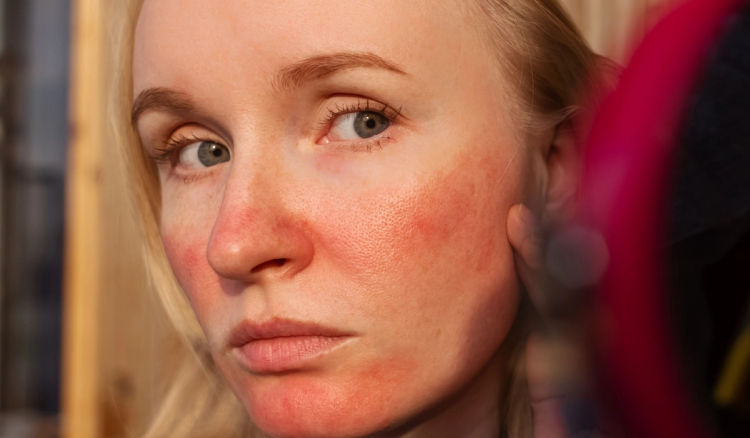
Unlike red and blue treatments, green light therapy works best at evening out your skin’s tone. “Green light targets pigmentation and discoloration to ultimately reduce hyperpigmentation,” says Jarosz. According to Susca, a round of green light therapy helps normalize the pattern of melanin production to decrease any areas of discoloration, including redness. But its benefits extend beyond dark spots. “Working at the mid-level of the dermis, green light can improve a multitude of cellular functions, including vasodilation, which can aid in reducing issues caused by broken capillaries and rosacea.
What to know before trying green light therapy
It’s always best to consult with your dermatologist before beginning any new skin treatment, and the same goes for green light therapy. “Since LED therapy works on a cellular level, consistent use is essential, so it’s important to establish a regimen,” says Jarosz. Susca agrees, noting that a minimum of three treatments a week is a good starting point but notes that green light can be used up to six times per week if preferred. With consistent use, the pros note that you can expect to see a more even skin tone after about four weeks, with a brighter complexion in about six weeks. As for using green light therapy at home, the process will be similar to red light devices. “You should always begin with clean, dry skin, free from any products, to ensure proper results,” says Susca.