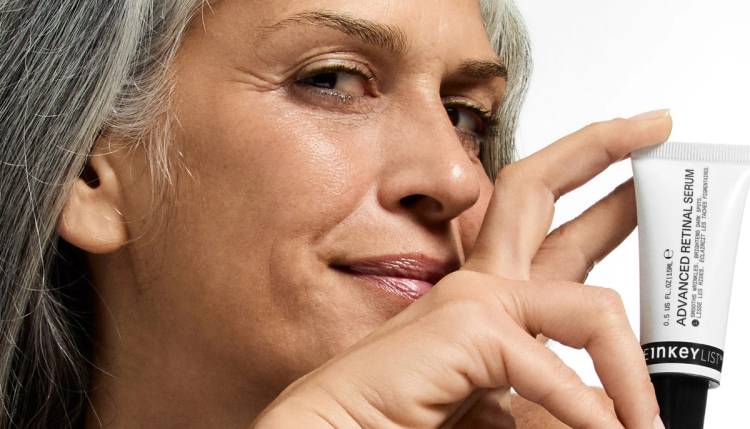

You’ve done the research. You know retinol is off the table. But the question every skin-conscious mom-to-be eventually lands on is: Now what comes next?
According to skin experts, there’s good news—pregnancy doesn’t have to mean putting your skin-care routine on pause. “Pregnancy is not the time to abandon your skin,” says Amy Peterson, a medical aesthetician and founder of Lenox and Sixteenth. “It’s actually when your skin is changing the most rapidly—melasma, sensitivity, breakouts, dryness, sometimes all at once. A thoughtful, edited routine matters more, not less.”
New York dermatologist Marina Peredo, MD, agrees. "During pregnancy and breastfeeding, I always recommend shifting away from retinol and focusing on safe, effective alternatives," she says. Her approach? Address the same concerns retinol handles—cell turnover, collagen and dark spots—through different, pregnancy-friendlier pathways. Here’s how to navigate those options, ingredient by ingredient.
Bakuchiol
If there’s one ingredient that’s earned its place as the pregnancy-safe alternative to retinol, it’s bakuchiol. Plant-derived and notably gentle, it works by signaling to the skin similarly to retinol—without the irritation, dryness or photosensitivity that retinoic acid can cause. “That matters a lot when your skin is already hormonally reactive,” Peterson notes. Dr. Peredo calls it “the closest retinol-like alternative” and recommends Derma Made Bakuchiol ($76) to her patients.
Vitamin C
Melasma—the hormone-driven hyperpigmentation that darkens the skin during pregnancy—is one of the most common and frustrating skin changes expectant women face. Vitamin C is a powerful option for addressing it. “A well-formulated vitamin C serum brightens, protects against oxidative damage and supports collagen simultaneously,” says Peterson.
Dr. Peredo, who built a pregnancy skin-care regimen for her own daughter during two back-to-back pregnancies, reaches for her own Skinfluence Vitamin C Serum ($140), which she says is “great for acne, melasma and collagen building.” We’re also big fans of SkinCeuticals C E Ferulic ($185), which combines vitamin C and ferulic acid for a double dose of brightening, collagen-stimulating power.
Azelaic Acid
A dermatologist favorite for its ability to address both pigmentation and breakouts, azelaic acid earns a spot in Dr. Peredo’s pregnancy routine for its gentle yet effective anti-inflammatory and brightening benefits. It pairs well with bakuchiol as an evening option for those navigating hormonal acne or lingering dark spots. Our go-to formula: Anua Azelaic Acid 10 Hyaluron Redness Soothing Serum ($22), which delivers soothing, brightening and hydrating benefits that won’t break the bank.
AHAs
One of the things retinol users miss most when they stop? That smooth, refined skin texture. AHAs (alphahydroxy acids) address exactly that. “A huge part of what retinol does is refine texture, smooth fine lines and address sun damage by pushing cellular renewal,” says Peterson. “AHAs do this beautifully.” Her Lenox and Sixteenth Laser Serum ($219), built around an exfoliating acid complex, targets the same signs of aging, dark spots and uneven tone as retinol through a different mechanism.
A note: Peterson always directs clients to consult their OB before incorporating acids, and the same applies here. “We’ve had pregnant clients incorporate The Laser Serum into their routine with their doctor’s approval,” she says. “For many of them, it became their retinol for that season.”
Peptides
Pregnancy can leave the skin barrier feeling reactive and depleted, and peptides are one of the best ingredients to reach for when that happens. Small pieces of protein made up of amino acids, they serve as the building blocks of collagen and elastin in the skin. What makes them especially valuable as a retinol alternative is how they work: rather than accelerating cell turnover the way retinoids do, peptides signal the skin to produce more collagen and elastin, helping smooth fine lines and improve skin texture. One to try: Naturium Multi Peptide Serum ($25).
The Bottom Line
One final note both experts emphasize: the term “pregnancy-safe” is less definitive than it sounds. As Peterson puts it, no skin-care ingredient has been formally tested in clinical trials on pregnant women—the reason is ethical, not scientific. “When someone tells you a product is ‘pregnancy-safe,’ what they really mean is that it hasn’t been flagged as harmful,” she explains. Be sure to loop in your OB before making any changes to your routine.
Ultimately, the expert advice is clear: “Don’t abandon your skin during pregnancy,” says Peterson. “Make smart swaps, and the results can absolutely keep coming.”