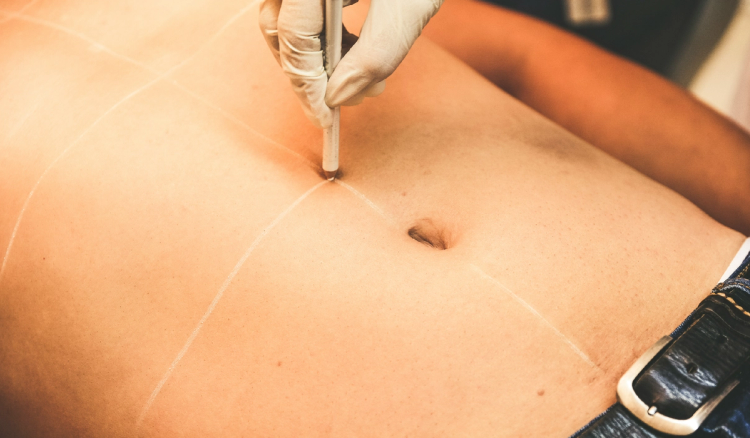
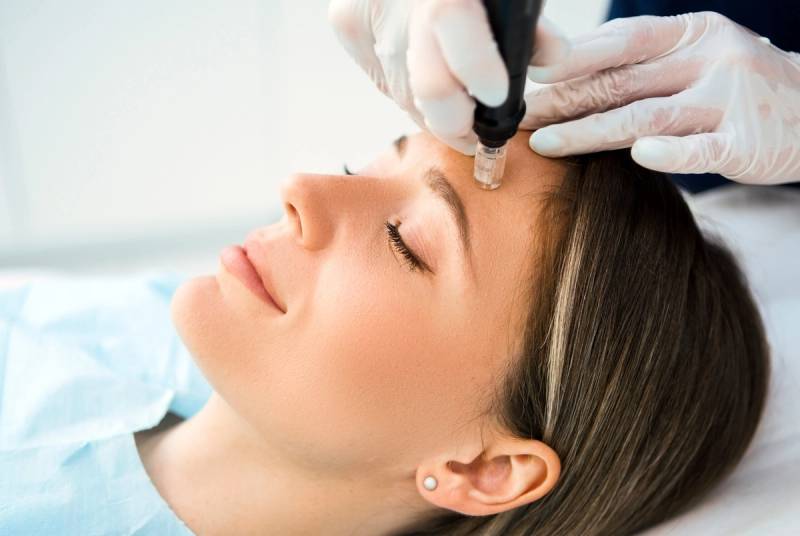
Microneedling has become a buzzword in many circles, but as Omaha, NE dermatologist Joel Schlessinger, MD explains, the term can encompass many different procedures, all of which have their own risks and benefits. “Sadly, in my office, we often see complications from microneedling done poorly or unprofessionally in medspas or other non-physician run practices,” he says. From what to look out for in the treatment room to how your skin should heal, here are six red flags to be aware of as you head into your next microneedling appointment.
Working on Infected Skin or Skin That Is Not Properly Cleansed
Dr. Schlesinger says the biggest challenge he sees with microneedling is a lack of sterile or clean technique. Because microneedling involves a needle repeatedly piercing the skin, the surface must be fully cleansed and disinfected prior to the treatment. “Additionally, it is key to make certain that the skin isn’t infected before treatment or that infection will be ‘transplanted’ to all areas of the microneedling,” says Dr. Schlesinger. “I can’t tell you how many times I have personally seen patients who went elsewhere for a microneedling treatment for ‘acne’ and it was actually a severe infection that was then spread horrifically, with sometimes dire consequences.”
Working in a Non-Sterile Environment or With Dirty Tools
West Palm Beach, FL Kenneth Beer, MD says a sterile environment is also critical to any procedure, including microneedling. “You should never see a dirty procedure room or instruments that are not clean,” he notes. Dirty instruments, as Dr. Schlessinger notes, can also lead to an infection.
Usage of “Bootleg” Mixtures
Dr. Schlesinger says another complication he sees frequently is the usage of “bootleg” skin-care mixtures to somehow boost the skin. “Many outside spas have started using skin-care products that are then microneedled into the skin,” he says. “While skin-care products are tested for OUTSIDE usage on the skin, they are absolutely NOT tested for INTERNAL usage,” says the dermatologist. “Again, terrible and long-term damage or reactions can and do occur if this is done.”
Skin Should Not Turn Black
Both in the treatment room and when you return home, Dr. Beer says you should never see your skin turn black. “This means it is not getting enough blood,” he explains. If this happens, reach out to a dermatologist immediately.
You Should Not See Pus
While we’ve seen our fair share of horrific images of microneedling gone wrong on social media, experts agree you should never, ever see pus during or after a microneedling procedure. “Seeing pus is never a good sign,” says Dr. Beer.
Worsening Redness and Warmth
After your procedure, if you notice your skin has “expanding redness or warmth,” take caution, as Dr. Beer notes this might be indicative of a potential infection. Post-microneedling, your skin will be red, but this should subside within 24 hours. If the redness gets worse instead of better, contact your dermatologist.
The Bottom Line
“The public needs to know the ramifications of going to an untrained or completely unqualified individual for treatments,” cautions Dr. Schlessinger. “While these may be significantly less expensive than a treatment done in a dermatologist’s office, this is your face and body that is being treated and there will be problems if the person on the other end of the needle has zero qualifications or judgment.”