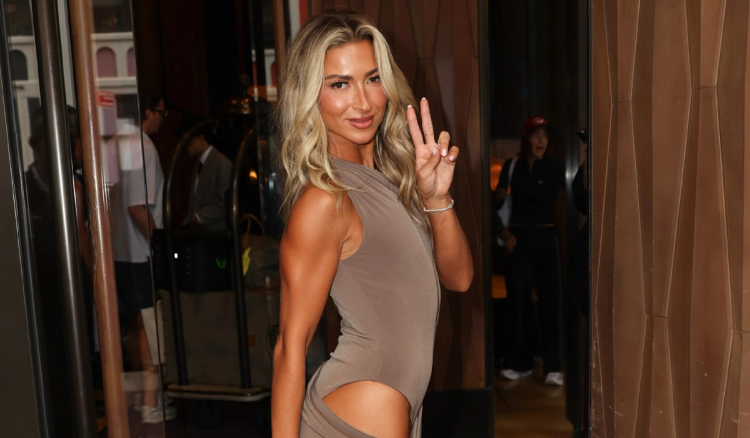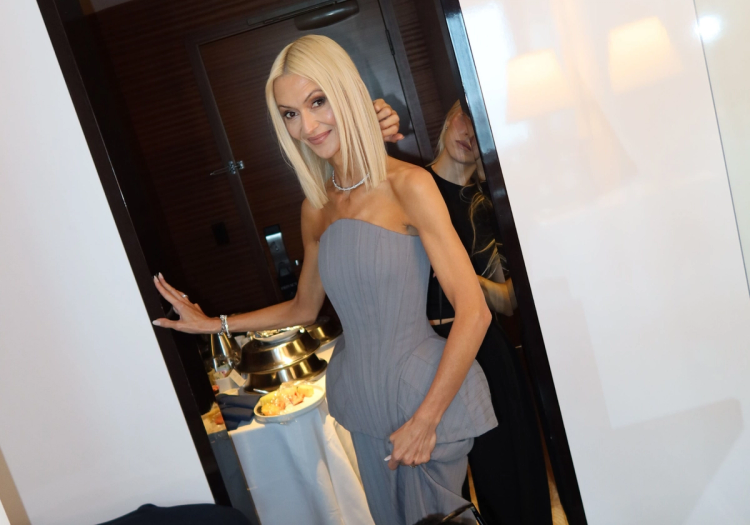
If you’ve spent the last few years hearing “cortisol” thrown around every wellness TikTok as the villain behind your bloating, your insomnia, and your inability to lose the last five pounds, you’re not alone—and you’re not entirely wrong to be confused about what to do with that information. Last Thursday night, NewBeauty headed to Flying Solo on Broome Street for Beyond Burnout: Cortisol, Estrogen & Hormone Imbalance Draining Your Energy, a happy hour and fireside chat hosted by Lume Health that promised to cut through the noise. It delivered on two fronts, giving a first look at the prototype of what Lume says is the first wearable built specifically to track cortisol, and, courtesy of OMI WellBeauty x Glamsquad, a chance to get our own hair follicles tested in real time—all while sipping on De Soi and OoMee.
The problem Lume is trying to solve
The evening’s discussion centered on a disconnect most women know intimately but rarely have language for: the fatigue, brain fog and burnout that show up long before a lab test flags anything as “abnormal.” Cortisol, the conversation made clear, isn’t just a single number to lower; it’s a rhythm. It should rise sharply in the morning to get you up and alert, then taper steadily through the day. When that rhythm gets thrown off by chronic stress, poor sleep, or hormonal shifts tied to estrogen, the result is the kind of dragging, wired-but-tired exhaustion that’s become a defining complaint of modern life, especially for women navigating perimenopause and menopause.
The existing options for measuring cortisol (a single blood draw, a saliva kit mailed to a lab) capture a snapshot, not the pattern. That gap is exactly what Lume Health was founded to close.
Meet the founders
Lume was co-founded by Vicki Powell, a former Apple product design engineer who worked on sensor technology for AirPods, Apple Watch and iPhone (and holds her own sensing patents), alongside Dr. Jonathan Moustakis, an award-winning physician serving as CTO. It’s a pairing that shows in the product: hardware-grade engineering rigor applied to a very human, very under-addressed problem.
The reveal
The highlight of the night was the prototype preview of the Lume wearable cortisol monitor, a device designed to track cortisol rhythms continuously throughout the day rather than in a single isolated reading. The current iteration estimates cortisol rhythm from wearable signals calibrated against saliva samples, with future versions aiming to read cortisol directly from sweat via integrated sensors. The goal isn’t to replace your Oura Ring or Whoop—it’s to layer in the one biomarker those devices can’t see, then translate it into something actionable: guidance on when to get morning light for a healthier wake-up, when your real energy peaks and dips are, and how to time meals and workouts around your own rhythm instead of a generic protocol.
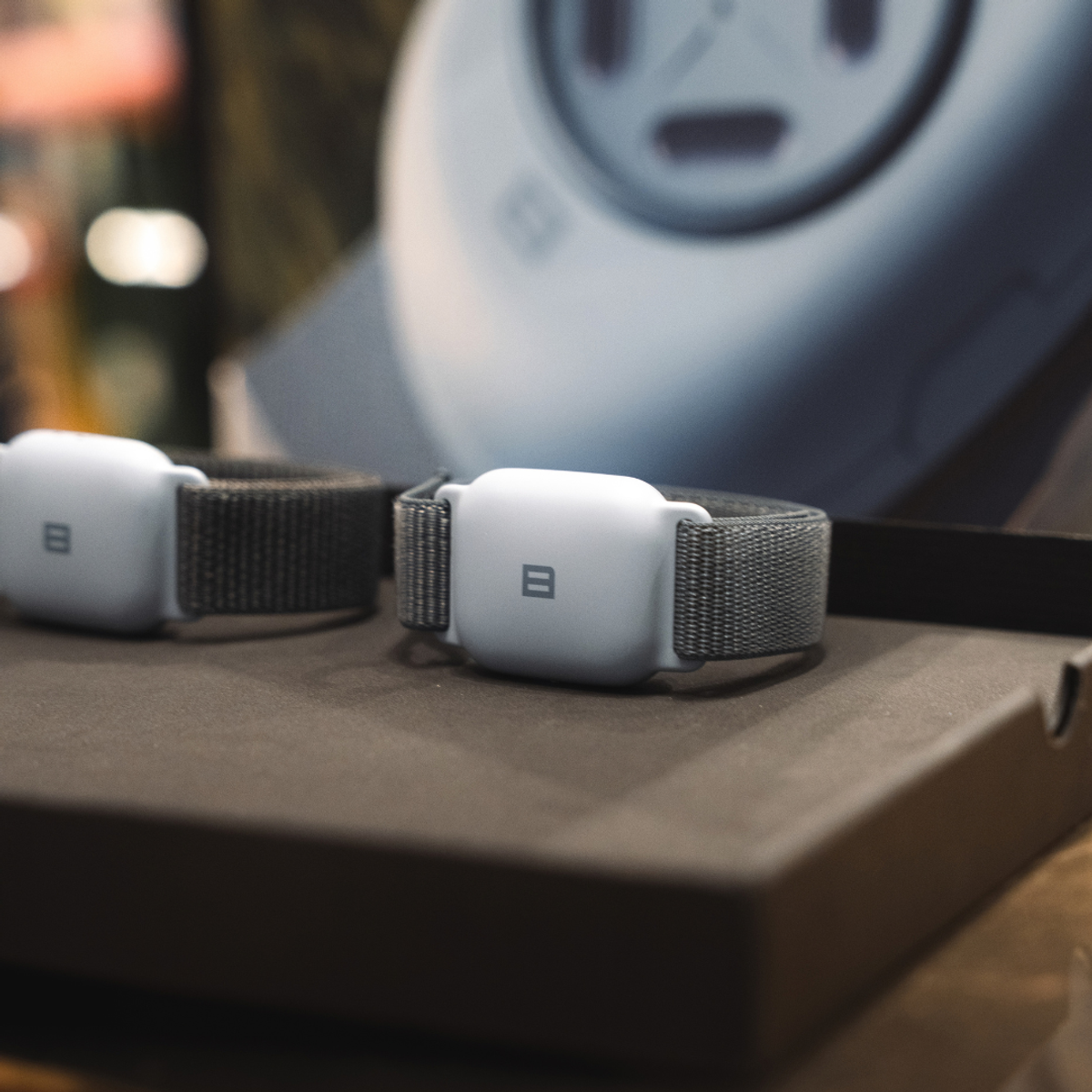
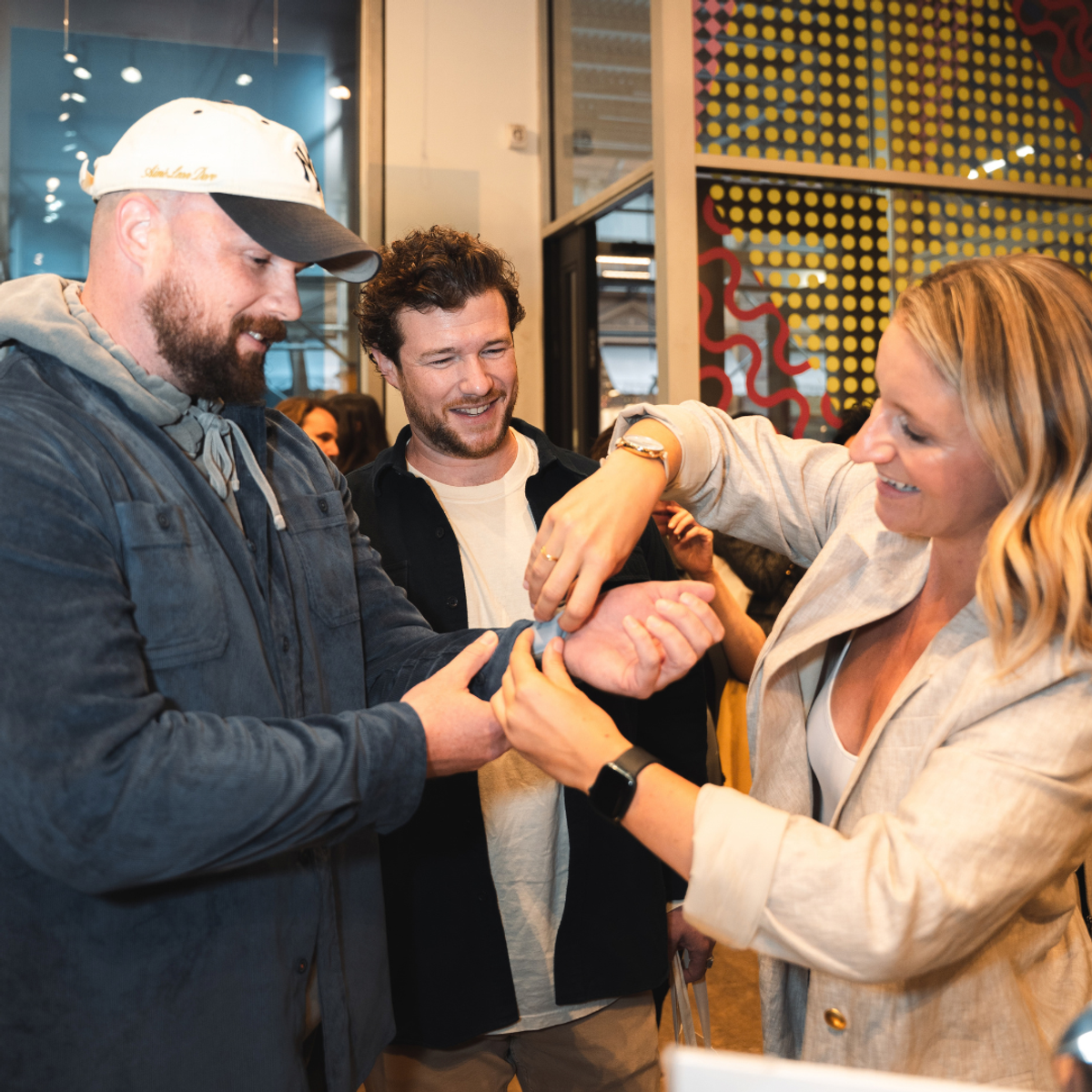
Early access users are already reporting results. Lume says participants saw 27 percent less time spent awake in bed after adjusting daylight exposure based on their data, with some describing the shift in energy and sleep quality as life-changing.
What’s next for Lume
The Lume wearable is currently in beta development, with a full launch targeted for 2027, and a waitlist open now at lumehealth.io. If Thursday night’s crowd—and the questions that kept the fireside chat running well past its scheduled end—was any indication, there’s real appetite for a device that finally treats hormonal health as something to be understood in real time, not diagnosed after the fact.
A second experience: OMI x Glamsquad’s real-time follicle testing
The hormone talk wasn’t the only science on offer. Tucked into the same evening was a collaboration between OMI WellBeauty, the peptide-based hair growth brand founded by Naomi Whittel, and Glamsquad, which set up real-time follicle testing for guests on the spot.
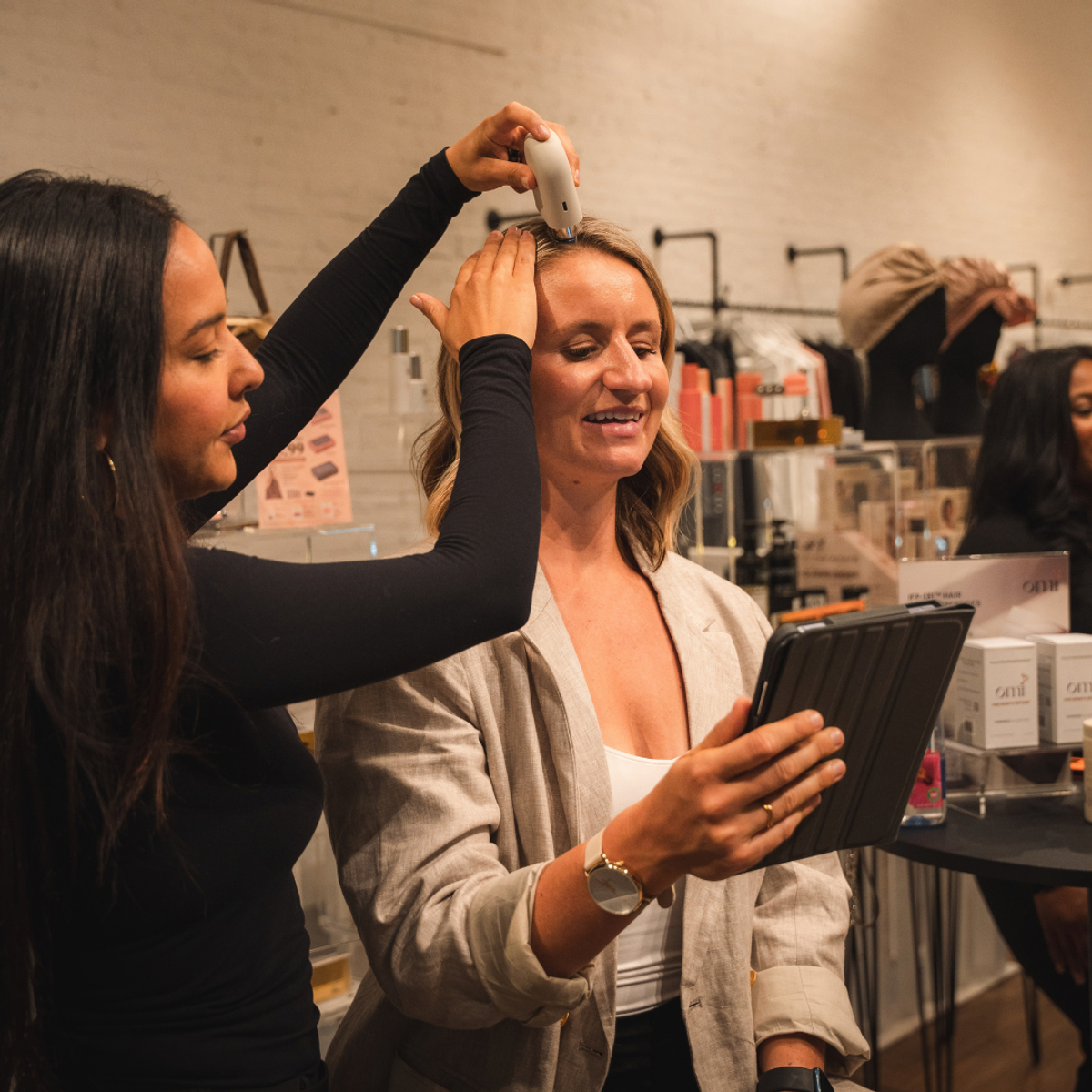
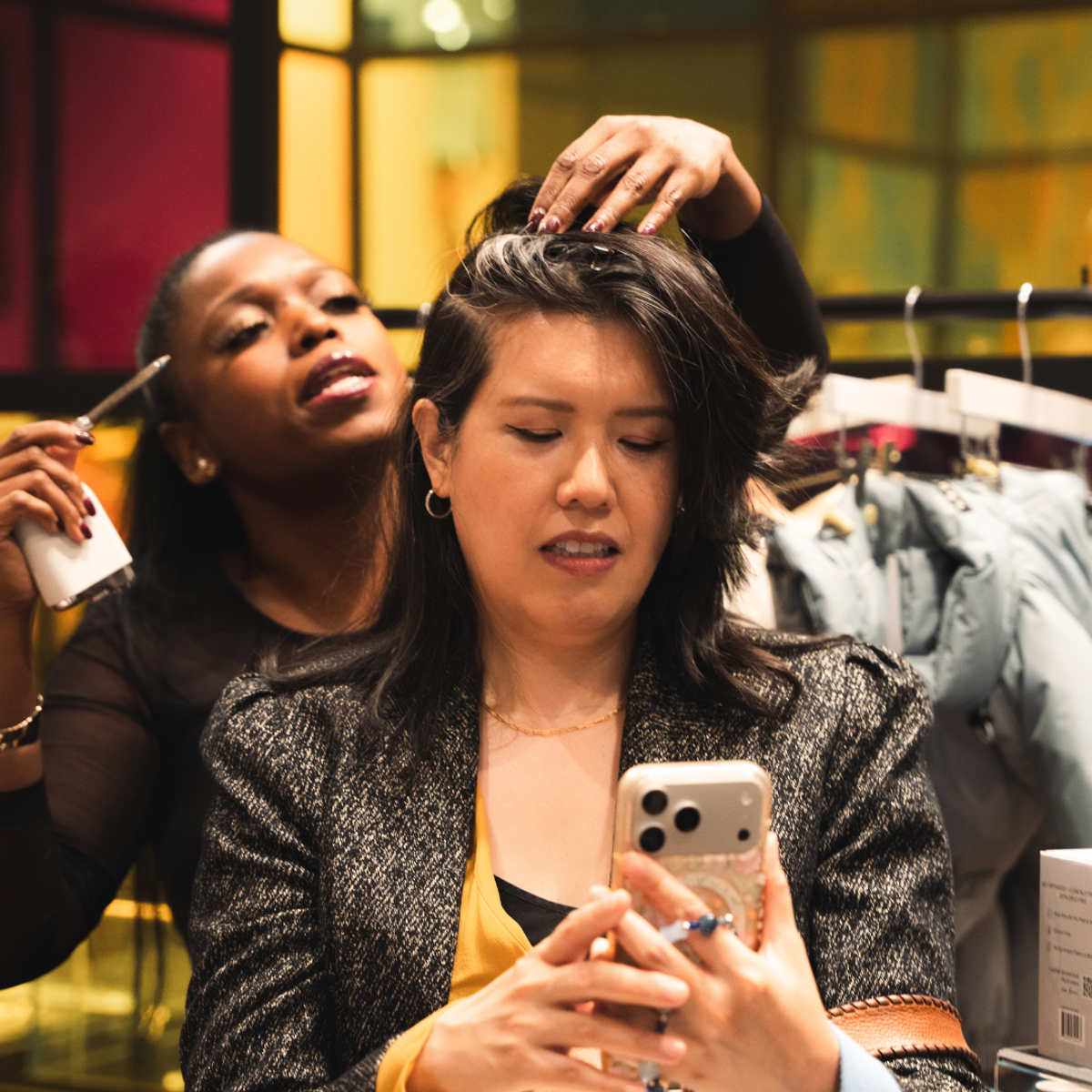
The tie-in made sense given OMI’s whole thesis: that most hair loss and thinning comes down to peptide depletion at the follicle level, not just the usual suspects of genetics or styling damage. OMI’s flagship IFP-131 peptide formula (available in capsules or wild-berry gummies) is built to anchor and strengthen hair from within, with the brand citing clinical results of up to 47 percent less hair loss in 90 days and up to 10 percent more hairs in their growth phase by day 30. Having Glamsquad on hand to actually examine follicles in real time turned that science from a claim on a bottle into something guests could see for themselves—a smart, tactile way to make the case for a supplement that otherwise asks you to take its word for it.
Between the two activations, “Beyond Burnout” ended up living up to its name from more than one angle: burnout as a hormonal story, and burnout as something that shows up, quite literally, at the root.
NewBeauty was a media sponsor of the Beyond Burnout event, hosted at Flying Solo, the stunning SoHo, NYC, boutique that helps independent designers showcase, market and sell their work.