Growing up, I was the pale girl. In high school, I was teased for it—called "Casper" or told people needed sunglasses around my fair skin. I grew up in California, surrounded by the "sun-kissed" beauty standard, and I always felt like I didn't quite fit it.
Like many teens trying to fit in, I pushed against my own skin. That meant baby oil, hours in the sun, never once thinking about SPF. I just wanted to look like everyone else. I didn't care what it cost me.
I also had a very bad sunburn at age 8 that left a birthmark-like pattern on my right arm and upper right back. In high school, after spending a lot of time lying out tanning, that area became more noticeable—darker—and I started developing a large number of moles within and around it. At the time, I didn't have the language for what I was seeing. I just knew my skin looked different, and eventually, my mom noticed too.
My First Warning Signs
At 17, my mother took me to a dermatologist in Newport Beach after noticing changes in that area. They referred me for further evaluation, and my first biopsy came back as a dysplastic nevus. I ended up having several moles removed in the months ahead, and they kept coming back dysplastic.
This led to a diagnosis of dysplastic nevus syndrome—a condition where the body produces abnormal moles at a higher rate and carries a significantly increased risk of melanoma.
They told me that while any individual mole was unlikely to turn into melanoma, my overall lifetime risk was much higher. I'd need regular skin checks every six to twelve months.
From 17 into my mid-20s, I did get regular skin checks—but I wasn't protecting my skin. I still lived in the sun, didn't wear SPF, nor did I wear hats. I didn't truly understand that my skin needed protection.
The Diagnosis That Changed Everything
In 2011, I was running Bella Volto Photography, specializing in fine art. I was outdoors constantly—shooting sunrise, golden hour sessions and midday shoots in tank tops, with no sun protection.
At 28, a client noticed a spot on my upper right chest. “Aren’t you concerned about that?” she asked. I brushed it off at first, but the comment stayed with me. I went home, looked again and realized it was changing—it was itching and bleeding. I looked at my ABCs of Melanoma chart and realized it was bad. I got an appointment right away.
Three days later, in June 2016, I was diagnosed with stage 1B melanoma. I was taken in immediately for surgery that week.
Dr. Gee, my UCLA-trained dermatologist, personally called me while she was traveling to deliver the diagnosis directly. She was completely direct: I was young, I had dysplastic nevus syndrome and I was very high risk. She didn’t just deliver news—she changed how I lived. UPF 50+ clothing, sunscreen, wide-brim hats and avoiding peak UV hours. My skin checks became every three months, and they’ve stayed that way ever since.
This time, I listened.
Why I Had to Advocate for Myself
Fast forward to June 2018. I was now living in Nevada and had a new dermatologist. A moderate dysplastic nevus came back from a biopsy with clear margins. At UCLA, my history had always led to wide excisions for anything moderate or severe. This doctor's approach was more conservative.
Something didn't sit right with me, but I deferred. Months later, the spot started growing back. I called repeatedly—every day for months—before I was finally seen in February 2019. By then, a second spot had appeared nearby.
I told the doctor I wasn't comfortable with either spot. They told me to pick one to biopsy, as neither was concerning to them. So I chose the one I already knew was dysplastic.
Two days later, the doctor called: melanoma. Stage 1B—nearly stage 2. It required six hours of Mohs surgery because of how deep it had grown. The second spot I had flagged was also checked during surgery—it was melanoma too. Stage 1A.
Three melanomas in three years.
I moved to a new dermatologist and began seeing an oncologist in the fall of 2019. That meant PET scans, blood work every six months and lymph node checks. Melanoma is one of those cancers that can travel anywhere in the body.
That reality stays with you. I learned the hard way: when something doesn't feel right, you have to speak up—even when doctors tell you not to worry.
How I Protect My Skin Now
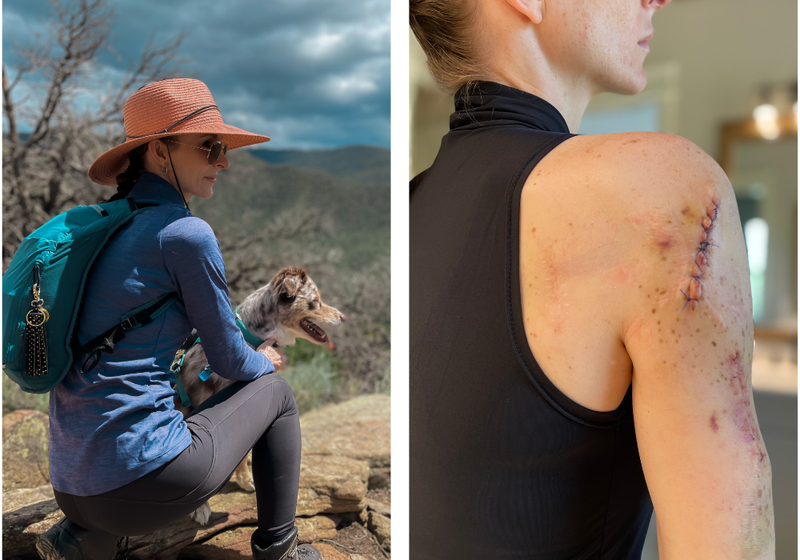
In May 2023, I had my fourth melanoma—stage 0. My skin check in January 2026 showed new dysplastic nevi growing inside two of my older melanoma scars from 2019, which required full removal of both scars. I now have a four-centimeter scar and a three-centimeter scar. At my April 2026 skin check, they found a dysplastic nevus in a brand-new area—my upper left rib cage—requiring a 3 cm excision.
My journey is complicated by genetics—rare mutations that independently increase melanoma risk, on top of my family history and dysplastic nevus syndrome. My mother had basal cell carcinoma that I caught. My great-grandmother had melanoma on her foot, which ultimately took her life. I’ve lost friends to melanoma—my dear friend Meaghan lost her battle at just 38.
Due to my history, my care team now takes an aggressive approach with all dysplastic nevi, treating them as higher risk. Even my mild atypical moles have been changing more over the last few years.
Four melanomas. Dozens of excisions. Skin checks every three months. Biopsies I've lost count of. But somewhere along the way, I stopped letting fear lead and started letting purpose take over.
What I Do Now
Since May 2019, I've used my photography background to bring awareness to skin cancer, especially in young children and teens. Through my series "LOVE the skin you're in," I raised $1,000 for the Skin Cancer Foundation and worked with 12 children, educating them on sun safety and skin health.
Today, May 18th, I'm releasing a collaborative awareness reel featuring 17 to 18 people spreading awareness about skin cancer—survivors, children, dermatologists and public figures, including my seven-year-old adopted brother. Three of the doctors from my own journey are part of it.
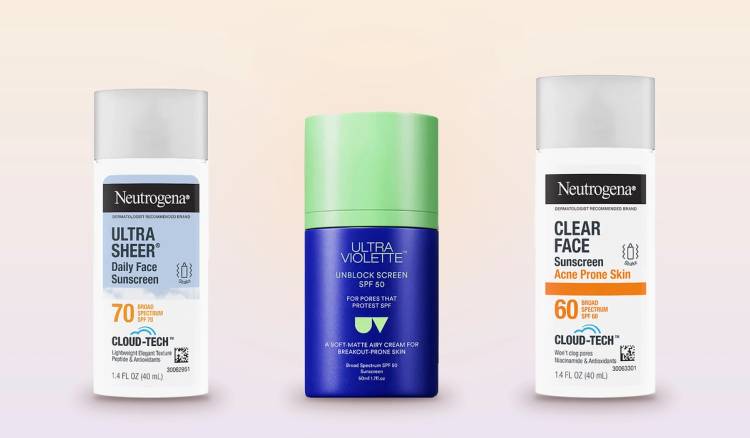
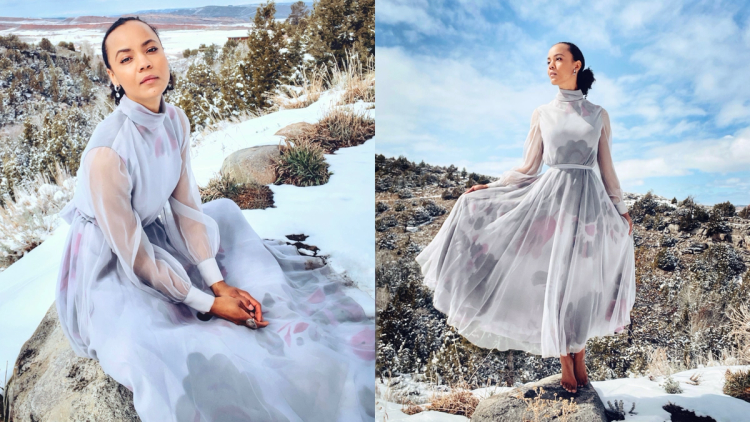
Now, my husband and I spend half the year traveling in our Airstream. I create content for Adventure_Our_Life, sharing what it looks like to live fully while still taking skin health seriously. My wide-brim hat collection has replaced the baby oil. I wear UPF 50+ clothing, sun gloves, sunscreen every morning and reapply throughout the day. We do regular skin checks together.
Even my Australian shepherd gets her skin checked because dogs can get skin cancer too.
The sun isn't the enemy. Ignoring it is. You don't have to give up the outdoors—you just have to be intentional. Protect your skin. Get checked. Advocate for yourself.
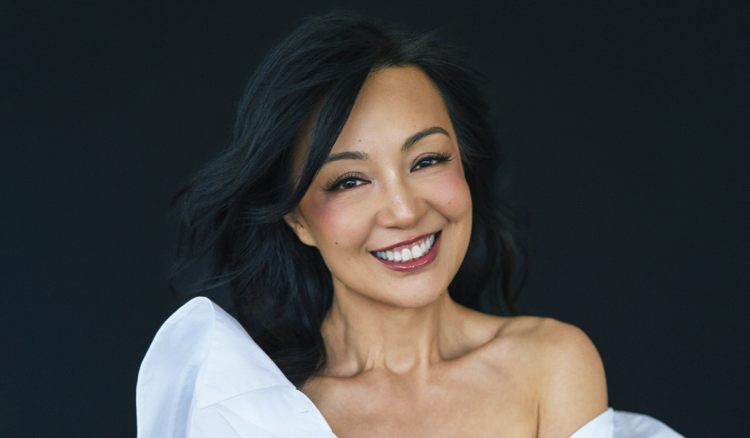
I used to think fitting in mattered more than protecting myself. I'm still here, and I'm still talking about it—scars and all.