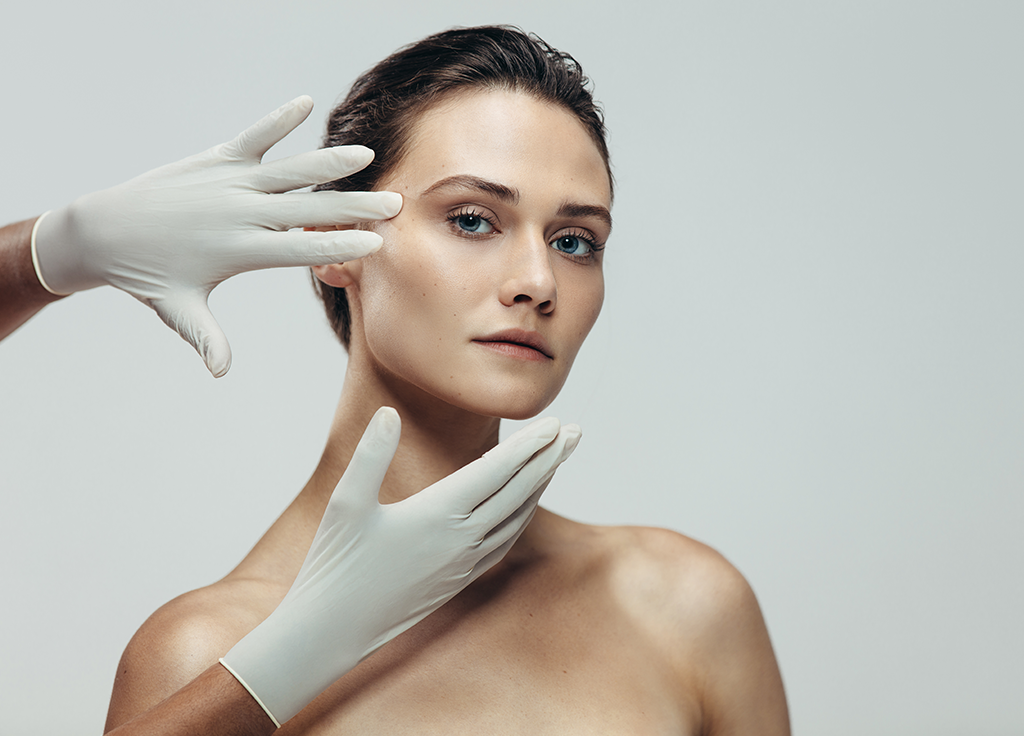
Facial plastic surgery continues to grow. According to the latest annual survey from the American Academy of Facial Plastic and Reconstructive Surgery (AAFPRS), procedures are projected to increase 19 percent nationwide, totaling an estimated 1.6 million treatments.
But the growth is not about going bigger. It is about starting earlier and being more deliberate. “The biggest takeaway is that aesthetics has become far more intentional,” says Houston facial plastic surgeon and AAFPRS President Anthony Brissett, MD. “While we saw a 19 percent increase in facial plastic procedures nationwide, patients are not asking for dramatic changes. They’re seeking natural-looking, strategic treatments that preserve their features over time. Patients want to maintain their identity while aging confidently.”
Ahead are the biggest trends emerging from this year’s survey.
Younger Patients Are Starting Earlier
This year’s survey found that 57 percent of surgeons report an increase in patients under 30 requesting cosmetic procedures or injectables. “At the same time, younger patients are starting earlier with preventative treatments,” says Dr. Brissett. “Instead of waiting to correct aging, they’re choosing to preserve and maintain. Together, these trends signal a long-term, strategy-driven approach to facial aesthetics.”
The data also show that patients 34 and younger continue to make up the majority of rhinoplasty patients, while those aged 35 to 55 remain the core group seeking neurotoxins and other nonsurgical treatments.
Nonsurgical Leads the Way
Minimally invasive care continues to dominate. According to the survey, nonsurgical treatments now account for 80 percent of all procedures performed by AAFPRS members, with neurotoxins and fillers remaining the most requested.
What’s driving those decisions has shifted. “According to our annual AAFPRS member survey, patients’ primary concern is no longer cost or downtime, but looking unnatural or overdone,” says Dr. Brissett. “After years of exaggerated trends on social media, there’s clear fatigue around overfilled or obvious results. Subtlety, balance and restraint have become the new aesthetic standard. This places greater importance on surgical expertise, precision and long-term planning.”
GLP-1 Medications Continue to Increase Demand
Weight-loss medications are also reshaping consultations. The survey shows 67 percent of members report increased demand related to rapid weight loss, up 45 percent from last year.
“GLP-1 medications have significantly reshaped facial aesthetics and patient needs,” says Dr. Brissett. “As facial fat diminishes quickly, we’re seeing more patients seeking volume restoration and skin support.”
AAFPRS members report a second consecutive year of 50 percent growth in fat grafting procedures, and one in four surgeons predict GLP-1 use could drive additional demand for nonsurgical treatments.
Menopause Is Driving Midlife Visits
Hormonal changes are now explicitly part of the aesthetic conversation. The survey found that 45 percent of surgeons report more women are referencing menopause or perimenopause as a reason for seeking treatment, up from 28 percent last year.
At the same time, 66 percent report a rise in eyelid procedures to look less tired, and 50 percent say patients are seeking cosmetic treatments to remain competitive in the workforce.
“We are moving toward more personalized, natural and longevity-focused care,” says Dr. Brissett. “Nonsurgical treatments now account for roughly 80 percent of procedures, reflecting demand for subtle options. Technology is enhancing communication and access, but expertise and specialized training remain essential. As president of the American Academy of Facial Plastic and Reconstructive Surgery, I see a future defined by thoughtful planning and results that age well, not trends that come and go.”
Men Seeking Treatment Almost as Often as Women
The survey also shows continued balance between men and women. One in four surgeons report that otoplasty (ear surgery), nonsurgical hair restoration, chin augmentation, facial implants, rhinoplasty, revision surgery, PRP injections, fat-dissolving injections and noninvasive energy-based fat reduction are now performed about equally in women and men.
Hair transplantation remains more common among men, but the numbers are shifting. The percentage of surgeons reporting hair transplantation as mostly male has dropped from 50 percent in 2019 to 33 percent, while practices reporting more female than male hair transplant patients have risen from 11 percent to 17 percent. Surgeons also report performing about twice as many hair restoration treatments in 2025 as in 2024.