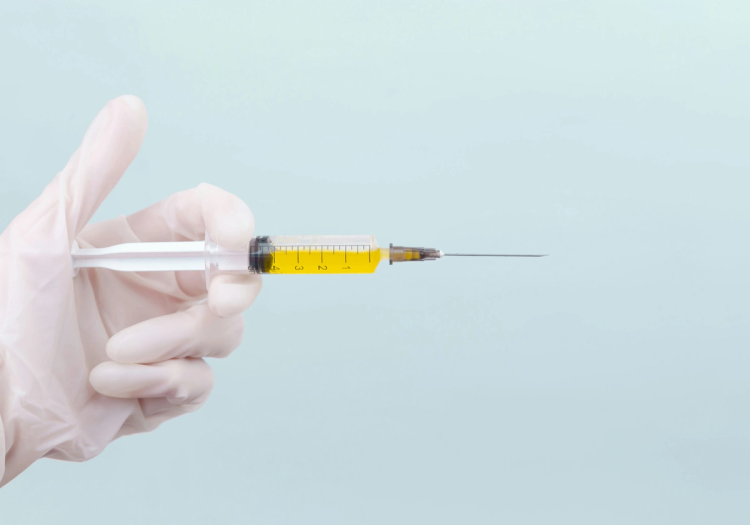
Moderate to severe eczema is hard enough to live with, but for a lot of patients the treatment itself becomes its own burden. It’s not just about clearing the skin; it’s the frequency of injections needed to keep it that way. A new drug in testing could change that math, cutting maintenance shots to as few as two to four times a year, as reported by Dermatology Times.
Called zumilokibart, the injectable antibody works by blocking IL-13, a protein involved in eczema flares. Its phase 2 trial results were strong enough that AbbVie agreed to acquire its maker, Apogee Therapeutics, in a deal worth about $10.9 billion. That acquisition is still pending regulatory and shareholder approval, but it signals how much confidence the drug industry has in zumilokibart’s potential.
How the Drug Performed in Testing
Early results were promising. About two in three patients on the drug’s middle dose saw their skin get at least 75 percent clearer within 16 weeks, using just four injection days compared with the nine typically required by existing options.
That improvement didn’t fade with time. About eight in 10 patients who responded within those first 16 weeks kept their skin at least 75 percent clearer a year later, even on doses spaced three to six months apart.
What Dermatologists Are Saying
“This can definitely be a first-line treatment. I always do shared decision-making with the patients, but anyone with moderate to severe disease who is seeking fast action and doesn’t want injections all the time…this definitely will be a very good drug for them. It ticks many boxes,” said New York dermatologist Emma Guttman-Yassky, MD, chair of dermatology at the Icahn School of Medicine at Mount Sinai.
What Comes Next
For now, zumilokibart remains firmly in testing. Larger phase 3 trials are set to begin in the second half of 2026, and if all goes well, the drug could reach patients around 2029. New Haven, CT dermatologist Christopher Bunick, MD, associate professor of dermatology at Yale School of Medicine, called the results potentially “best-in-AD among biologics and on par numerically with [Janus kinase] inhibitor responses,” underscoring just how competitive this next generation of eczema treatments has become.
Right now, this is more about what’s coming than what’s available. But for people tired of frequent biologic injections and treatment switching, zumilokibart’s early results suggest more convenient options may finally be catching up with what patients have been asking for.