If you’re serious about using a retinoid—whether for acne, fine lines or to improve your overall skin quality—you already know it’s not a plug-and-play step. The results can be transformative, but the path there often involves a little turbulence, in the form of dryness, flaking and sensitivity.
But here’s the part that doesn’t get talked about enough: success with a retinoid isn’t just about the retinoid itself—it’s about what you pair it with. And according to dermatologists, the moisturizer you're using alongside it can be the difference between sticking with it long enough to see results or tapping out early.
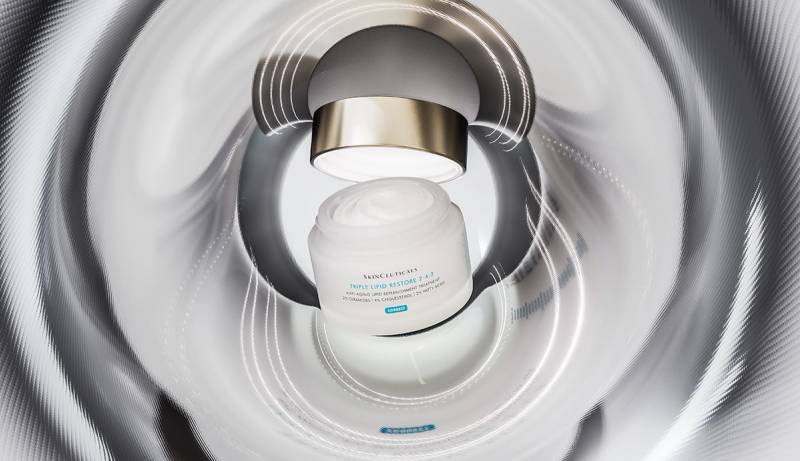
Enter SkinCeuticals’ Triple Lipid Restore 2:4:2 Moisturizer Cream ($155). Formulated with a patented ratio of ceramides, cholesterol and fatty acids that mirrors the skin’s natural lipid composition, this physician-tested cream is designed to complement retinoid use. It helps replenish what retinoids temporarily deplete—even shortening the adjustment period by up to one week—so your skin can successfully navigate the process without irritation.
Read on as New York dermatologist Michelle Henry, M.D., breaks down why retinoids remain the gold standard for treating visible signs of aging at home—and why pairing them with a barrier-supporting moisturizer like SkinCeuticals’ Triple Lipid Restore 2:4:2 isn’t just helpful, but a non-negotiable.
Why Retinoids Are Still the Gold Standard
Retinoids have been around for decades, but their reputation hasn’t wavered, and that’s because the science is there. “Retinoids are like one of the best-studied drugs in dermatology,” says Dr. Henry. “We have data—extensive data— proving [their benefits].”
Here’s the short version of how they work: Retinoids bind to receptors in the skin to normalize cell turnover, stimulate collagen production and reduce inflammation. Over time, that translates to smoother texture, more even tone and softer fine lines.
The Adjustment Period Everyone Talks About
If you’ve ever started a retinoid and immediately questioned whether it’s actually worth it, you’re not alone. That initial phase—known as retinization—is expected. “You can get some dryness, you can get some redness, you can get some sensitivity,” Dr. Henry explains. “Because it is accelerating epidermal turnover…until the skin adapts, it’s temporarily disruptive.”
That’s often where routines fall apart. Without the right support, meaning the products you’re using alongside it, irritation can start to feel like a reason to stop instead of something to work through. And ultimately, that comes down to what you’re pairing it with.
Why What You Pair It With Matters
This is where your moisturizer comes in, both to support your skin through the process and keep your routine on track. Dr. Henry calls this step—best applied after your retinoid—“absolutely essential,” but of course, not all formulas are created equal.
“When the barrier is a bit disrupted, we want to make up for that by using the appropriate ingredients—ceramides, fatty acids and things like glycerin or even oat—that help restore the barrier. They help reduce irritation, improve tolerance and ultimately allow patients to get those long-term results we’re aiming for.”
Crucially, not all moisturizers are built that way. “Some things call themselves moisturizers and they are not,” Dr. Henry continues. "Either they're, like, solely an occlusive, which is not useful, or they're solely a humectant. You need a smart moisturizer that can do both; that can give you that moisture and also fortify the skin barrier in such a way that it can hold in and lock in that moisture. And so the formulation of the moisturizer is critically important."
That’s exactly the thinking behind SkinCeuticals’ Triple Lipid Restore 2:4:2. Designed to mimic the skin’s natural lipid composition, it supports what Dr. Henry describes as a “brick wall,” where skin cells are the bricks and lipids—like ceramides, cholesterol and fatty acids—act as the mortar holding everything together.
And it’s not just about having those ingredients, it’s about having them in the right balance. “It’s like baking,” Dr. Henry says. “You have to put the right ingredients in. When you deviate from that, the cake doesn’t come out quite right. It’s the same kind of chemistry.” Triple Lipid Restore does just that, with its 2:4:2 ratio of ceramides, cholesterol and fatty acids.
It also checks the boxes she calls out—combining humectants, emollients and occlusives, so it hydrates the skin while reinforcing the barrier to help lock that moisture in. "When that barrier is optimized, then patients are more likely to get to that through their retinization period without extreme discomfort," says Dr. Henry. "And so they're more likely to continue, more likely to be consistent...and really receive the benefits of a retinoid instead of stopping early because they can't tolerate it."