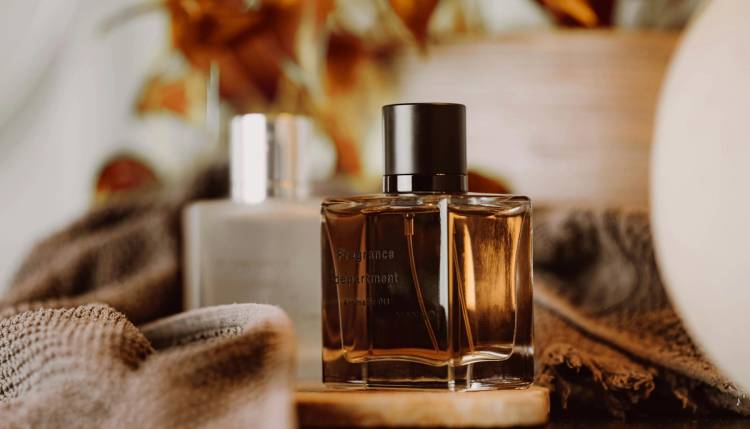
Notes. Sillage. Projection. Fragrance has its own language, and for many, it can feel like a blur. On Fragrantica, it's second nature—broken down, debated and defined by a community that speaks scent.
There, on the site that's been cataloging the world's fragrances since 2007, users come to trace the perfumers behind their favorite bottles, follow scent families across releases and get a sense of what something might smell like before the first spritz. Then they stay—to rave, rant and keep track of it all, building virtual vanities where tiny fragrance bottles line up in orderly rows alongside wish lists, signature scents and "top favorites"—a little like a MySpace Top 8.
On each fragrance page, reviews move well beyond "sweet" or "floral." Hundreds—sometimes thousands—of users weigh in, their impressions stacking into a general pattern, or breaking in every direction. There's no single authority here, just a chorus of very opinionated noses. So what happens when something as personal as scent is shaped by more than just your own? Is instinct still leading, or just one voice in the mix?
Finding the Words
Most brand and retailer sites make you hunt for the real reviews. The more opinionated ones tend to take some digging, often buried beneath a sea of five-star praise. On Fragrantica, candidness is the point, and there's plenty of it.
Everything from drugstore body mists to high-end eau de parfums gets picked apart in long, detail-packed takes that range from sharply critical to deeply sentimental. On one end: "How does a soapy floral scent turn to musty toes?" one reviewer writes. On the other: "The drydown reminds me of my late mother, a Khmer Rouge survivor, the person I call my Hero. I am actually in tears right now as I'm writing this."
For all the fluency on display, finding those words takes time. "It's a bit like going to the gym," says Zoran Knezevic, one half of the husband-wife team behind the site. "Most people start with no developed fragrance vocabulary and no real way to express what they smell. But the more they read, compare and participate, the more detail they begin to notice, and the more passion they develop for it."
Melissa Cossaboom—known as @buzzwithhoneybee to her fellow Fragrantica users—has a type. Her nose, as she puts it, is "gourmand-leaning, with a soft spot for vanilla, coffee, marshmallow and comfort scents"—preferences that have only sharpened over time, somewhere between scrolling and spritzing.
"Fragrantica expanded my vocabulary, and honestly, my imagination," Cossaboom says. "I used to default to simple descriptors, but now I think in textures, moods and moments. Things like 'golden hour on warm skin' or 'a creamy tropical breeze with a little attitude.' Fragrance stopped being something I just smelled and became something I interpret."
Making Sense of Scent
Putting fragrance into words is one thing; understanding it is another. "The universe of fine fragrance is incredibly complex," explains Dr. Avery Gilbert, a psychologist specializing in the science of smell. "You might know what you like or smell something on someone else, but to really understand how a fragrance is constructed—to distinguish top notes from drydowns, to understand its character—you need a framework." Fragrantica bridges that gap, and it's built into its very design.
"We figured out very early that fragrance was missing something that specialists have only recently started calling memetics—how symbols and ideas get adopted and propagate," says Knezevic. Heady as it sounds, it's really just a shared language for scent—the same way sommeliers trade tasting notes or coffee obsessives argue over origins.
That shared language doesn't replace instinct—it sharpens it. Even seasoned users know there are limits to reading a fragrance on paper. "Notes alone are never a safe guess," says one user who's been on the site since the late 2000s and preferred to remain anonymous. "There are so many variations on how a note can smell." The same ingredient can skew creamy or sharp, airy or dense, depending on how it's built.
That's where Fragrantica's note pyramid comes in. Attached to every fragrance, it maps the scent from top to base. You get a sense of it before you ever smell it, like a subway map you scan in a second, then come back to when you need to trace the route. Users weigh in on everything else, too—longevity, sillage, gender, price—then vote on when to wear it, whether that's a summer evening or a date night.
This isn't just a hunch—there's research to support it. A study published in Cognition found that scent becomes easier to place when it's paired with consistent language, which is what cognitive scientist Asifa Majid calls "consistent verbal input." Name something the same way, enough times, and it starts to stick. The sandalwood icon isn't just a logo; it's a memory cue. Fragrantica, it turns out, has been doing neuroscience all along.
But when does consensus start to outweigh instinct, and is there still room for both?
Crowd Control
On Fragrantica, a fragrance gets a reputation—fast. One review turns into 10, then hundreds, drawing just as many eyes. It's how discovery works now: According to analytics platform Spate, people are learning how something smells through search, social and other people's descriptions, before they've ever encountered it themselves.
For Cossaboom, that wave of opinion is part of her research. Before committing to a new bottle, she scrolls. "I don't trust my nose alone," she says. "I like a second opinion…or 500." Dr. Gilbert has seen this before. "It's similar to movie ratings, like Rotten Tomatoes," she says. "You aggregate individual opinions to find a consensus."
But consensus has a ceiling. Paul Fino—a leading voice on PerfumeTok, TikTok's fragrance community—points out that the crowd naturally gravitates toward the familiar. "The easy, mass-appealing designer scents are always gonna rise to the top," he says. "But that doesn't mean they're the best or most exciting. It just means they're the easiest for everyone to agree on."
And then there's the question of what happens before you've even uncapped the bottle. "Fragrantica can definitely create a narrative around a scent," Fino continues. "Once you start listening to everyone else before you even smell something, you're not really experiencing it for what it is. You're experiencing what you were told it is."
Ben Krigler, owner and perfumer of the eponymous fragrance house, gives Fragrantica its due: "It's a good way to get a fragrance education at no cost. It is really helping people make choices." But there's a limit to what the site can tell you. "Perception is still very personal," he adds. "There's nothing like trying a perfume on your skin to see how it reacts with your chemistry."
"People sometimes say they can't completely imagine how something smells until they see its Fragrantica page," Knezevic says. "And that page isn't top-down. Note intensity, accords, longevity, sillage, seasons and occasions are all results of community feedback. Over two decades, our platform has helped shape a shared sensory language for fragrance."
The users feel it, too: "When we change the icon for sandalwood, the whole internet revolts because we've disturbed their visual map," Knezevic adds. "That's how deeply this language has been internalized."
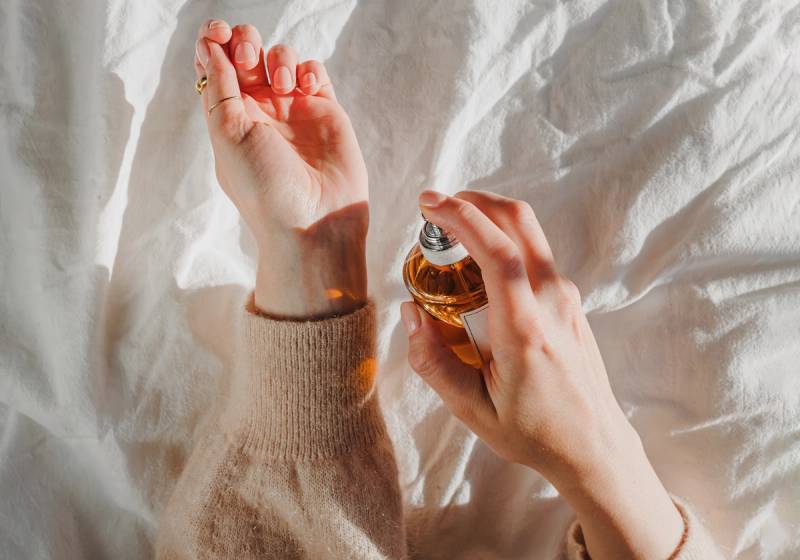
In the end, there's only so much a stranger's nose can do. It can tell you the memory it unlocks for a stranger in Seoul, the season someone in Vermont reaches for it, the other bottle it reminds a thousand people of. It can even warn you if Barb in the next cubicle will complain to HR about a headache—or have strangers following you down the street. But, what it can't tell you is what it will mean to you. That one's between you and your wrist.