You may think that they’re just stubborn white heads, but those small white bumps on your skin could actually be something completely different. What you could be dealing with is called milia which is actually keratin that’s trapped under the surface of the skin. Since it can be tricky to get rid of, we went straight to the experts to get their tips.
Milia most often appears on the eyelids, but can also show up in other places as well. It’s especially common for it to appear as the skin heals after a skin injury such as a burn, blister, cut or rash. “In addition, I’ve seen milia appear after overzealous manipulation of the skin,” says Livingston, NJ, dermatologist Chris W. Sciales, MD. “There is such a thing as being too clean, and if you overdo it, you’re bound to get milia.”
While it can sometimes go away on its own, if it’s there longer than two or three months, it usually takes a dermatologist to remove it. The removal process usually involves using a lancet to prick the milia, followed by using an extractor to squeeze out the keratin.
For the most part, experts say that milia can arise for no apparent reason and don’t exactly know why some people are more prone to it than others. However, sun damage does tend to play a role in its formation. “Because of sun damage, I tend to see more milia in fair skinned people,” says Dr. Sciales. Darker people tend to have less because they are less prone to sun damage.”
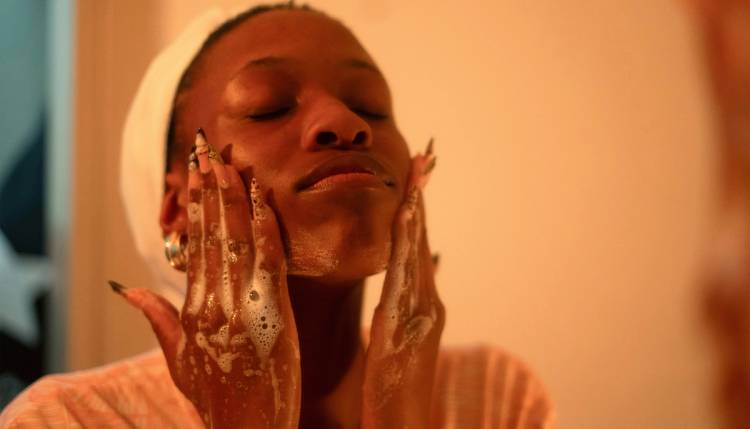
If you notice that you’re especially prone to milia, ditch those rough scrubs, washcloths, sponges and other harsh exfoliation devices. Instead, gently wash your face with just your hands. Also, using a cream that contains retin-A is a good preventative measure, says Dr. Sciales.
“The main thing is to not pick at them because it can lead to scarring,” says San Francisco dermatologist Vic Narurkar, MD. It’s best to resist the temptation to extract the milia yourself. “Don’t do it at home because you can risk an infection. The best way to treat milia is to visit your dermatologist to get a prescription or have them do an extraction in the office.”
Related:
What Are Those White Under-Eye Bumps?
When a Breakout Isn’t Acne