For most of us, a scratchy scarf or a brisk walk in November air is just part of the season. But for people with chronic inducible urticaria, a type of hives that flare from a specific trigger, those everyday moments can mean itchy, raised welts. In a recent roundtable reported by Dermatology Times, Hampton, VA dermatologist Diego Ruiz Dasilva, MD, and San Antonio dermatologist Lindsey Finklea, MD, broke down why it’s so easy to overlook and what’s finally changing.
More common than you’d think
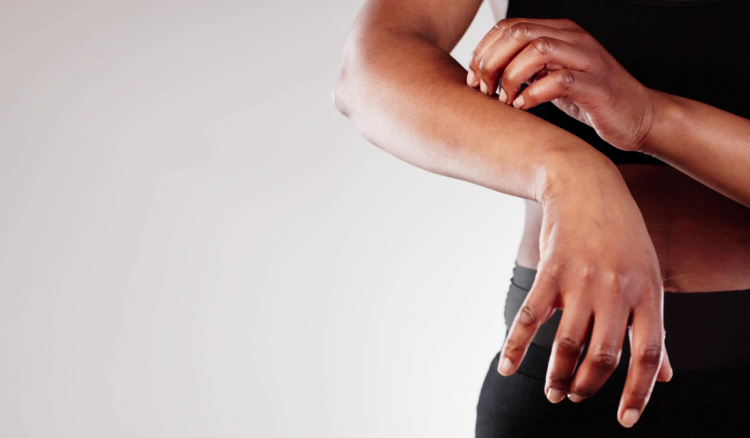
By Finklea’s estimate, trigger-based hives affect roughly 0.5 to 1.5 percent of people worldwide. About half have symptomatic dermographism, aka “skin writing,” where rubbing or pressing on the skin raises welts. Others break out from the cold or when they heat up during exercise.
Many people simply rearrange their lives around their triggers, so the toll is easy to miss. If you’ve stopped going to the gym or dread stepping outside in winter, tell your dermatologist.
When your antihistamine isn’t cutting it
Daily non-drowsy antihistamines like Zyrtec, Allegra or Xyzal are where treatment starts, but Finklea says standard doses only help about 20 to 50 percent of people. She raises the dose slowly over two to three weeks and has patients take it every day, not just during a flare (check with your doctor before changing yours). These derm-approved ways to treat hives at home can help in the meantime.
For people still breaking out after all that, options were limited until last month, when Rhapsido (remibrutinib) became the first FDA-approved treatment for symptomatic dermographism. It’s approved only for adults with that type who still have symptoms on antihistamines. It isn’t yet approved for cold- or exercise-triggered hives, though the manufacturer plans to submit data on those types to regulators.
What the newest trial found
The twice-daily pill blocks a signal inside the immune cells that release histamine, the chemical behind the itch and swelling. In the phase 3 REMIND trial of 115 adults still breaking out despite antihistamines, about 29 percent of people with dermographism on Rhapsido had a complete response (no hives on a standardized rub test) at week 12, compared with 14 percent on placebo. The trial was small, with fewer than 60 people in each group. Differences showed up as early as week 2.
The doctors pointed out that zero hives is a tough bar. Finklea says a score of one on that rub test, which reflects mild symptoms, is a realistic goal for many patients, and people can still see real improvement without total clearance.
Common side effects included colds, headache, nausea, abdominal pain and mild bleeding. Because Rhapsido can cause bleeding, including tiny red spots on the skin called petechiae, the doctors said it’s worth discussing up front. They also noted Rhapsido is a highly selective BTK inhibitor, which makes it more targeted than earlier drugs in that class.
Doctors also weigh omalizumab (Xolair) and dupilumab (Dupixent), and no studies have compared the three head to head, so the right fit depends on your hive type, age, health and preferences. Bring a list of your triggers to your next appointment, and check out our Rhapsido FAQ for more on the pill.